Whole-House Humidifier
Whole house humidifier — worth it, for whom, and the ceiling nobody selling one mentions
The most-asked question about this equipment, in the one non-shop result that ranks for it, is whether it is worth the price. Every other result is a store. This page answers the question with a hygrometer and the federal humidity guidance rather than a catalogue, and it spends as long on when not to install one as on how it works.
Are whole-house humidifiers worth the price? The honest version
For a house in a cold climate that measurably runs dry in winter, yes, and the benefits are real: no static shocks, no cracked woodwork or gapped floorboards, fewer dry throats and nosebleeds, and a house that feels warmer at the same thermostat setting because humid air holds heat against skin better than dry air. For a house that does not measurably run dry, no, and the reason is not the price but the risk — the same machine that fixes a dry house pushes a normal house past the federal ceiling and into condensation and mould. The difference between those two houses is one instrument that costs less than lunch.
- Who genuinely needs one. A house with real winters, a hygrometer reading in the twenties or below through cold spells, and the symptoms above. The equipment was designed for exactly this, and here it earns its keep.
- Who does not. A mild climate, a house that already reads in the thirties or higher, or — above all — a house with condensation on the windows, which is the sign of too much moisture rather than too little. Which machine addresses which complaint is set out on the indoor air quality page.
- Who should measure first. Everyone else. A hygrometer left in the main living space for a week in the coldest part of winter answers the question the salesperson cannot, and it answers it for about ten dollars.



The Machine
What a whole-house humidifier is and how it works
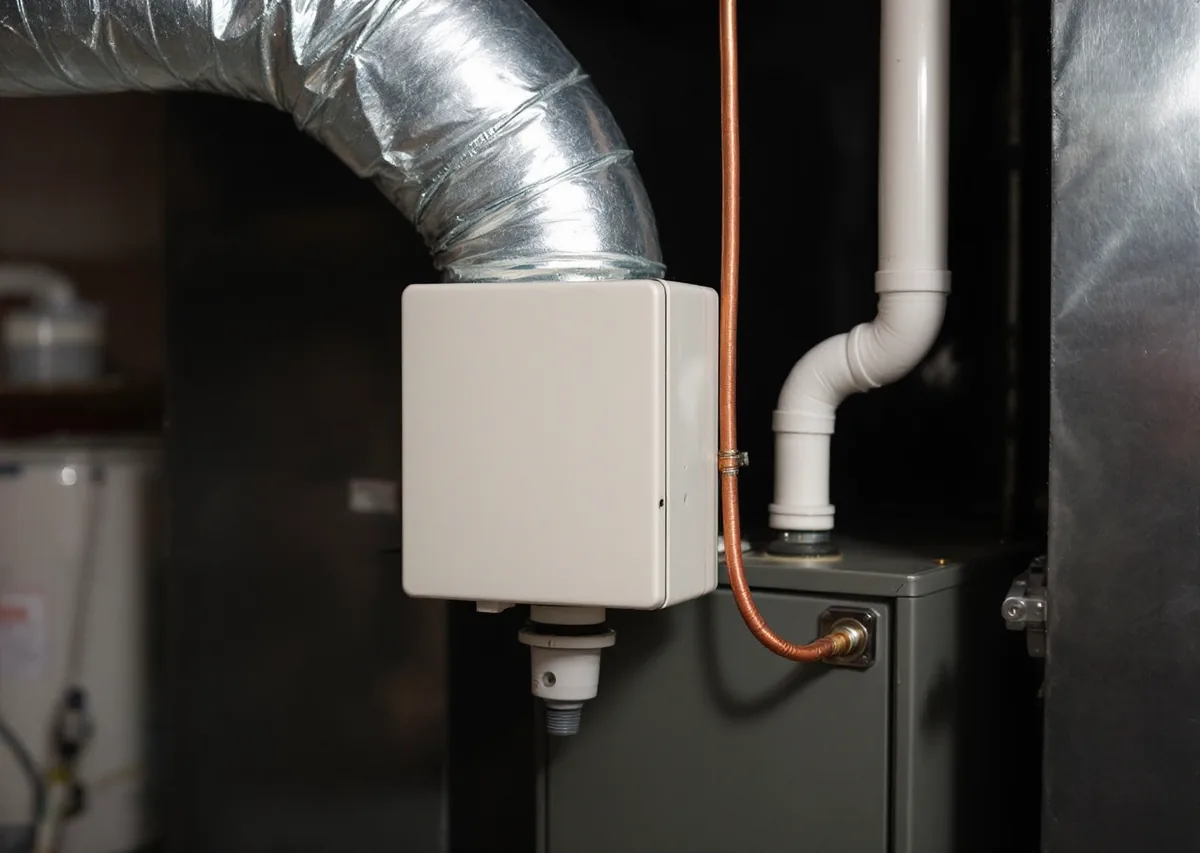
A box on the side of the furnace or air handler, plumbed to water, wired to a humidistat, and working only while the blower runs.
Where it lives
It mounts on the supply plenum or the return duct beside the indoor unit — which is why the search phrases “furnace humidifier”, “humidifier for furnace” and “HVAC humidifier” all describe the same thing. It has a small water line, a drain, and a low-voltage connection to the controls. It is part of the duct system, and everything about the ducts applies to it: it reaches the rooms the ducts reach, and only while air is moving. What the indoor unit itself is and how it is arranged is on the air handler page.
How the evaporative kind works
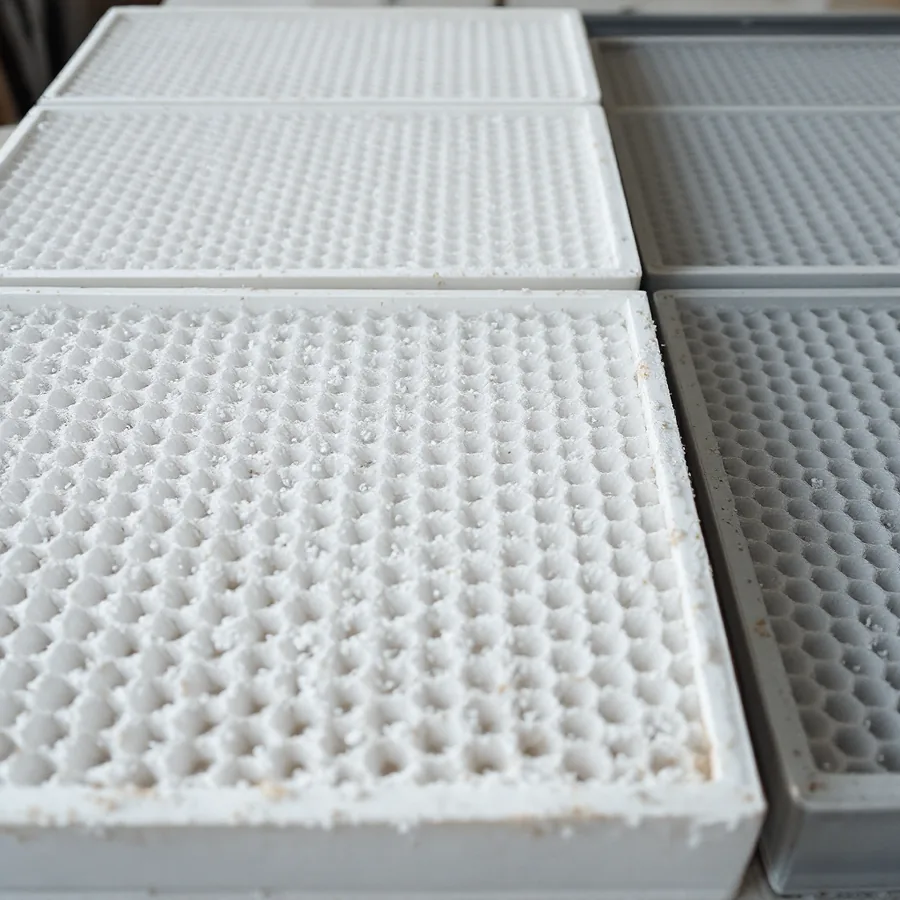
Water trickles down a porous panel — the water panel, or pad — and warm air from the furnace passes through it, picking up moisture by evaporation. Water that does not evaporate runs to the drain. Because the moisture leaves as vapour rather than as droplets, the minerals in the water stay behind on the panel, which is why the panel scales up and is replaced each season, and why this design does not put mineral dust into the house.
The humidistat
A humidity thermostat: it calls for humidification when the house drops below its set point and stops when it reaches it. The good ones also read outdoor temperature and lower the target as the weather gets colder. That single feature is the difference between a humidifier that helps and one that puts water on the windows, and it has its own section below.
What it cannot do
Humidify a house without ducts, humidify while the blower is off, or humidify rooms the ducts do not reach properly. It also cannot compensate for a house that leaks moisture to the outdoors faster than it can add it, which is the older, draughtier house — there, sealing comes first.
Three Designs
Bypass, fan-powered and steam
Same job, three ways of doing it, and the differences are water, electricity and what your water is like.
Bypass
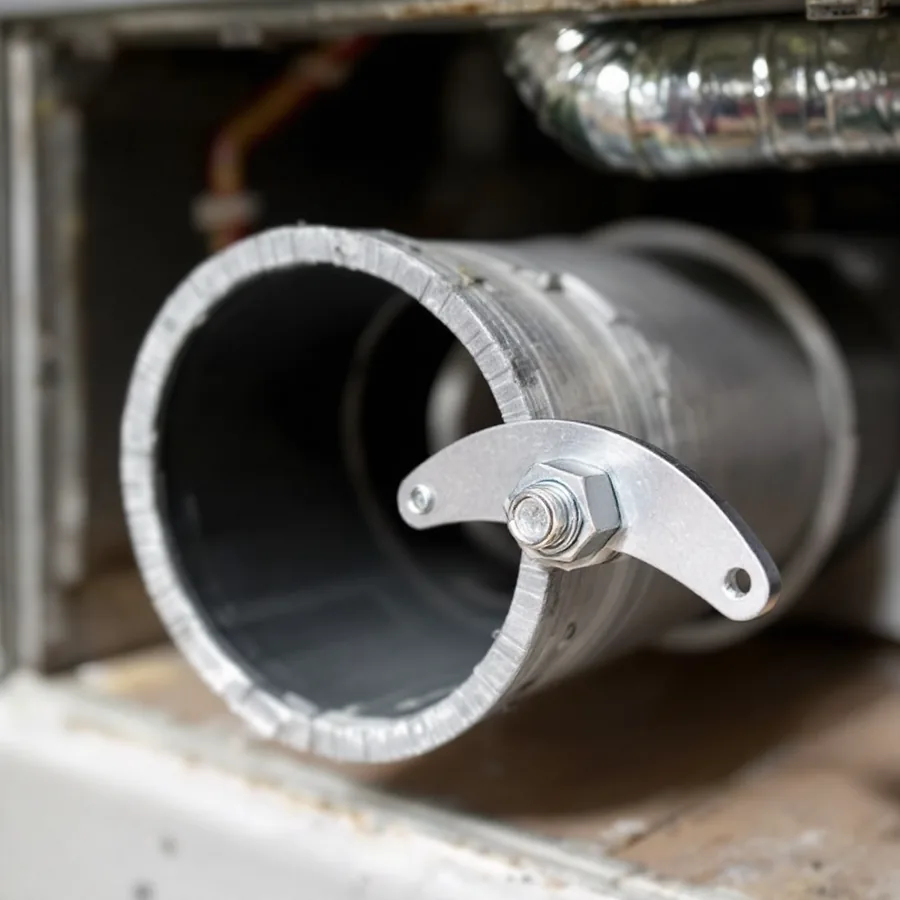
Evaporative, using the furnace blower and a short bypass duct between supply and return to push air through the panel. No fan of its own, the least to go wrong, and the least capacity. Needs the bypass duct, so it needs room beside the unit.
Fan-powered
Evaporative, with its own small fan pulling air across the panel. More capacity than bypass from the same footprint, no bypass duct, a little more electricity and one more motor to fail.
Steam
Boils water and injects vapour into the duct. The most capacity, works even when the furnace is not heating, uses the most electricity and is least tolerant of hard water. The choice for large or very tight houses and for heat pump systems whose supply air is too cool to evaporate much.
Water use, honestly
Evaporative units drain what they do not evaporate, and on a bypass unit that can be a large share of what goes in. It is not wasteful in a way that shows on most water bills, but it is worth knowing before you are surprised by the drain running. Steam units use only what they boil.
Hard water changes the choice
Mineral-heavy water scales an evaporative panel faster and scales a steam canister faster still. If your kettle furs up quickly, expect the same inside the humidifier, and ask about it before choosing steam.
The name on the box
One manufacturer dominates this category the way one dominates thermostats: Aprilaire. You will see an Aprilaire whole house humidifier on the side of most furnaces that have one, and the search for an Aprilaire steam humidifier — the 800 series is the one most people mean — is really a search for the steam design described above. That is a fact about the market rather than a recommendation: the three designs are what matter, every maker offers them, and the questions to ask are the same whatever the name on the box.
The Number That Matters
The federal ceiling nobody selling one mentions
A humidifier is the one piece of comfort equipment that can damage a house by working properly. The federal guidance sets the limit, and it is quoted rather than paraphrased.
Fifty percent
EPA's guidance on home humidifiers: “Do not humidify to indoor relative humidity levels exceeding 50 percent.” Its guidance on mould and moisture gives the working range: “keep indoor humidity below 60 percent (ideally between 30 and 50 percent) relative humidity.” Thirty to fifty is the target; fifty is the ceiling; sixty is where mould becomes likely.
The sign you have passed it
EPA again: “Condensation can be a sign of high humidity.” Water on the inside of windows on a cold morning is the house telling you it is over the line. If a whole-house humidifier is running in a house with wet windows, the setting is wrong, and the water on the glass is also forming inside the walls where you cannot see it.
Why the ceiling moves with the weather
Fifty percent indoors is fine at 40°F outside and produces streaming windows at 0°F, because the inside surface of the glass gets colder as the outdoor temperature falls and moisture condenses on it sooner. That is why the practical ceiling in a cold snap is well below fifty, and why the humidistat that reads outdoor temperature exists. A fixed setting chosen in November is wrong by January.
The rule in one line
Set it low, watch the windows, and let the coldest morning of the winter set the ceiling. The house will tell you when it has had enough, and it does so on the glass first.
Against The Portable Kind
Why the federal guidance favours the evaporative design
The case for a whole-house unit over a bedroom mist machine is not convenience. It is in EPA's own findings about what portable humidifiers put into the air.
What the studies found
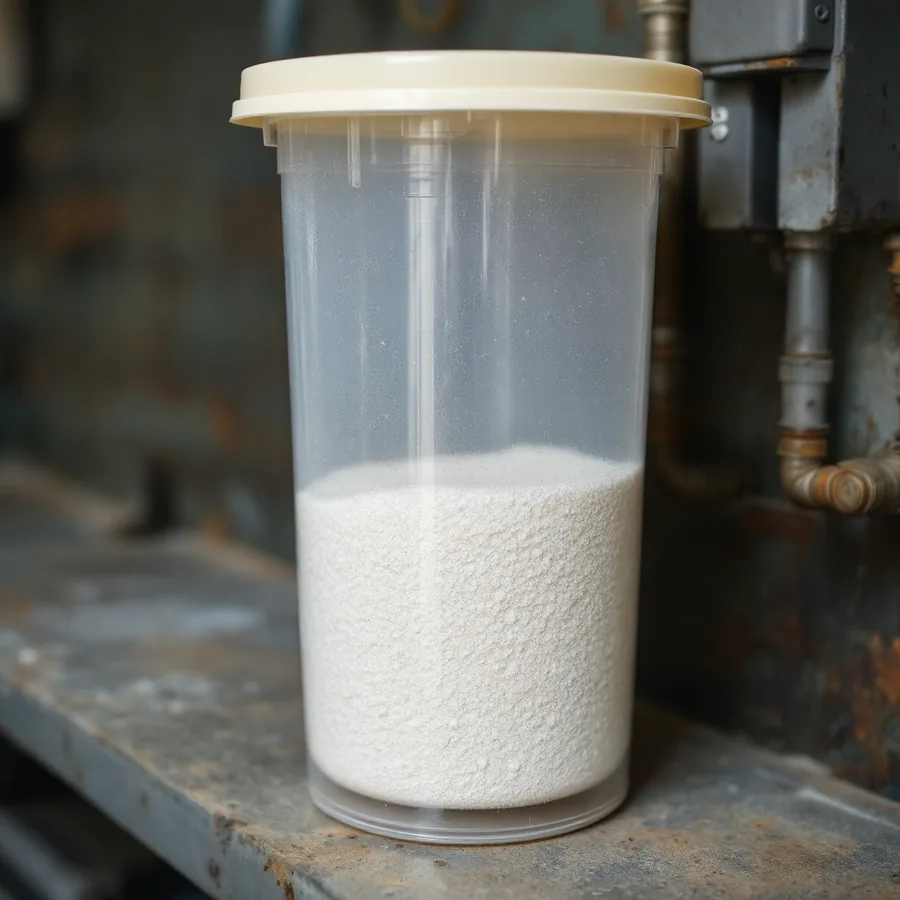
“Several studies have shown that ultrasonic and impeller (or "cool mist") humidifiers can disperse materials, such as microorganisms and minerals, from their water tanks into indoor air.” Ultrasonic and impeller units atomize water: whatever is in the tank — minerals, and anything growing in standing water — goes into the room as fine particles. The white dust that settles around an ultrasonic humidifier is the minerals from the water, and it is the visible fraction of what is being breathed.
Why evaporation is different
An evaporative unit, whole-house or console, turns water to vapour rather than to droplets. Vapour is water alone; the minerals and whatever else was in the water stay on the panel. That is the mechanism behind the federal preference, and it applies to a plumbed-in bypass or fan-powered unit exactly as it does to a portable evaporative one.
The maintenance arithmetic
EPA's instruction for portables: “Clean portable humidifiers every third day.” Every third day, all winter. A whole-house evaporative unit has no tank to grow things in, only a panel that is replaced each season. That is not a small difference in effort, and it is the reason a household that has kept a portable running for years often finds the whole-house unit is the first humidifier it actually maintains.
What EPA says applies to central units too
For console and furnace-mounted units, the guidance is to follow the manufacturer's cleaning directions, and specifically: “if the humidifier contains a tank, do not allow water to stand in the tank for extended periods of time, and keep the water clean.” Steam units have a canister; evaporative units should not have standing water at all — if you find some, the drain is the fault.
Work It Out
Whether you need one at all
Three questions, nothing sent anywhere. Its most frequent answer is “buy a hygrometer first”, which is the answer a company selling the equipment cannot afford to give.
A referral that ends in a ten-dollar hygrometer and no installation pays us exactly what a steam unit does, which is why this tool is allowed to say so.
The Control
The humidistat, and the mistake that ruins walls
Most of the harm this equipment does is done by one setting left alone from autumn to spring.
Manual, and what goes wrong with it
A manual humidistat holds one set point. Set to 40 percent in October it is comfortable and harmless. Held at 40 percent through a January cold snap it drives condensation onto every window in the house, and into the wall cavities behind cold exterior surfaces where the water is invisible and the mould is not. The unit is doing exactly what it was told. The instruction was wrong for the weather.
Automatic, and why it is worth insisting on
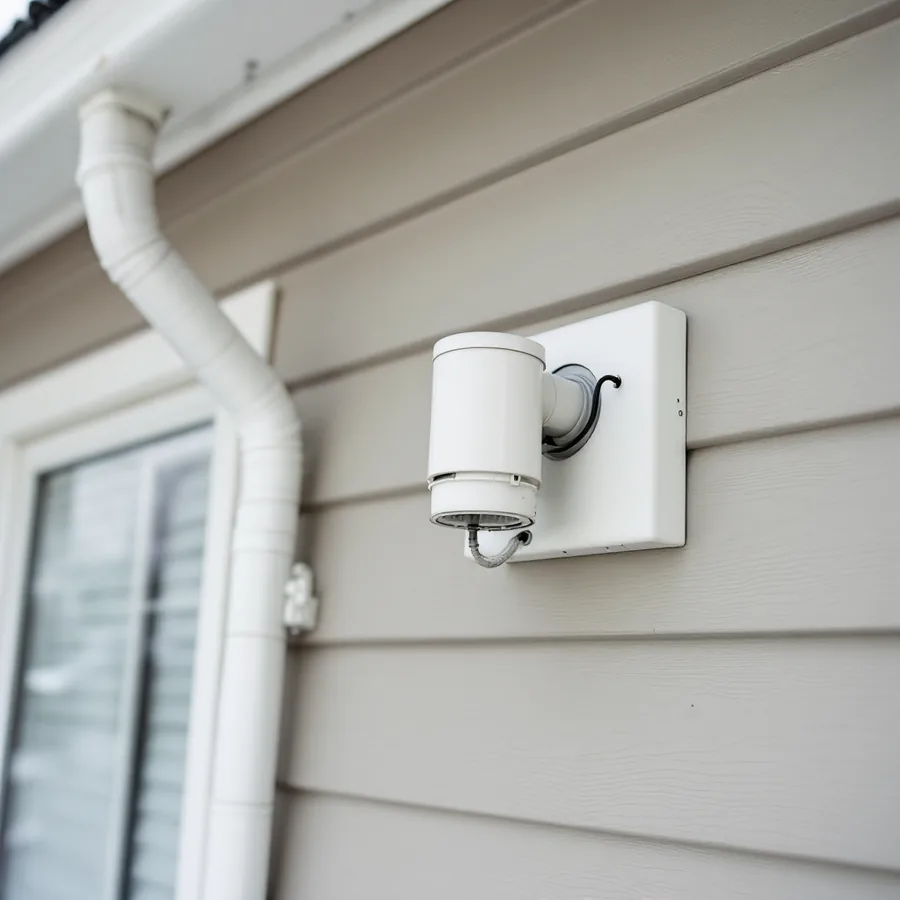
An outdoor-compensated humidistat carries a small temperature sensor outside and lowers the indoor target as the temperature drops. It is the equipment's own version of the rule above — let the coldest air set the ceiling — and it does it without anyone remembering. It sits beside the thermostat on the same low-voltage circuit, and shares its failure modes. On a new installation it is the single feature worth paying for; on an existing manual unit, turning the dial down whenever the forecast turns cold is the manual substitute.


The setting to start from
Low. Thirty percent is comfortable for most people and safe in almost any weather; raise it a few points at a time only if the symptoms persist, and stop at the first sign of moisture on the glass. The federal range is 30 to 50; the bottom of it is where a humidifier should begin, not the top.
Turn it off in spring
And close the bypass damper if it has one, or the unit will keep adding moisture through the cooling season while the air conditioner is trying to remove it. A forgotten humidifier in July is a common reason a house feels clammy with the air conditioning running, and one of the things worth ruling out before deciding the air conditioner is at fault.
Once A Season
Maintenance: the water panel and the standing water
Less than a portable, more than nothing, and one part that gets forgotten for years.
The water panel
On an evaporative unit the panel scales up with the minerals left behind as water evaporates. A scaled panel passes less air and evaporates less water, so the unit runs longer for less result. Replace it at the start of every heating season, and in hard-water areas look at it mid-winter as well. It is an inexpensive part and the whole maintenance burden of the design.
Standing water
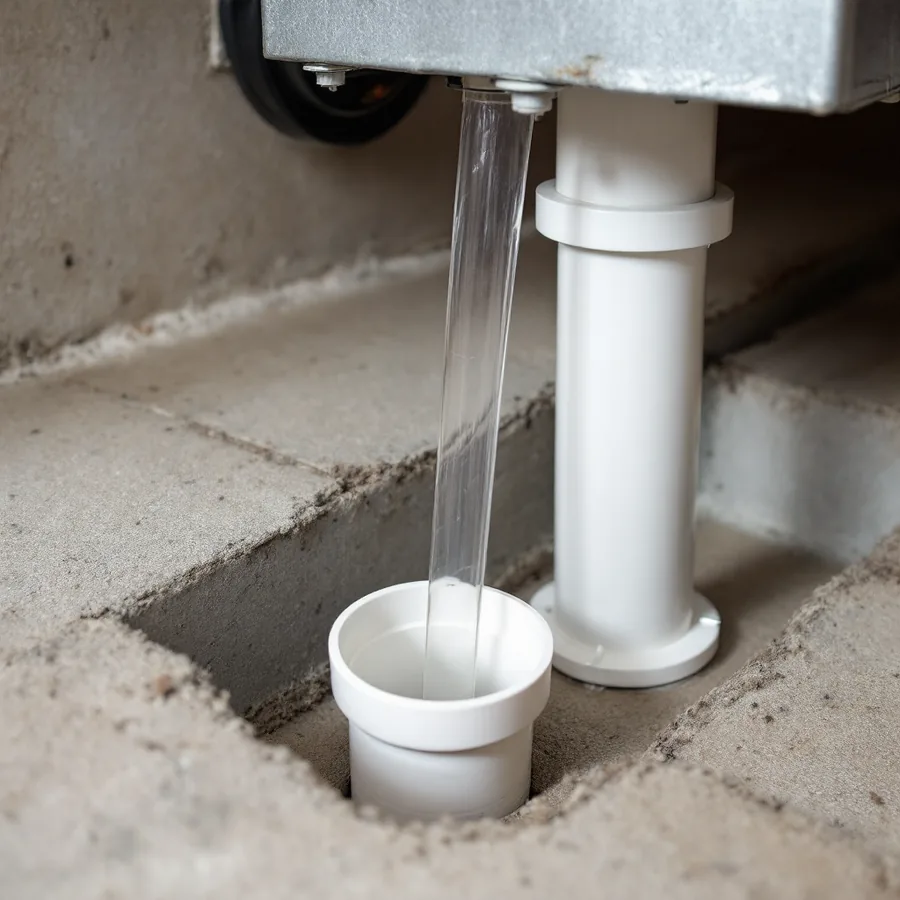
An evaporative unit should have none: water runs down the panel and out of the drain. If the drain pan holds water, the drain line is slow or blocked, and the guidance for central units applies directly — keep the water clean and do not let it stand. A steam unit has a canister that is replaced on the manufacturer's schedule, typically each season or two depending on water hardness.
The forgotten unit
The commonest state of a whole-house humidifier in an older house is switched on, panel never changed, damper open all summer. It is doing little in winter and a little harm in summer. If you have inherited one with the house, the first job is finding out whether it works and the second is finding the panel. Both belong on the annual visit described on the maintenance page.
The health note, quoted
EPA's instruction for any home humidifier: “Stop using your humidifier and contact your physician if you have respiratory symptoms which you believe are associated with periods of use of your home humidifier, even if you are following maintenance directions.” We quote it because we are not a medical source and neither is anyone who installs equipment.
The Job
Installation: what the work involves and what moves the cost
No national prices, by policy. What the installer actually does, and which parts of it change the number.
What moves the number
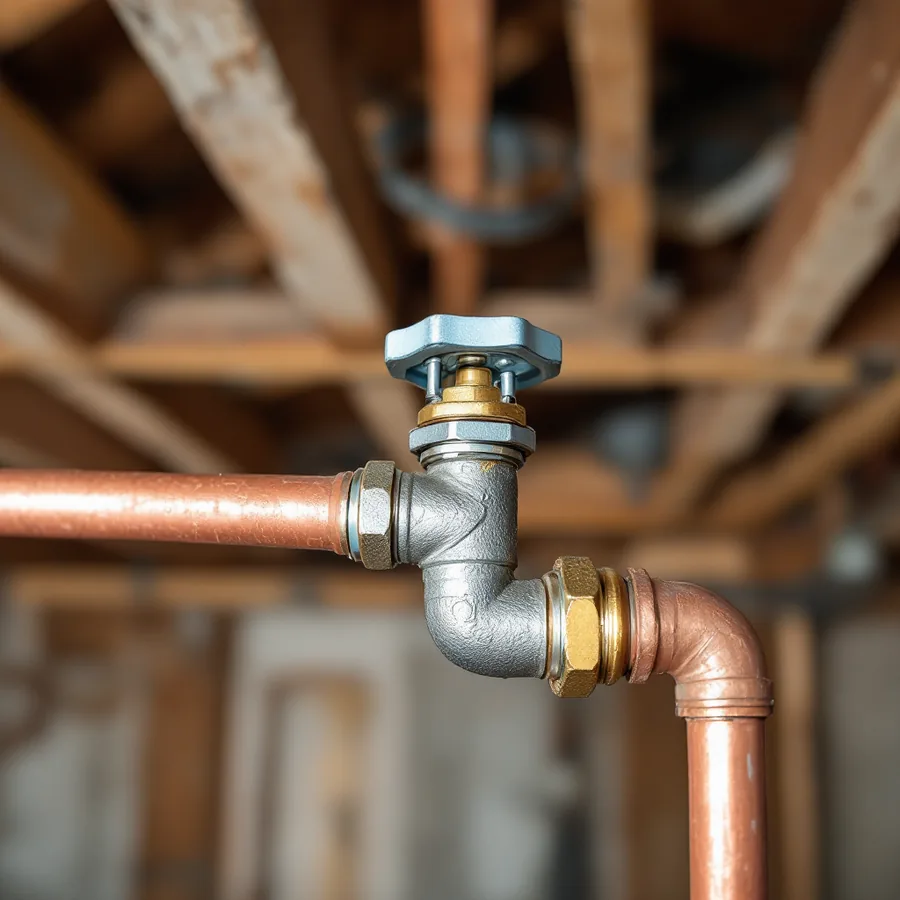
Type, first: steam costs more to buy, more to install because of the circuit, and more to run. Then access, distance to water and drain, and whether the humidistat is the automatic kind. The unit itself is a modest part of the total on most jobs; the plumbing and electrical around it are the rest. How those lines sit inside a larger quote is on the replacement cost page.
Can it be added to an existing furnace
Almost always, and it usually is. The questions are room beside the unit for the box and the bypass, a water line within reach, and a drain. A heat pump system with cool supply air is the case where an evaporative unit disappoints and steam gets recommended instead.
Without A Review
How to choose one without reading a review
The search for the best whole-house humidifier leads to catalogues. Four things decide it, and none of them is a brand.
| Compare | What it means | Ignore |
|---|---|---|
| Type | Bypass for a small or average house with room for the duct; fan-powered where there is not; steam for large or tight houses and heat pump systems. | Which type the installer stocks. |
| Capacity | Rated in gallons per day and matched to house volume and tightness. A leaky house needs more; a tight house needs far less than the square-footage rating suggests. | The square-footage figure on the box, taken alone. |
| Control | Automatic with an outdoor sensor, or manual. This is the feature that decides whether the unit is safe for your windows. | Anything described as smart that does not read outdoor temperature. |
| Water panel cost and interval | The recurring cost of the design. Cheap unit, expensive panel is a common combination. | Warranty length on the housing, which almost never fails. |
Before It Goes In
What to ask before it is installed
Four questions that separate a company that measured from one that has a unit on the van.
| Ask | What it tests | A weak answer |
|---|---|---|
| What humidity reading did you take, and where? | Whether the recommendation came from a measurement or a stock list. | “Everyone needs one in this climate.” |
| Does the humidistat read outdoor temperature? | Whether the unit will lower its own target when the weather turns. | “You just set it and forget it.” |
| Where does the drain go, and where does the water come from? | Whether the quote includes the plumbing or leaves it to be discovered. | Vagueness, or a saddle valve on a line that deserves better. |
| What does the water panel cost and how often does it change? | Whether you know the running cost before you own it. | “Not much, once in a while.” |
What we do, and what we do not
We are not a contractor and we do not sell equipment. We are paid a fixed fee for an introduction — the same whether the visit ends in a steam humidifier or a ten-dollar hygrometer — which is why this page can afford to tell most readers to measure first. When you want somebody to look at the house, we connect you with independent licensed and insured heating and cooling companies. Who pays us is on our about page, and the rest of what we publish starts from the home page.
Straight Answers
Whole-house humidifier questions, answered
Are whole-house humidifiers worth it?
In a cold climate, in a house that measurably runs dry in winter, yes: they end static, cracked woodwork and dry-air symptoms and make the house feel warmer at the same setting. In a mild climate or a house that already reads in the thirties on a hygrometer, no, and in a house with condensation on the windows they are the one thing the federal guidance rules out. The instrument that decides it costs about ten dollars.
What should I set a whole-house humidifier to?
Start at thirty percent and raise it a few points at a time only if symptoms persist. EPA's guidance is not to humidify above fifty percent, with thirty to fifty the ideal range, and to treat condensation on windows as the sign of too much. In cold weather the practical ceiling is lower, which is why a humidistat that reads outdoor temperature is worth having.
Can a whole-house humidifier cause mould?
Yes, if it is set too high for the weather. Moisture that condenses on windows is also condensing inside exterior walls, and EPA's mould guidance names indoor humidity above sixty percent as the condition in which mould grows. The prevention is a low setting, an outdoor-compensated humidistat, and switching it off in spring.
How does a whole-house humidifier work?
An evaporative unit mounts on the duct beside the furnace, trickles water down a porous panel, and lets warm supply air pass through it, picking up moisture as vapour. Unevaporated water goes to a drain. A steam unit boils water and injects vapour into the duct instead. Both run only while the blower runs and are controlled by a humidistat.
Bypass or fan-powered or steam?
Bypass for an average house with room for the short duct it needs; fan-powered for more capacity in the same footprint or where there is no room for the bypass; steam for large or very tight houses, hard-to-humidify heat pump systems, and anyone who needs humidity when the furnace is not heating. Steam costs the most to buy, install and run and is least tolerant of hard water.
Do whole-house humidifiers use a lot of water?
Evaporative units drain what they do not evaporate, and a bypass unit in particular sends a fair share of its water to the drain. It is rarely visible on a water bill, but the drain will run while the unit does. Steam units use only what they boil.
Why does EPA prefer evaporative humidifiers to ultrasonic ones?
EPA reports that studies have shown ultrasonic and impeller humidifiers can disperse microorganisms and minerals from their water tanks into indoor air, because they atomize water into droplets. Evaporative units, whole-house or console, turn water to vapour and leave the minerals behind on the panel. EPA's instruction for portables is to clean them every third day; a whole-house evaporative unit has no tank and a panel replaced once a season.
Can I add one to my existing furnace?
Almost always. It needs room beside the indoor unit for the box and, for a bypass model, the short duct; a water line within reach; and a drain. A heat pump system with cool supply air is the case where an evaporative unit underperforms and steam is usually recommended.
Where This Comes From
Sources
- Humidity ceiling, portable humidifier findings, cleaning and the health note — U.S. Environmental Protection Agency, use and care of home humidifiers.
- The 30 to 50 percent range, condensation as a sign, and mould — EPA, a brief guide to mold, moisture and your home.
- Humidifier fact sheet — EPA indoor air facts, use and care of home humidifiers.
- Humidifier safety — U.S. Consumer Product Safety Commission, humidifier safety alert.
- Source control and ventilation as the first two moves for indoor moisture problems — EPA, improving indoor air quality.
- Where the unit mounts and what the ducts deliver — ENERGY STAR, duct sealing.
Our editorial standards explain how we source and check what we publish. Every quotation on this page is taken from the federal page linked beside it, and we publish no price averages. We are a referral service rather than a contractor. Last updated .
Before you call anyone
The independent match — we are paid for the introduction, not for the size of your job
Most roofing advice is written by the company that wants to do the work. That is not a failing of the people who read it; it is a defect in who is talking. The estimate, the diagnosis and the invoice come from one party, and no amount of care on your side fixes that.
We are built the other way round. We do not repair roofs and we do not sell materials, so the payment reaches us when you are connected to a licensed, insured roofing company — the same amount whether your roof needs an eight-hundred-dollar repair or a twenty-thousand-dollar replacement. Nobody here has a reason to talk you into the larger number. How we make money and how we research are both written down.
Waiting is the one thing that actually costs money. An insurance clock runs from the date of the damage rather than the date you noticed it, and damage that sits through a season stops reading as sudden and starts reading as wear — which is the exclusion that pays nothing. And if your roof is simply worn out, say so on the call. No claim will pay for age, we will tell you that plainly, and you will have lost nothing but the call.