Thermostat Not Working
Thermostat not working — one safe test first, then everything else
Before batteries, before wiring diagrams, before buying a replacement: set the fan to On and listen. If the blower runs, the thermostat has power and its circuit to the equipment is intact — which means the thing you are about to replace is probably not the thing that is broken. That single test is the most useful thirty seconds on this page, and it is missing from every result above us.
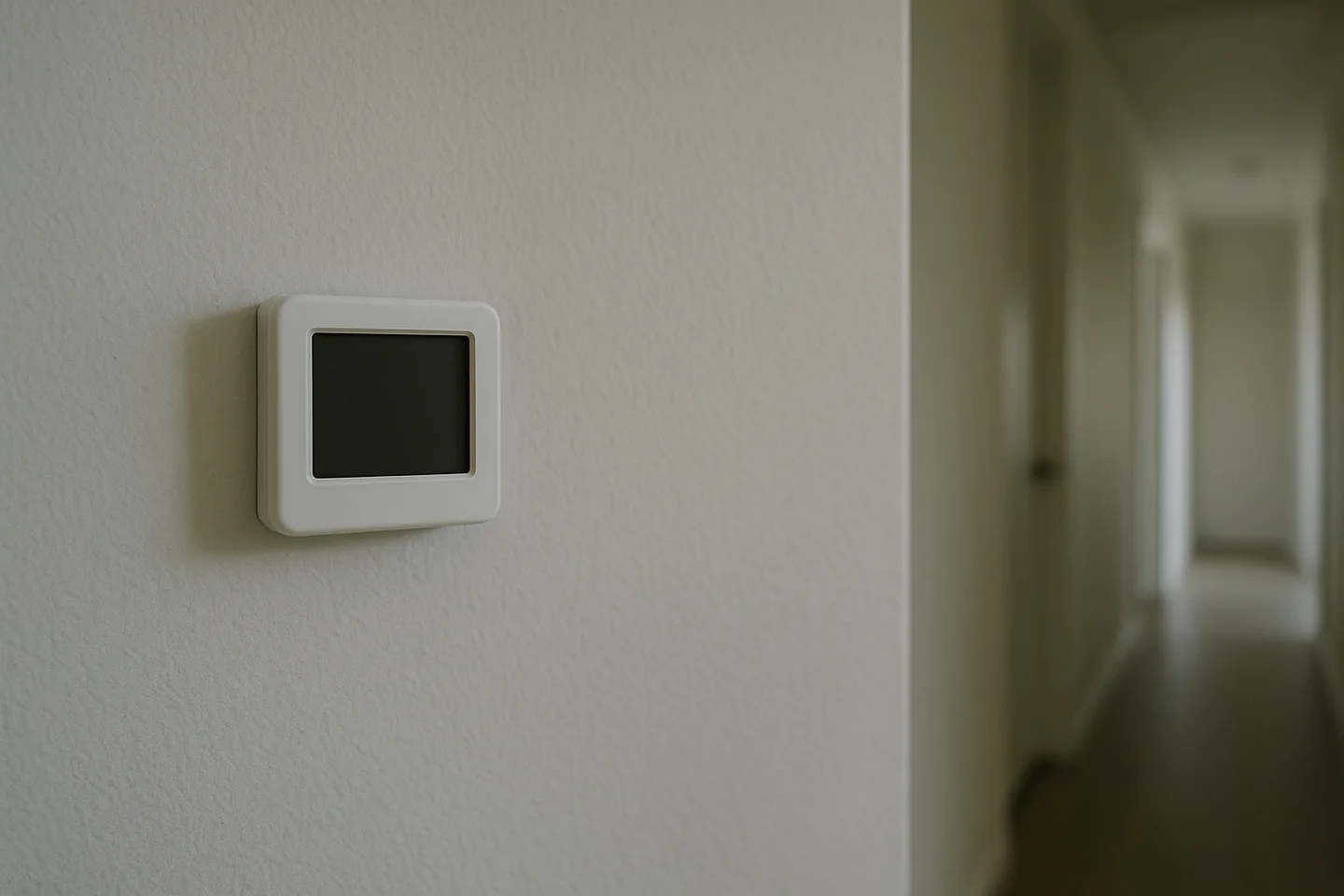
Thirty Seconds
The one test that tells you whether it is the thermostat at all
Nothing is opened, nothing is unscrewed, no wire is touched. You are asking the thermostat to do the simplest thing it knows how to do, and watching whether it can.
How to run it
Find the fan setting on the thermostat — usually a switch or menu item marked Auto and On — and set it to On. Leave the heating and cooling mode alone. Within a few seconds you should hear the indoor blower start and feel air at the registers, regardless of whether anything is heating or cooling.
What each result means
- The blower runs. Three things are proven at once: the thermostat has power, the wiring between it and the equipment is intact, and the equipment responds to it. A no-heat or no-cool problem is therefore downstream, and replacing the thermostat is the commonest wasted purchase in this whole subject.
- Nothing happens at all. Either the thermostat is not sending anything or nothing is arriving. Now the candidates narrow to power at the equipment, the low-voltage fuse on its control board, dead batteries, and the thermostat wiring itself — all of which are below.
- The blower runs but the display is blank. Unusual, and it points at a display or software failure on a thermostat that is otherwise still passing a signal. Worth noting rather than acting on.
Why this matters more than it sounds
“Is it the thermostat or the furnace?” is the question underneath almost every search on this subject, and it is normally answered by guessing and then buying. The fan test answers it in half a minute for nothing. Do it before you read the rest of this page, and half of what follows will already be irrelevant to you.
Thermostat Triage
What your thermostat is doing, and what to do next
Three questions, nothing sent anywhere. The first one is about the result of the fan test rather than about how the house feels, because that result is what actually narrows the problem.
A thermostat is the cheapest part in the system, and we are paid the same fixed introduction fee whether your visit ends in a $30 part or a new furnace. That is why this page opens by trying to talk you out of buying one.
Blank, Frozen, Dim
The screen, and what its behaviour tells you
Thermostat display not working is one of the most searched phrasings in this whole subject, and a blank screen has only a few possible causes.
Where a thermostat gets its power
Some run on batteries alone. Some run entirely on low-voltage power from the heating equipment. Many run on both: equipment power with batteries as a backup, which is why a thermostat can go blank when the furnace loses power even though its batteries are fine. Knowing which of the three you own turns a blank screen from a mystery into a two-item list.
Blank, and new batteries did not help
Then the thermostat is being powered by the equipment, and the equipment is not supplying it. Check the breaker, then the switch on the wall beside the furnace that looks like a light switch and is not, then that the front access panel is fully seated against its safety switch. If all three are right and the screen is still blank, the next candidate is the low-voltage fuse, which has its own section below.
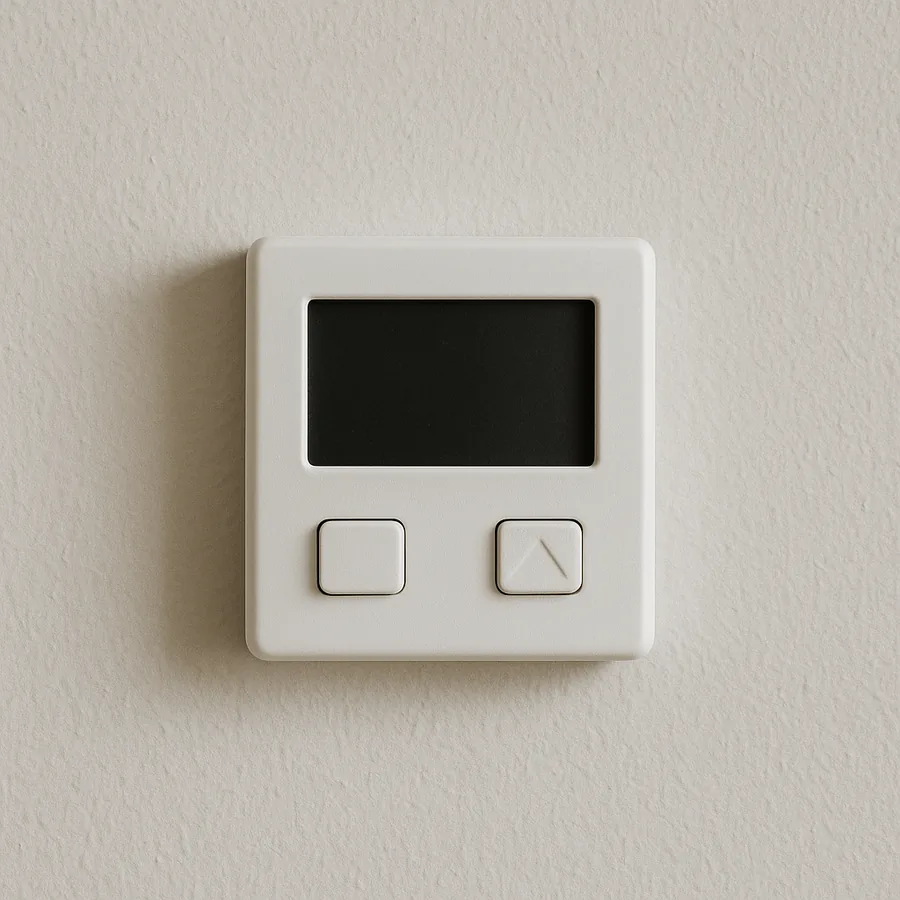
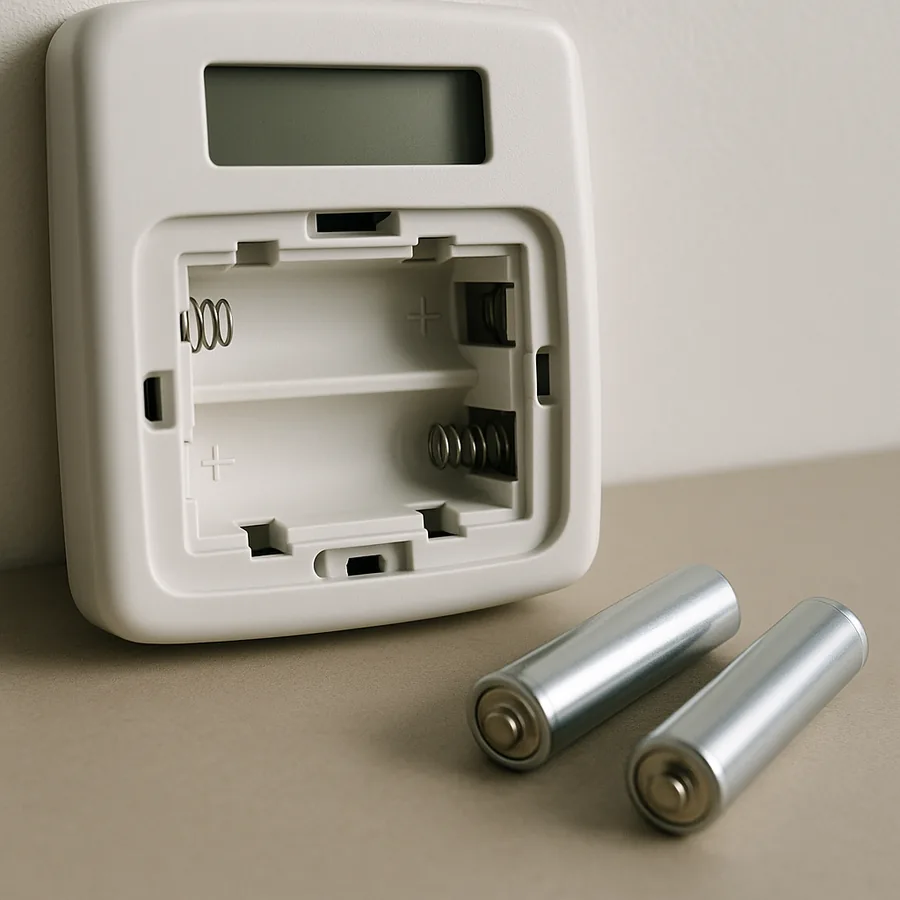
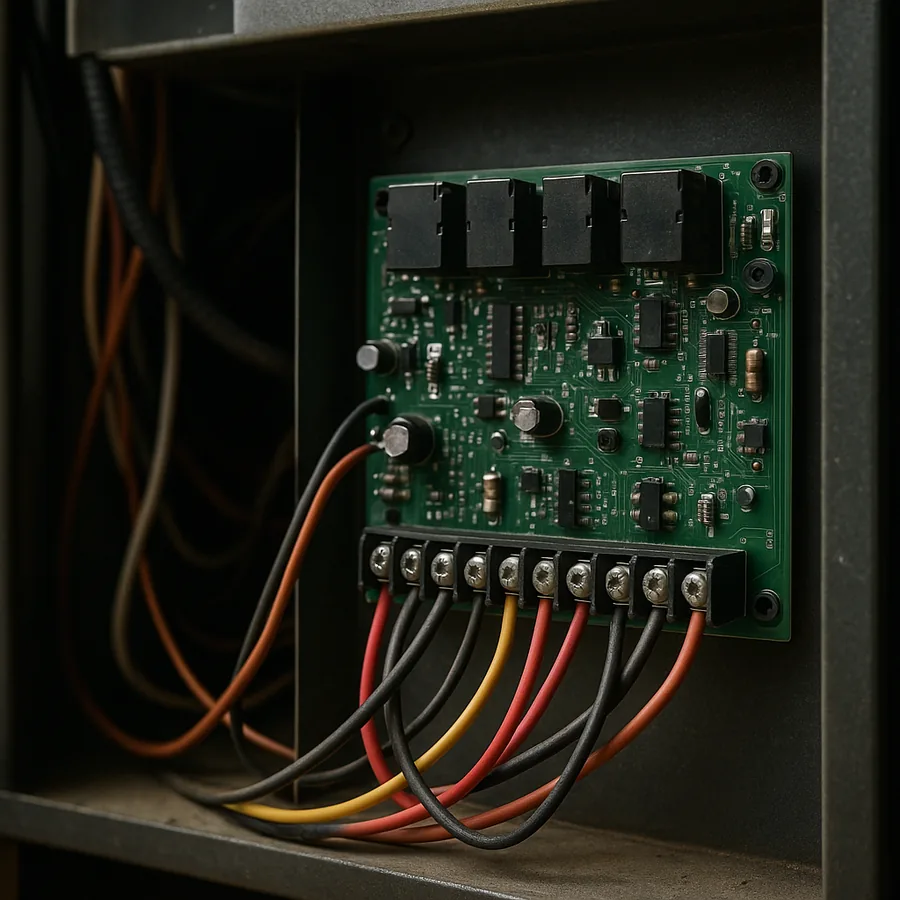
Frozen: lit, but not responding
Power-cycle it. Remove the batteries for a minute on a battery model; switch the furnace off at its breaker for a minute on a wired one. If it comes back and then freezes again within days, that repetition is the diagnosis rather than a nuisance — on a smart thermostat it usually points at the power supply, which is the C wire section below.
Dim, flickering, or losing settings
Classic marginal power. Weak batteries, a loose wire behind the plate, or a thermostat drawing more than it is being given. A thermostat that loses its schedule every time it is disturbed is telling you it has no reliable power source of its own.
The Cheapest Fix
Batteries, and why a battery change can break it
A surprising number of searches are for a thermostat that stopped working immediately after somebody changed the batteries, which sounds like bad luck and usually is not.
- Orientation. The commonest cause by a distance. The battery compartment markings are small and often in shadow; one cell reversed and the thermostat is dead in exactly the way it was before.
- The wrong chemistry. Use alkaline unless the manufacturer says otherwise. Rechargeable cells sit at a lower voltage and some thermostats read that as flat from the first day.
- The schedule was in volatile memory. On some models a battery change resets the program, so the thermostat works perfectly and simply does not do what it used to do at six in the morning. That is a configuration problem wearing the costume of a fault.
- The plate was disturbed. Changing batteries often means pulling the thermostat off its wall plate, and a wire that was barely gripped in its terminal can let go on the way back. If it worked before you touched it and not after, this is where to look — or to have somebody look.
How often
Once a year, on a date you can remember, whether or not it is complaining. Most thermostats show a low-battery warning long before they stop, and most people meet that warning for the first time in the middle of a cold night.
The Part With No Name
The low-voltage fuse nobody tells you about
If the screen is blank, the batteries are new and the equipment has power, this is very often the answer — and almost nothing written for homeowners mentions it exists.
What it is
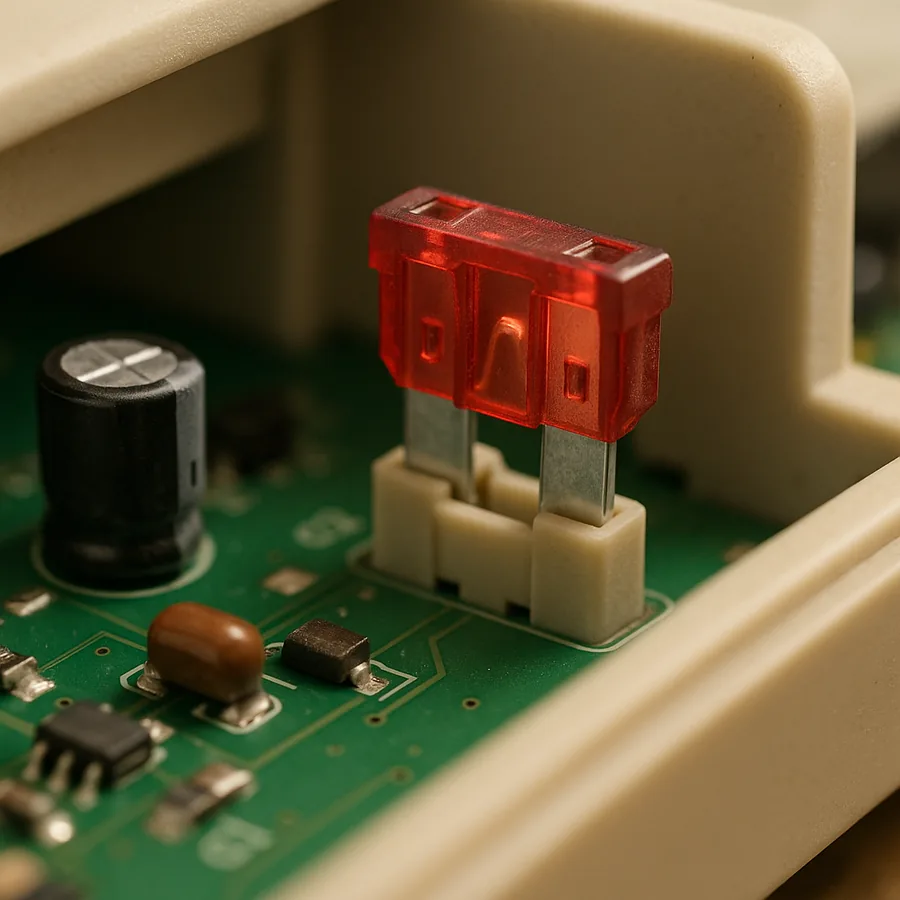
Inside the furnace or air handler, on the control board, sits a small fuse — typically three or five amps, often the blade type used in cars. It protects the 24-volt circuit that powers the thermostat and carries its instructions. When it blows, the thermostat loses power completely and the whole system goes silent, which looks exactly like a failed thermostat and is not.
Why it blows
Almost always because a thermostat wire has shorted somewhere along its run. The usual places are where the wire enters the outdoor unit, where it passes through a wall or a joist, and wherever someone has recently worked near it. Which matters, because replacing the fuse without finding the short means replacing the fuse again.
What to do with this
Not replace it yourself. The fuse is behind a panel on live equipment, and its value is diagnostic rather than practical: knowing the word changes the phone call. “The display is blank, new batteries did not help, the equipment has power — can you check the low-voltage fuse and look for a short in the thermostat wiring?” is a sentence that gets the right van with the right parts, and it costs you nothing to say.
The Modern Problem
The C wire, and why a new smart thermostat misbehaves in an old house
The single most common reason a nest thermostat or an ecobee thermostat behaves strangely in a house where the previous thermostat worked perfectly for fifteen years.
What the C wire is
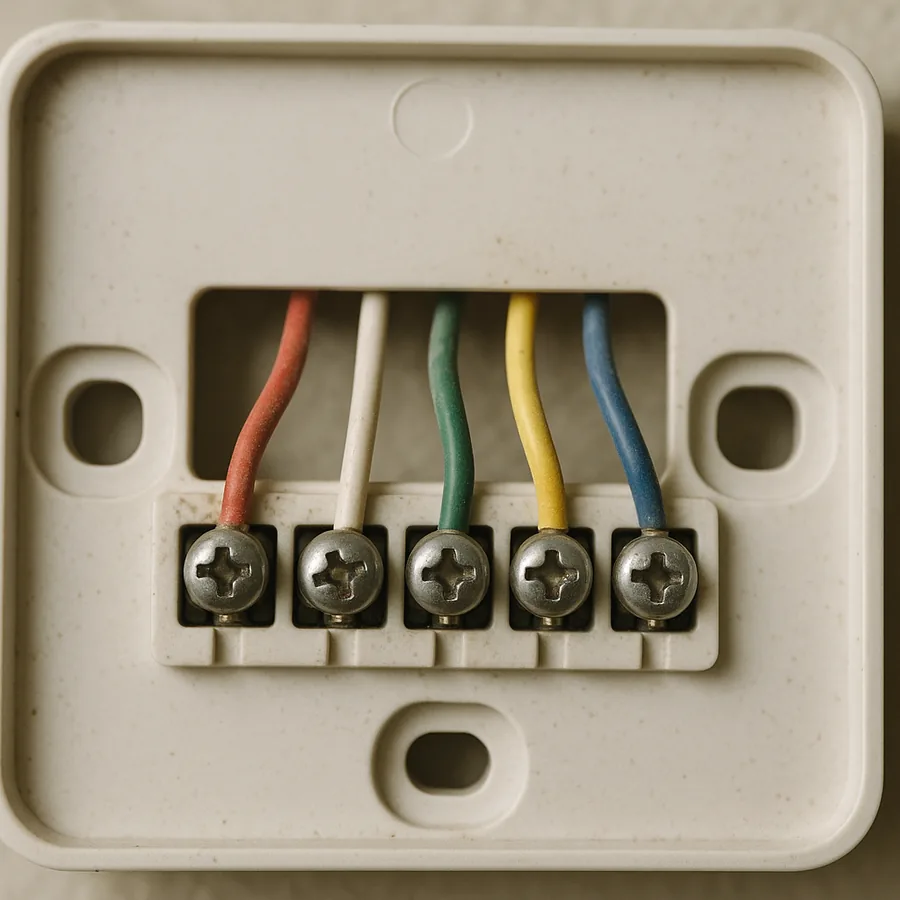
Thermostat wiring carries 24 volts. The R wire brings power in; W, Y and G send instructions out for heat, cooling and fan. The C wire — the common — completes the circuit so that the thermostat can draw continuous power for itself rather than only when it is asking for something. A mechanical thermostat never needed it, because it drew nothing. A screen with wi-fi does.
Power stealing, and what it looks like when it fails
A smart thermostat installed without a C wire will usually work anyway, by taking small amounts of current through the heating or cooling circuit while the system is idle. It is a legitimate technique and it is at the edge of what the circuit tolerates. When it goes wrong it does not fail cleanly — it produces symptoms that look like software: the thermostat restarts by itself, drops off wi-fi, freezes, loses its schedule, or briefly clicks the equipment on and off in a way nobody asked for. Short cycling that started the week a smart thermostat was installed is this until proven otherwise.
How to tell what you have
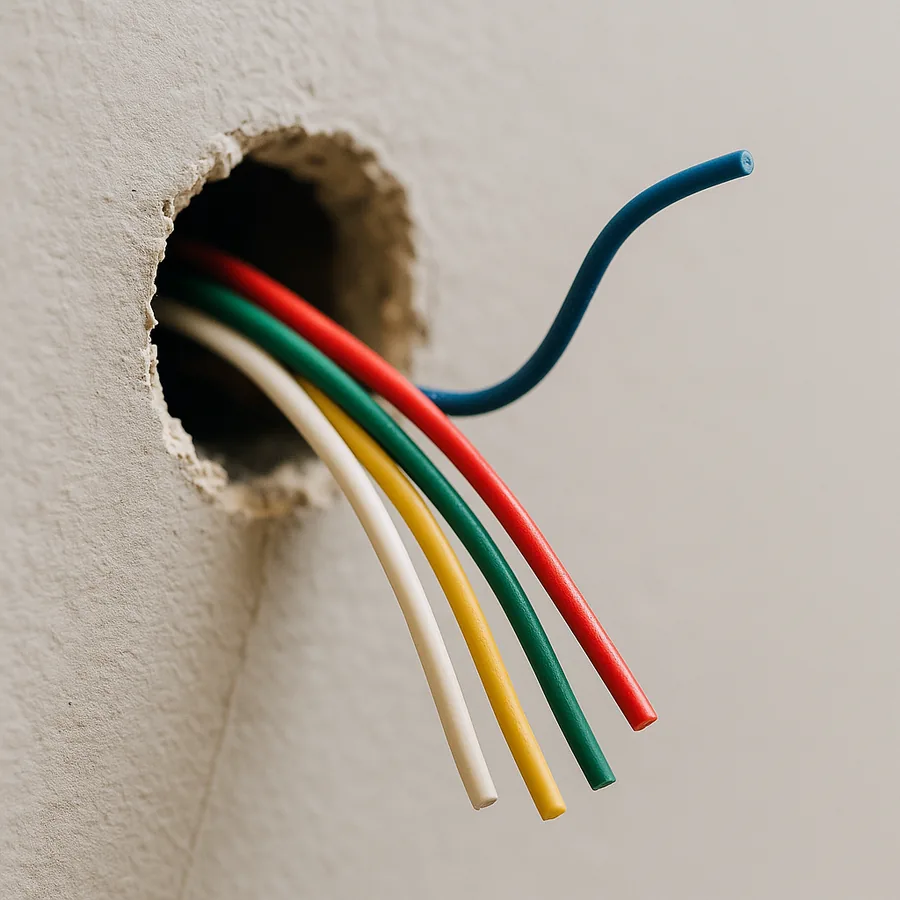
Pull the thermostat off its wall plate and look at the terminals without touching them. If a wire is landed on a terminal marked C, you have one. If there is a spare unused wire in the bundle — often blue — a common wire may be available and simply never connected, which is a fifteen-minute job for somebody with the right access at both ends. If there are only four wires and none spare, the options are running a new cable or fitting an adapter that shares the existing wires.
The honest version of the adapter option
Adapters work and they add a component to a circuit that had none. Where the wall is open or the run is short, a proper common wire is the better answer and it is permanent. Where neither is true, an adapter is a reasonable compromise rather than a defeat.
The Expensive Confusion
It says heat is on, and there is no heat
Searched as thermostat says heat on but no heat, thermostat flashing heat on but no heat, and thermostat clicks but no heat. Three phrasings, one misunderstanding, and it is the misunderstanding that costs people the most.
The display reports the request, not the outcome
When a thermostat shows that heat is on, it is telling you that it has closed a circuit and asked for heat. It has no way of knowing whether anything happened next. Everything between that request and warm air — the ignition sequence, the safety switches, the gas valve, the blower — is invisible to the thermostat, and any of it can decline.
A click is the same news
The click you hear at the wall is the relay closing. It confirms that the thermostat did its job. It says nothing at all about what happened at the other end of the wire, which is why thermostat clicks but no heat is not a thermostat fault in most cases.
What flashing usually means
On many thermostats a flashing heat indicator means the equipment has been asked and has not yet delivered, or that a compressor protection delay is running. A steady indicator with no heat after several minutes is different information from a flashing one in the first five, and it is worth noticing which you have before calling.
So where do you look
At the equipment, not at the wall. A modern furnace announces its own faults with a blink code on the control board, visible through a small window in the panel. Count the flashes and the pattern, write it down, and take it to the phone call. What each code means is on our page about a furnace that runs without heating, along with the causes it points at.
Can a bad thermostat cause no heat?
Yes, but it is further down the list than people assume, and the fan test at the top of this page usually rules it in or out in half a minute. The versions that genuinely are the thermostat: a dead or blank unit sending nothing, a failed relay that clicks without closing, a wire that has come off the W terminal, or a smart thermostat browning out because it has no C wire.
The Summer Version
The thermostat is not calling for cooling
Same wall, different wire, and one difference that catches people out every summer.
The delay that is not a fault
Air conditioners and heat pumps protect their compressors with a built-in delay, typically several minutes, after they stop. If you switch the thermostat off and straight back on, or change the setpoint twice in quick succession, nothing will happen for a while, and that is deliberate. Wait five minutes before concluding anything, and see what a genuine cooling fault looks like if it still does nothing.
When the screen is blank and the cooling is dead
Searched as thermostat is blank and ac not working, and it has a specific and very common cause in summer: a blocked condensate drain. A float switch in the drain line cuts the low-voltage circuit when water backs up, which switches off both the cooling and the thermostat that is powered by it. The system is protecting your ceiling. Clearing the drain restores everything, and the fault is in the plumbing rather than in the wall — which is also why the drain is an item on the seasonal checklist.
Cooling that never starts, with a live thermostat
If the fan runs on On but the cooling never engages, the problem sits in the Y circuit or beyond it: the contactor at the outdoor unit, the capacitor, the compressor protection, or the refrigerant side. Those causes and how to tell them apart are on our page about an air conditioner that is not cooling.
Three Generations
Mechanical, digital and smart: three different sets of faults
We do not publish model-by-model instructions, because they go stale and because the brand on the cover matters far less than the generation behind it. What follows applies whatever name is on yours — Honeywell, Honeywell Home, White Rodgers, Braeburn, Vivint, Carrier, Trane or anything else.
Mechanical
No screen, no batteries, no software. A bimetal coil and a set of contacts. Its failures are physical: dust on the contacts, a unit mounted out of level so the switching point drifts, or simple age. It must sit level to read correctly, which is why an old thermostat that started misbehaving after decorating is often just crooked.
Digital
A screen, batteries or equipment power, and a schedule. Its failures are power and contact: dead cells, a wire loose in a terminal, a display that fades. Simple, cheap, and the generation most likely to be fixed by something free.
Smart
Wi-fi, an app, continuous power draw. Its failures are the two above plus a new category of its own: no C wire, a dropped network, a firmware update, or an app that says one thing while the wall says another. More capability, more ways to be confused.
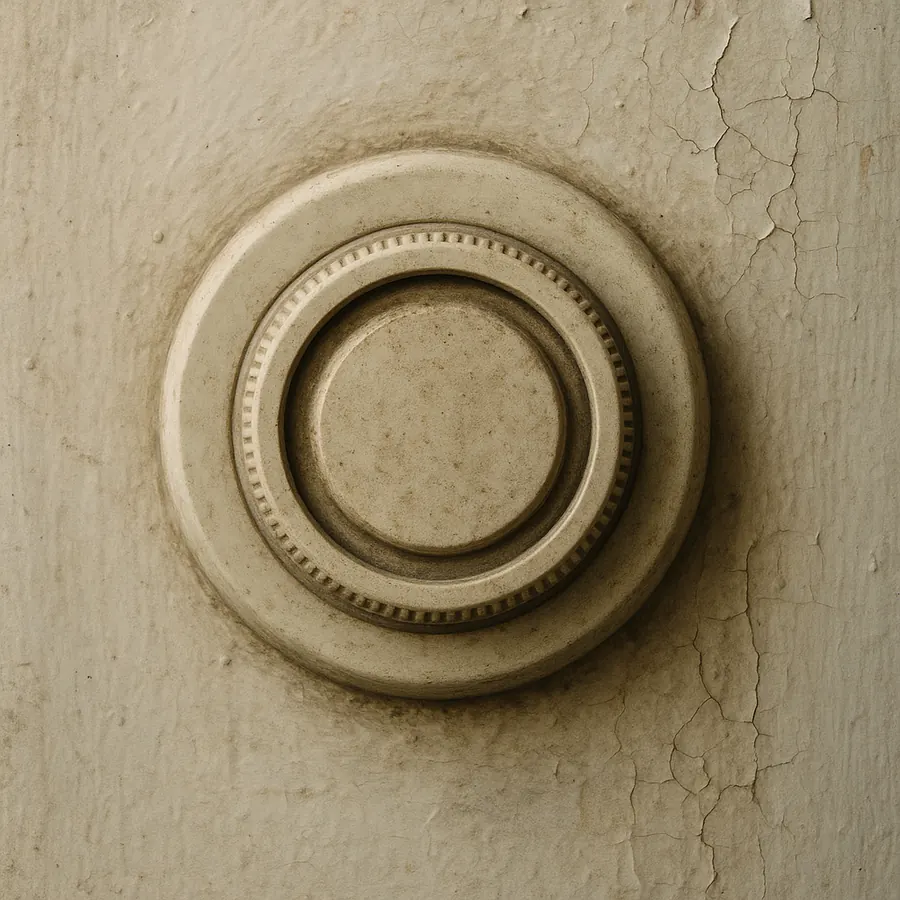
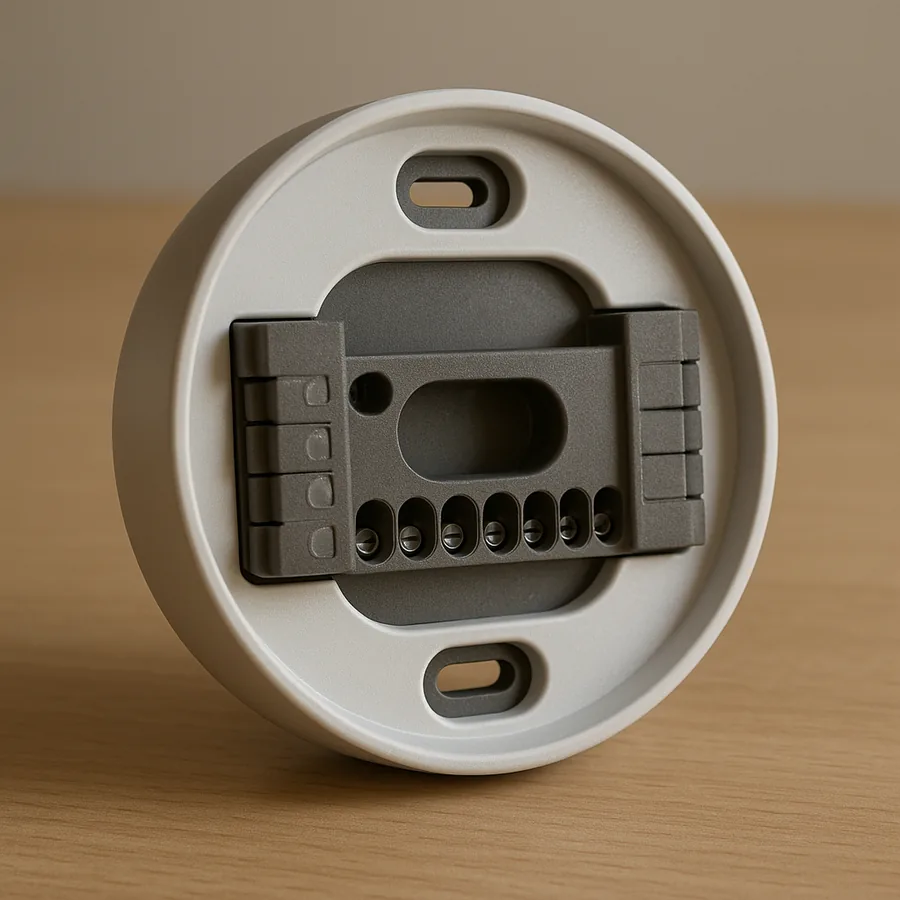
An old Honeywell that has stopped working
Two very different situations share that description. A round mechanical unit from decades ago has contacts and a level to check, and note that the oldest of them contain mercury in a sealed glass ampoule — if you ever remove one, it goes to household hazardous waste collection rather than in a bin. A digital unit from the 2000s has batteries and terminals. Establish which you own before reading advice about either.
When the app and the wall disagree
Trust the wall. The app reports what the thermostat told the manufacturer's servers, which is at least two hops from what is happening in your house. A thermostat that is offline in an app but working correctly on the wall has a network problem, not a heating one.
Right Thermostat, Wrong Reading
Placement and calibration
A thermostat measures the temperature where it is, not the temperature you care about. Sometimes those are very different numbers.
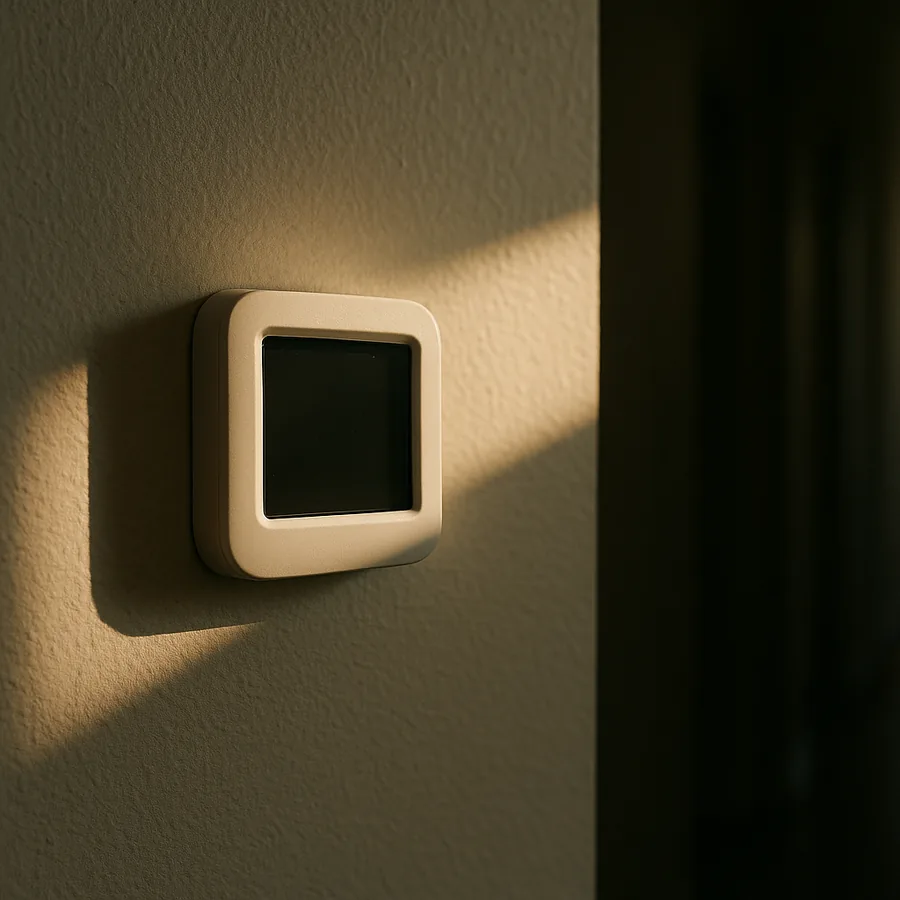
- Direct sunlight. An hour of afternoon sun on the cover reads as a warm house and switches off heating that the rest of the rooms still need.
- An exterior wall. Cold conducts through, the thermostat reads low, and the system overheats the house on the coldest days — exactly when it is most expensive to do so.
- A draught. From a door, a stairwell or an un-insulated wall cavity behind the plate. Air moving across the sensor produces a reading that wanders for no visible reason.
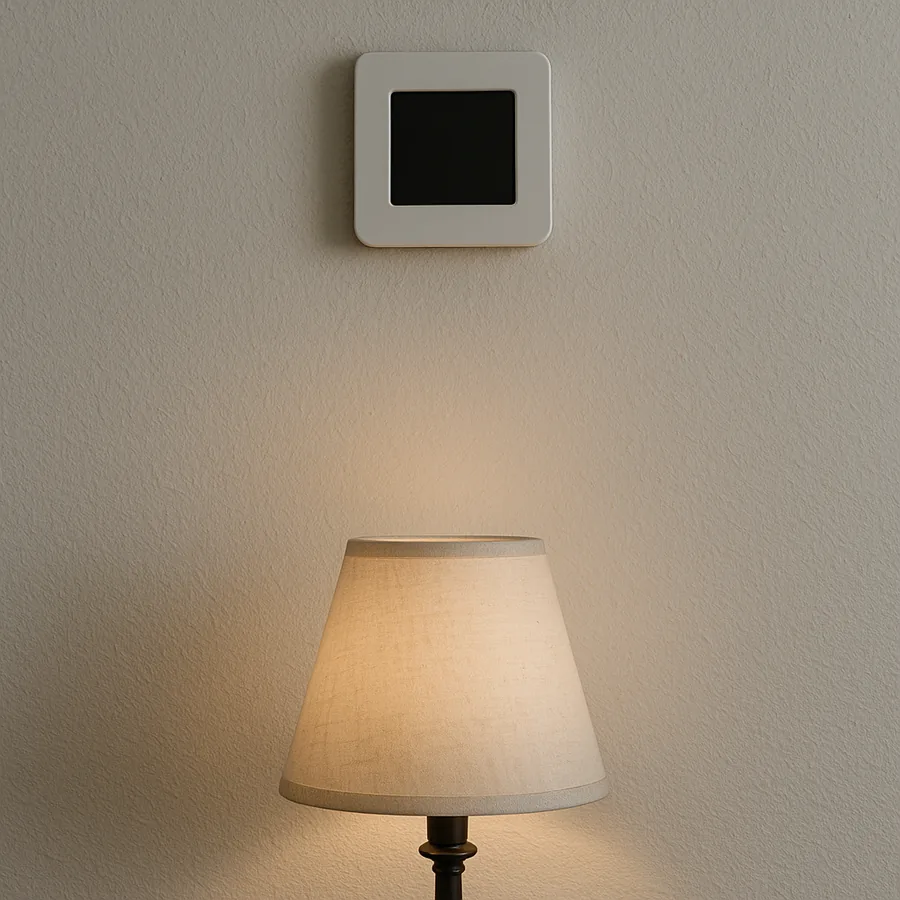
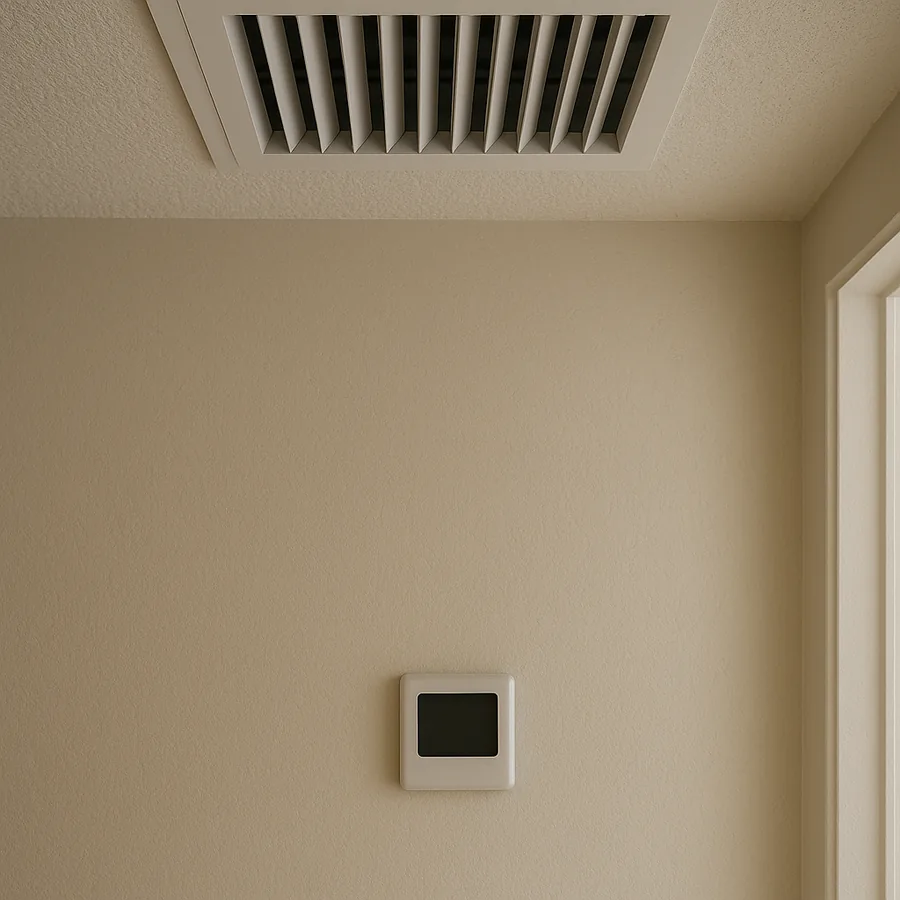
- A heat source nearby. A lamp, a television, a kitchen doorway, or a supply register blowing at it. All of them tell the thermostat the room is warmer than it is.
How to check before you blame it
Put an ordinary thermometer beside the thermostat and leave both alone for an hour. A consistent offset points at calibration or position; a reading that wanders points at a draught or something warm nearby. If the offset is consistent and small, many thermostats can be calibrated in their settings, and that costs nothing.
Moving one
Worth doing when the position is genuinely wrong, and it means running low-voltage cable inside a wall. It is not dangerous work and it is fiddly work, and it is the kind of job where the labor is the price rather than the parts.
The Number Nobody Advertises
What a smart thermostat actually saves
Since a broken thermostat is the moment most people consider upgrading, here is the figure to make that decision with — and it is smaller than the marketing suggests.
The federal figure
ENERGY STAR states it plainly: on average, savings are approximately 8% of heating and cooling bills, or $50 a year. That is not a model or a manufacturer's claim — certified smart thermostats are independently certified, based on actual field data, to deliver energy savings, with real-world data from a large sample of homes analysed and aggregated rather than simulated.
Where the number is bigger, and where it is nothing
ENERGY STAR is equally clear that savings vary with climate, comfort preferences, occupancy and equipment. Homes with high heating and cooling bills, and homes empty for much of the day, do considerably better. A household that is always home, in a temperate climate, already running a sensible schedule on a simple programmable thermostat, is close to the bottom of that range — because most of the saving comes from not conditioning an empty house, and that household does not have one. For comparison, duct leakage in a typical house wastes a fifth to nearly a third of the air moved, which dwarfs anything a thermostat can recover.
The honest way to read $50 a year
It is a real saving and it is not a reason on its own. Buy a smart thermostat for the remote control, the reminders, the usage reports and the convenience — those are worth what they are worth to you. If the case rests entirely on the energy, the payback is measured in years rather than months, and any seller quoting a much larger figure should be asked where it comes from.
Compatibility, before anything else
ENERGY STAR's own buying advice: make sure the smart thermostat you purchase is compatible with your heating and cooling system. On single-stage gas heating with air conditioning almost anything fits. On a heat pump with auxiliary and emergency heat, on multi-stage equipment, or on systems with a humidifier or zoning, compatibility is a genuine constraint and the wrong choice produces a thermostat that runs the wrong stage or ignores half the system.
The Line
Safe checks, and exactly where to stop
Thermostat circuits run at 24 volts, which will not hurt you. That fact is why people take risks here, and it is also not the risk that matters.
What is genuinely yours to do
- Everything at the interface. Mode, setpoint, fan setting, schedule, batteries, a factory reset if the manual describes one, and a look at the terminals without touching them.
- Power-cycling the equipment at its breaker or the switch beside it, which is the standard first move for a frozen thermostat and carries no more risk than switching off a light.
- Checking the obvious around the equipment — panel seated, breaker on, filter clear — because those explain a share of what people bring to this page.
What is not, and why
Bridging or jumpering thermostat wires to force the equipment on is a real technique used by people who do it daily. On a homeowner it is how a control board fuse dies, and occasionally how a transformer dies with it. The saving from the test is minutes; the cost of getting it wrong is a part, a visit and a day. Replacing a control board fuse is the same argument: it is behind a panel on live equipment, and a blown fuse means there is a short to find rather than a fuse to change.
One thing that is not about voltage at all
If your heating is gas or oil and you smell rotten eggs or sulphur at any point, stop reading, do not touch switches, leave the house and call the gas utility from outside. And if a carbon monoxide alarm sounds, everyone goes outside and the call is 911. Neither of those is a thermostat problem, and both outrank one.
Buy Or Not
Replace the thermostat, or leave it alone
Thermostats are cheap, which is exactly why they get replaced when they are not the problem. Three questions settle it.
Did the fan test pass?
If the blower ran on Fan On, the thermostat has power and its circuit works. Replacing it will change nothing about a heating or cooling failure, and the money is better spent on the diagnosis you actually need.
Does the fault survive a power cycle and fresh batteries?
A thermostat that fails again within days of a reset, with good batteries, has a real problem — but check whether that problem is the thermostat or its power supply first, because a smart thermostat without a C wire fails in exactly this way and a new one will fail identically.
Will a new one fit what you own?
Count the wires at the terminals and note what they are landed on. Heat pumps, multi-stage systems, and anything with auxiliary or emergency heat need a thermostat that understands them. This is the step people skip, and it is the reason a proportion of new thermostats work in one mode and not another.
How long do thermostats last?
A mechanical one can run for decades and many still are. A digital one typically lasts ten years or more, and a smart one is usually replaced for software reasons rather than hardware ones — the opposite of how equipment replacement decisions work — support ends, an app changes, a feature you relied on goes away. None of them has a service interval, and none should be replaced on age alone.
On The Phone
What to say when you call
Four sentences. Each one saves time on the visit, and time on the visit is the part you are paying for.
| Say this | What it changes | A weak answer back |
|---|---|---|
| “On Fan On, the blower does / does not run.” | Splits the problem in half before anyone leaves the depot, and tells them whether to bring a thermostat. | Indifference to the result. |
| “The display is blank and new batteries did not help.” | Points straight at equipment power and the low-voltage fuse rather than at the wall. | “We’ll bring a new thermostat.” |
| “The furnace is showing this blink code.” | Often decides which part rides in the van. The most valuable sentence a homeowner can offer. | No interest in the code. |
| “It is a smart thermostat and I do not know if it has a C wire.” | Flags the commonest modern cause before the technician has to find it. | Unfamiliarity with the term. |
What we do, and what we do not
We are not a contractor. We do not fit thermostats, we do not sell them, and we take a fixed fee for an introduction that is the same whether your visit ends in a $30 part or a system replacement. That is the only reason a page on this subject can afford to open by telling you not to buy anything. When you want somebody to look, we connect you with independent licensed and insured heating and cooling companies; how that works is on our about page, and everything else we publish starts from the home page.
Straight Answers
Thermostat questions, answered
Why is my thermostat not working?
Start with the fan test: set the fan to On. If the blower runs, the thermostat has power and its circuit to the equipment is intact, so the fault is downstream and a new thermostat will not fix it. If nothing happens, the candidates are dead batteries, no power at the equipment, a blown low-voltage fuse on the control board, or the thermostat wiring itself.
My thermostat screen is blank. What now?
Fresh alkaline batteries, correctly oriented, first. If that does not help, the thermostat is powered by the equipment: check the breaker, the switch beside the furnace, and that the front panel is fully seated against its safety switch. If the screen is still blank, ask a technician to check the low-voltage fuse on the control board and to look for a short in the thermostat wiring.
The thermostat says heat is on but there is no heat. Is the thermostat broken?
Usually not. The display reports what it asked for, not what happened; everything between that request and warm air is invisible to it. Go and look at the furnace instead: a blink code on its control board says why. The same applies to a thermostat that clicks — the click is the relay closing, which confirms the thermostat did its job.
Can a bad thermostat cause no heat?
Yes, but less often than assumed, and the fan test settles it in half a minute. The versions that really are the thermostat: a dead unit sending nothing, a relay that clicks without closing, a wire off the W terminal, or a smart thermostat browning out because it has no C wire.
My thermostat stopped working after I changed the batteries.
Check the orientation of each cell first, which is the commonest cause by a distance. Then check the chemistry — alkaline unless the manufacturer says otherwise. Then consider that pulling the unit off its plate can loosen a wire in a terminal, and that some models lose their schedule on a battery change, so the thermostat works and simply no longer does what it used to at six in the morning.
What is a C wire and do I need one?
The common wire completes the 24-volt circuit so a thermostat can draw continuous power for itself. Mechanical thermostats never needed one. Smart thermostats do, and without one they take power through the heating or cooling circuit, which produces restarts, dropped wi-fi, frozen screens and short cycling. If a smart thermostat is behaving strangely in a house where the old one was fine, this is the first thing to check.
How much does a smart thermostat actually save?
ENERGY STAR puts it at approximately 8% of heating and cooling bills, or $50 per year on average, certified on real field data rather than modelled. Savings are larger in extreme climates and in homes empty much of the day, and close to nothing for a household that is always home and already runs a sensible schedule.
Do you fit or sell thermostats?
No. We are a matching service paid a fixed fee for the introduction rather than a share of anything sold, so a $30 part earns us exactly what a new furnace does. We publish research and connect homeowners with independent licensed and insured heating and cooling companies.
Where This Comes From
Sources
- Smart thermostat savings, certified on field data — ENERGY STAR smart thermostat FAQ, and ENERGY STAR smart thermostats.
- What certification requires — ENERGY STAR key product criteria for smart thermostats.
- Thermostat settings on the seasonal checklist, and filter frequency — ENERGY STAR maintenance checklist.
- Heating and cooling as a complete system — ENERGY STAR, heat and cool efficiently, and the ENERGY STAR HVAC fact sheet.
- Carbon monoxide alarms and what to do if one sounds — U.S. Consumer Product Safety Commission, and CDC on carbon monoxide poisoning.
- Home heating fire safety — U.S. Fire Administration.
- Equipment ratings as tested — AHRI certified product directory.
Our editorial standards explain how we source and check what we publish. We do not publish model-specific instructions or wiring diagrams, and nothing here is a diagnosis of your equipment. We are a referral service rather than a contractor. Last updated .
Before you call anyone
The independent match — we are paid for the introduction, not for the size of your job
Most roofing advice is written by the company that wants to do the work. That is not a failing of the people who read it; it is a defect in who is talking. The estimate, the diagnosis and the invoice come from one party, and no amount of care on your side fixes that.
We are built the other way round. We do not repair roofs and we do not sell materials, so the payment reaches us when you are connected to a licensed, insured roofing company — the same amount whether your roof needs an eight-hundred-dollar repair or a twenty-thousand-dollar replacement. Nobody here has a reason to talk you into the larger number. How we make money and how we research are both written down.
Waiting is the one thing that actually costs money. An insurance clock runs from the date of the damage rather than the date you noticed it, and damage that sits through a season stops reading as sudden and starts reading as wear — which is the exclusion that pays nothing. And if your roof is simply worn out, say so on the call. No claim will pay for age, we will tell you that plainly, and you will have lost nothing but the call.