Indoor Air Quality
Indoor air quality — what actually works, in the order the EPA puts it
The federal guidance lists three ways to improve the air in a house, and it ranks them: remove the source, then ventilate, then clean the air. Almost everything sold under the words “indoor air quality” is the third one. This page follows the federal order instead, which means it spends its first section telling you how to fix things without buying anything.

The Order Of Operations
What the federal hierarchy says, and what the industry sells
Quoted rather than paraphrased, because the ordering is the whole argument and it is not ours.
Three strategies, in this sequence
EPA lists them as source control, improved ventilation, and air cleaners and filtration — in that order. And it is direct about which one to reach for: “Usually the most effective way to improve indoor air quality is to eliminate individual sources of pollution or to reduce their emissions.” Elsewhere on the same page: “For most indoor air quality problems in the home, source control is the most effective solution.”
It is also the cheapest, and EPA says why
Source control “is also a more cost-efficient approach to protecting indoor air quality than increasing ventilation because increasing ventilation can increase energy costs.” So the most effective option is also the one that costs least to run, which is an unusual thing for the best answer to be.
Now look at what is being sold
Search the phrase that brought you here and count how many results are companies offering to install something. Air purifiers, ultraviolet lamps, ionizers, whole-house filtration, duct treatments. Every one of those is level three on a three-level list, offered before anybody has asked what the source is. That is not necessarily dishonest — it is what a company that installs equipment has to sell — and it is why the order gets inverted so consistently.
What we sell, so you can weigh this
Nothing. We are paid a fixed fee for an introduction, identical whether you end up buying a whole-house system or opening a window, which is the only reason a page on this subject can afford to start with the free options.
Level One
Source control: the first move, and nobody sells it
It is unglamorous, it is mostly free, and according to the federal guidance it is the most effective thing you can do. Here is what it means in an ordinary house.
Moisture, first and always
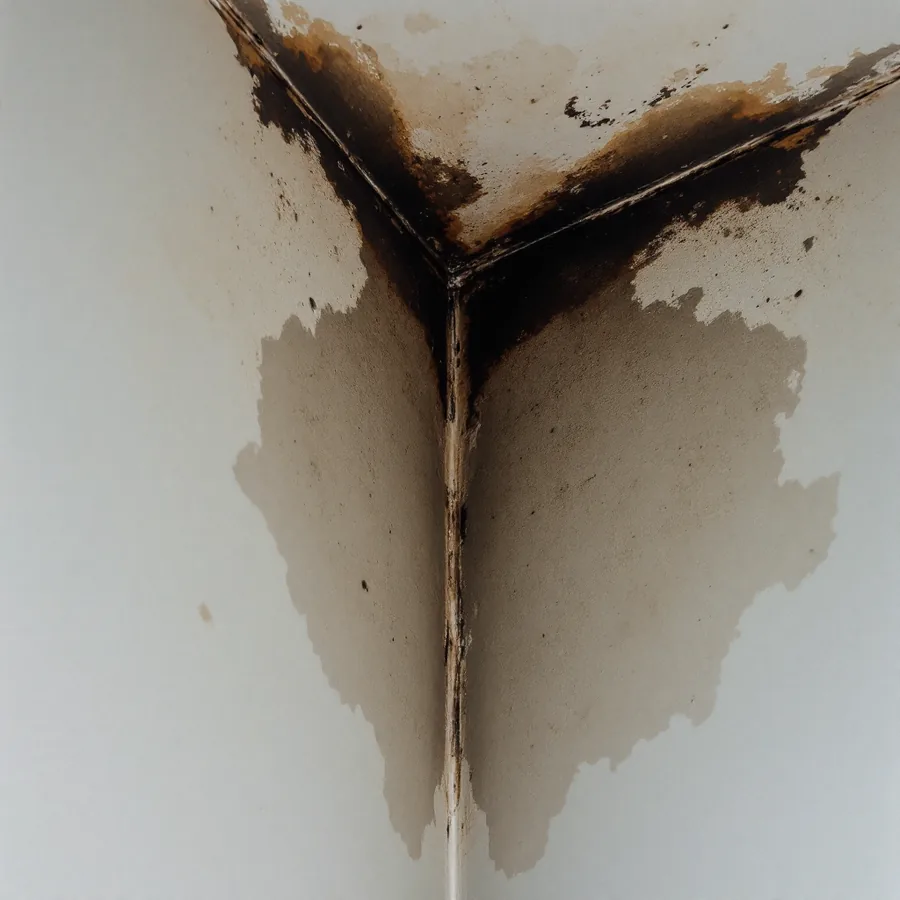
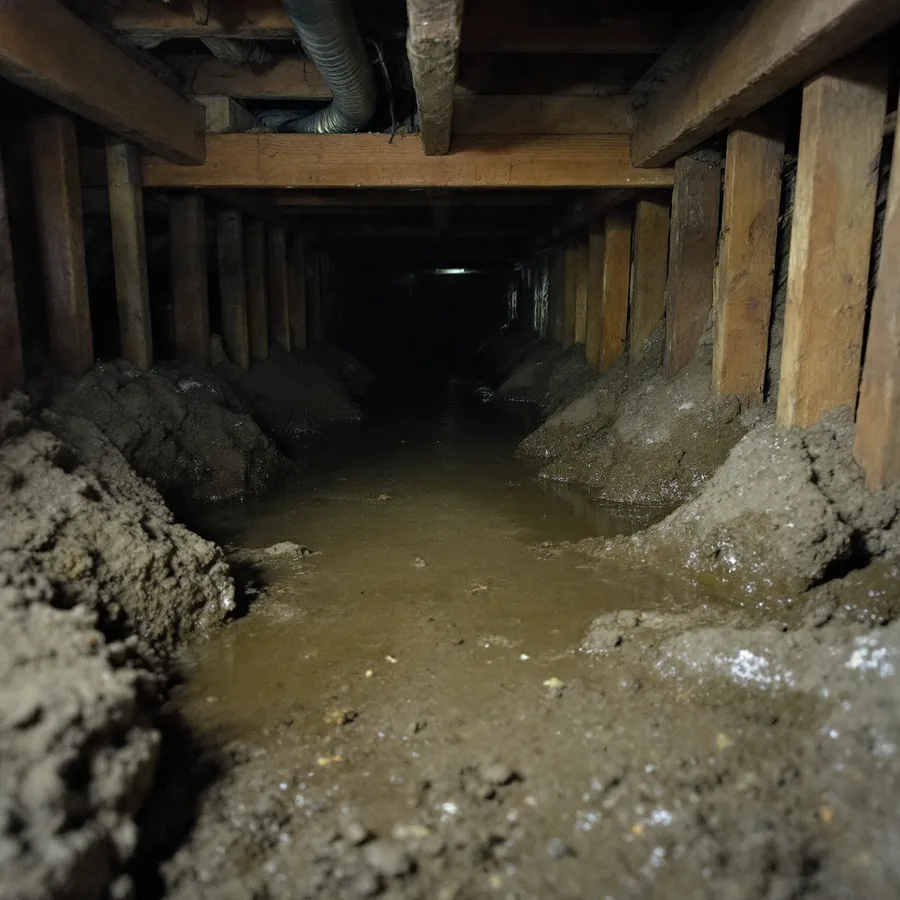
Damp is the source behind most persistent air complaints in a home, because mould needs water and dust mites need humidity. That makes a leaking condensate drain, a damp crawlspace, a bathroom fan venting into an attic, or condensation on ductwork an air quality problem rather than a plumbing one. Find the water and the smell usually leaves with it.
Combustion, and the thing that shares your air
Anything that burns fuel indoors produces combustion gases: a furnace, a water heater, a gas range, a fireplace. Kept properly vented and inspected they are safe; unvented or backdrafting they are not, and the inspection belongs on the seasonal checklist. Duct leakage matters here too, because leaks change the pressure balance of a house and an unbalanced house can pull combustion gases back down a flue instead of venting them.
The attached garage
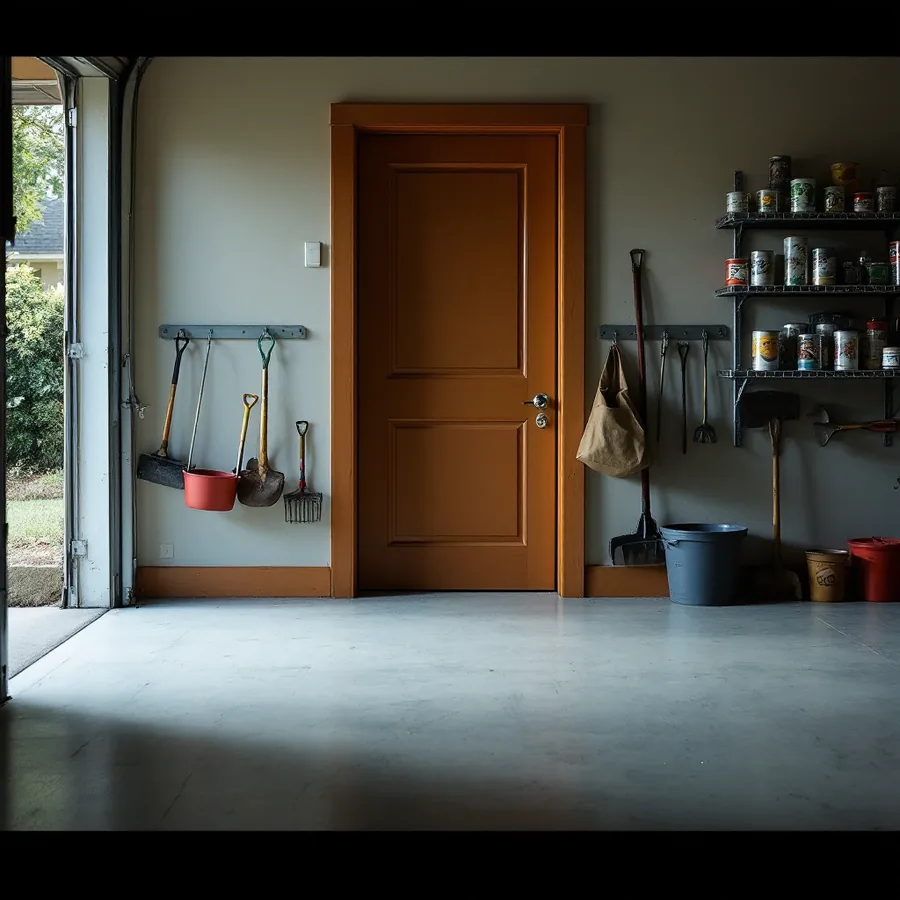
The single most under-appreciated source in American housing. Exhaust, fuel, solvents, paint and lawn equipment sit on the other side of a door from your living space, and any return duct leaking in that garage will import all of it continuously. Keeping the garage door to the house closed and sealing return ducts costs almost nothing.
What comes in on purpose
Cleaning products, air fresheners, hobby materials, new furnishings and finishes. None of this needs to become a lifestyle project: the useful version is simply to notice what was introduced shortly before a complaint began, because sequence is the cheapest diagnostic there is.
Smoking, and the one rule with no nuance
Nothing else on this page moves the number as much, and no filtration strategy compensates. It belongs at the top of level one and it is the reason level one is called source control rather than source reduction.
Level Two
Ventilation, and the energy it costs
Second on the list, and second for a reason EPA states plainly: it works, and it puts your heating and cooling bill up.
What ventilation actually means here
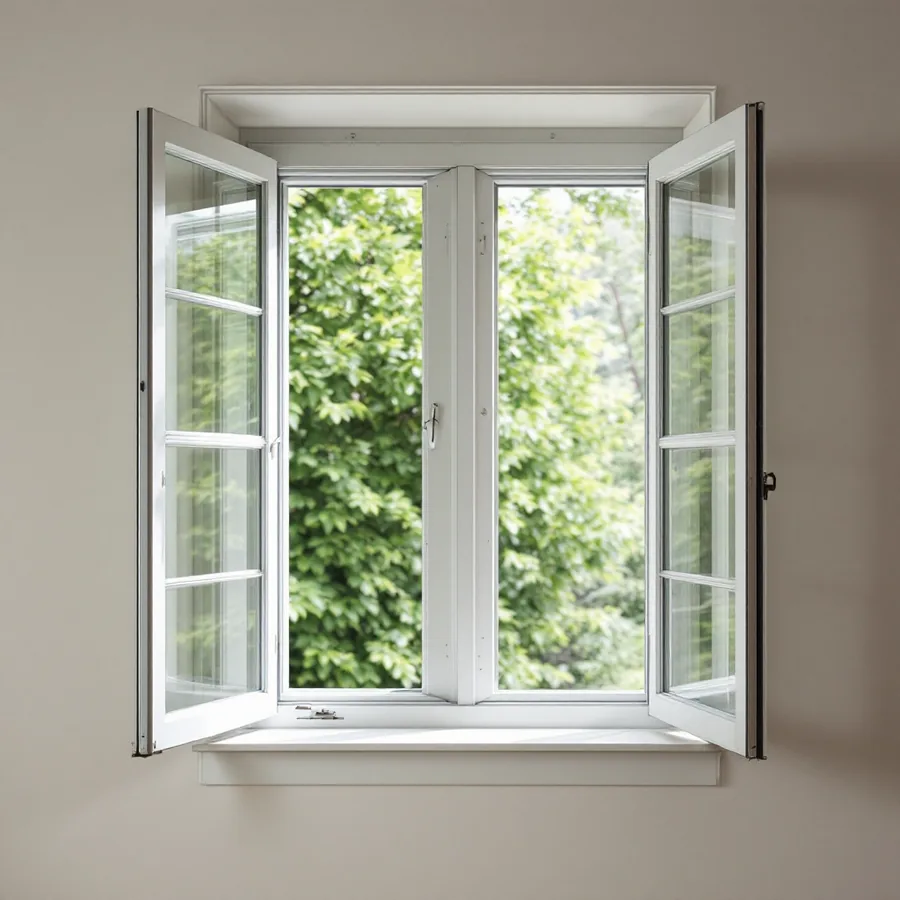
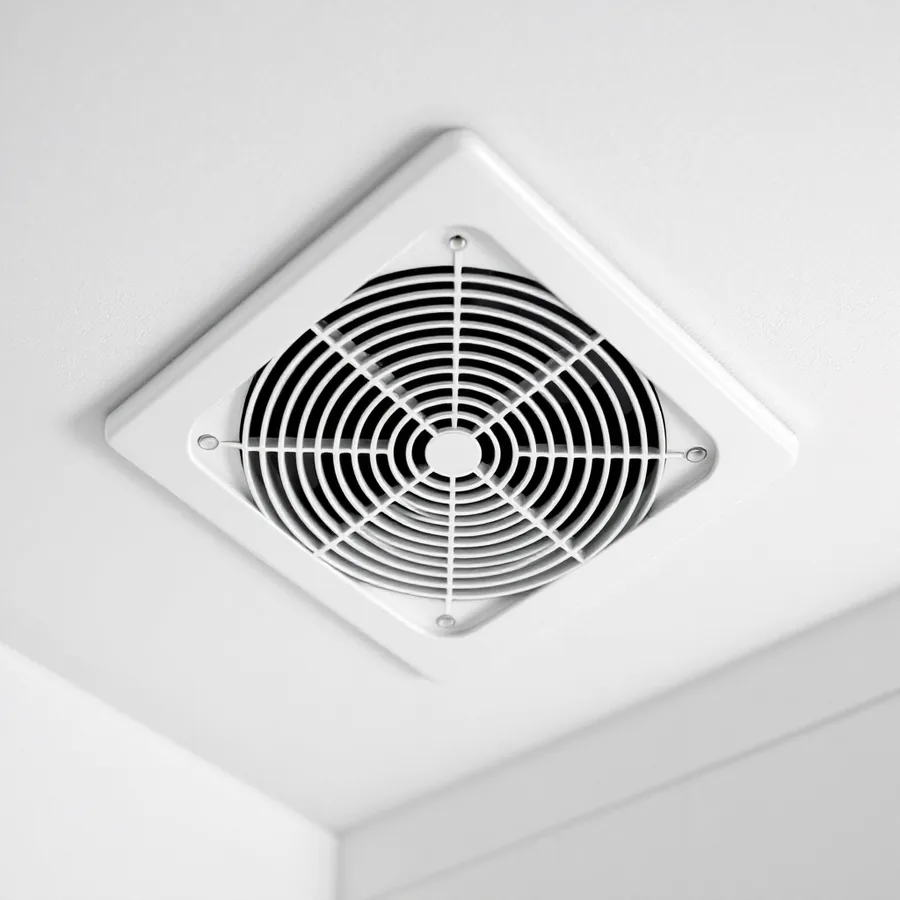
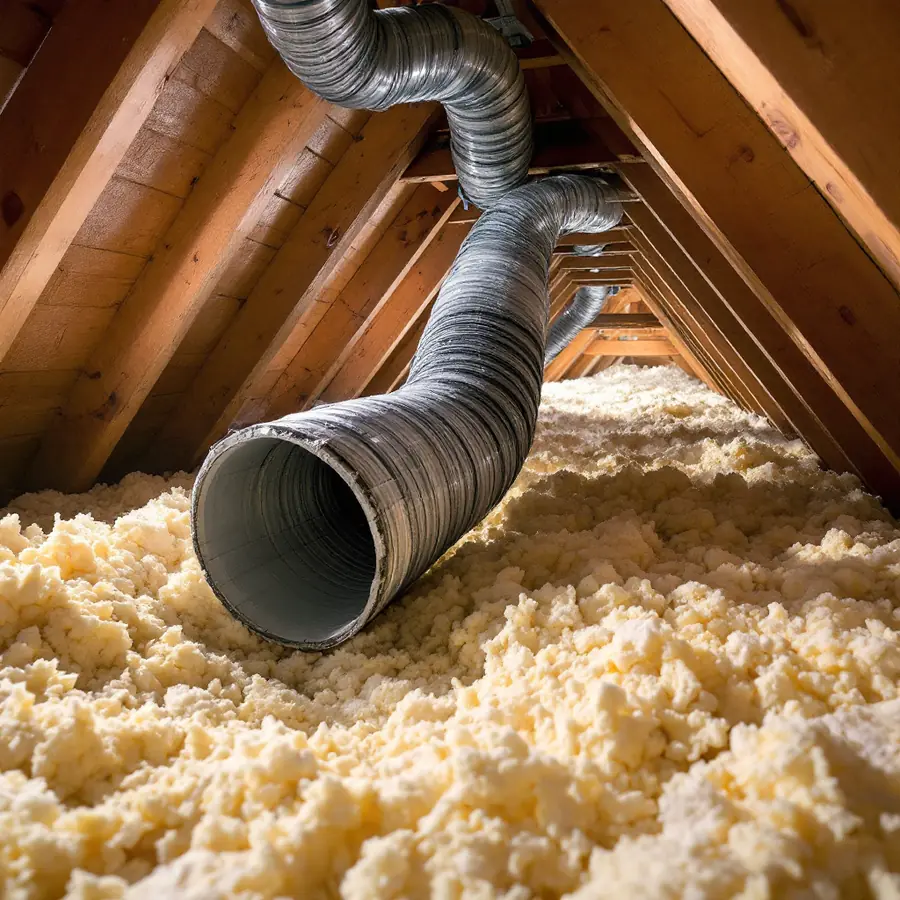
Replacing indoor air with outdoor air, deliberately. In most older houses this happens by accident through leaks; in a newer or recently air-sealed house it has to be arranged. Opening windows is the free version and it is genuinely effective in mild weather. Running bath and kitchen exhaust fans during and after the activity that generates moisture or fumes is the targeted version — and if those fans discharge into an attic rather than outside, that is a ductwork fault wearing a ventilation costume — and it is the one most households under-use.
The tightness paradox
A well-sealed house costs less to heat and cool and exchanges less air with outside, so whatever is generated indoors stays longer. That is not an argument against air sealing — it is an argument for making ventilation deliberate rather than accidental. If your house has been weatherized and the air feels stale, this is the mechanism.
Heat and energy recovery ventilators
An ERV or HRV brings in outdoor air while recovering most of the heating or cooling energy from the air it exhausts, which is how a tight house gets fresh air without the energy penalty EPA warns about. It is a real piece of equipment with a real installation cost, quoted the same way as any other addition to the system, and it is the level-two answer for a house that genuinely cannot ventilate any other way.
When ventilation is the wrong tool
When the outdoor air is the problem — wildfire smoke, a pollen peak, heavy traffic outside. On those days the hierarchy inverts temporarily and filtration is what you have. That is the exception rather than the rule, and it is worth knowing it is an exception.
Which Level Is Yours
Work out what to do first
Three questions, nothing sent anywhere. Note in advance that most of its answers are “do not buy anything yet” — that is not modesty, it is the federal ordering applied honestly.
A referral that ends in nothing being installed pays us the same as one that ends in a whole-house system. That is why this tool has a row headed “do not buy” at all.
Level Three
Air cleaners: what they do, and what EPA says they do not
Third on the list is not the same as useless. It is the same as third, and knowing the limits is what turns a purchase into a decision.
What filtration is good at
Particles. Dust, pollen, pet dander, smoke particulate, mould spores — anything with physical size gets caught by a filter of adequate rating and adequate airflow. On a day when the outdoor air is worse than the indoor air, this is the tool that helps.
Three limits, in EPA's own words
- “Air cleaners are generally not designed to remove gaseous pollutants.” Which covers most of what people mean by a smell. If the complaint is odour rather than dust, filtration is the wrong department.
- “Table-top air cleaners, in particular, may not remove satisfactory amounts of pollutants from strong nearby sources.” A small unit against an active source loses, and the household concludes that air cleaners do not work when what failed was the match-up.
- “At present, EPA does not recommend using air cleaners to reduce levels of radon and its decay products.” The one hazard in this subject with a federal action level is not addressed by the product category the subject is famous for.
Portable, or in the ductwork
A portable unit treats the room it is in and can be moved to where the problem is, which is often the right answer for one bedroom. Something installed in the ductwork treats whatever air the system moves, which means it only works while the blower runs and only reaches rooms the ducts reach properly — which is a question about duct design rather than about the accessory. If your ducts leak or are badly balanced, a whole-house cleaner inherits both faults — and duct leakage in a typical house runs to a fifth or nearly a third of the air moved.
The filter you already own
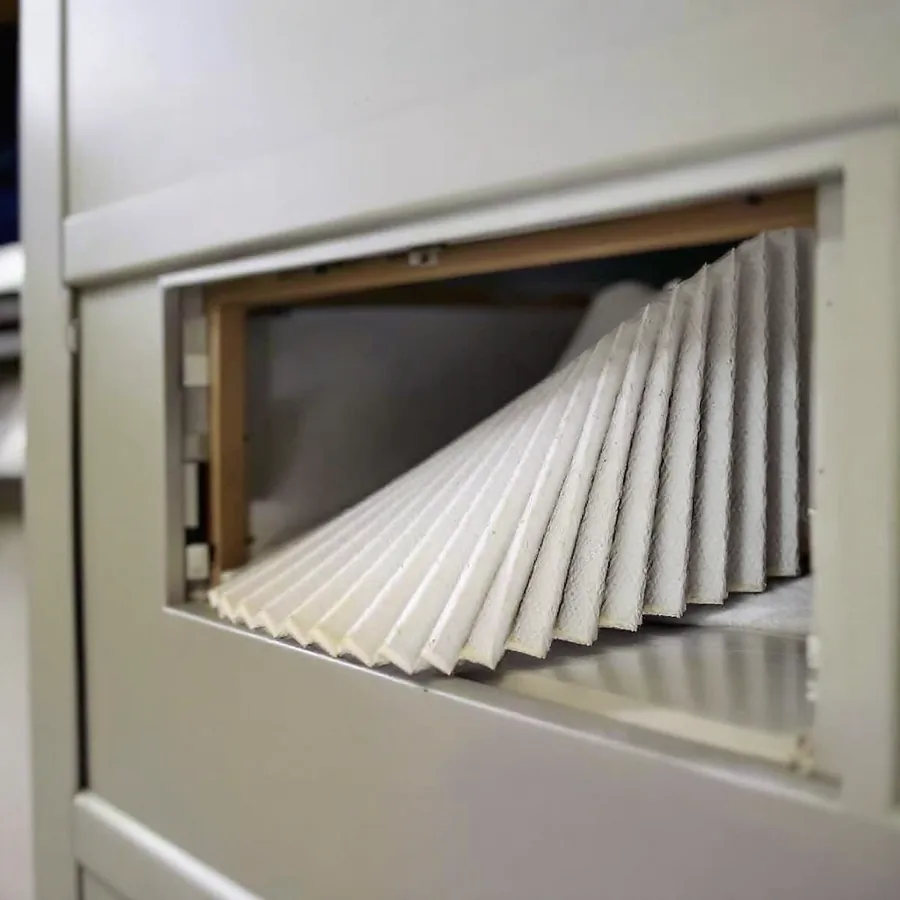
Before buying a second machine, look at the first one. EPA's guidance is to choose a filter of at least MERV 13, or as high a rating as your system fan and filter slot can accommodate — that second clause matters, because a denser filter adds resistance. How to settle it is on our maintenance page, and the answer is a static pressure measurement rather than an opinion.
The Product To Refuse
Ozone generators, in EPA's words rather than ours
Still sold, still marketed for homes, and the subject of an unusually direct federal page. We are quoting rather than characterizing, because on this one the quotes are stronger than anything we would write.
On whether they work
“Available scientific evidence shows that, at concentrations that do not exceed public health standards, at concentrations that do not exceed public health standards, ozone is generally ineffective in controlling indoor air pollution.” And separately: at those concentrations ozone “has little potential to remove indoor air contaminants.” Read that carefully — it says the amount that is safe to breathe does not do the job, which leaves only the amount that is not safe to breathe.
On what it does to you
“When inhaled, ozone can damage the lungs. Relatively low amounts of ozone can cause chest pain, coughing, shortness of breath and, throat irritation.” EPA adds that ozone “may also worsen chronic respiratory diseases such as asthma as well as compromise the ability of the body to fight respiratory infections” — which is notable, because respiratory symptoms are exactly what sends people looking for an air cleaner.
On how it is sold
EPA is blunt about the marketing: “Often the vendors of ozone generators make statements and distribute material that lead the public to believe that these devices are always safe and effective in controlling indoor air pollution.” On the specific claim that ozone renders chemical contaminants harmless with only carbon dioxide, oxygen and water as by-products, EPA's verdict is one word: “This is misleading.”
What to do with this in practice
If a device is described as producing “activated oxygen”, “energized oxygen”, or as an ionizer that generates ozone as a by-product, ask directly whether it produces ozone and at what rate. Some ionizing air cleaners produce ozone incidentally rather than deliberately, which is a different product with the same question attached. A supplier who cannot answer plainly has answered.
The Most-Asked Question Here
Air purifier or humidifier — what is the difference?
Around fourteen thousand searches a month ask this in half a dozen phrasings, which suggests the answer is not easy to find without an advertisement attached. It takes two paragraphs.
They do opposite kinds of thing
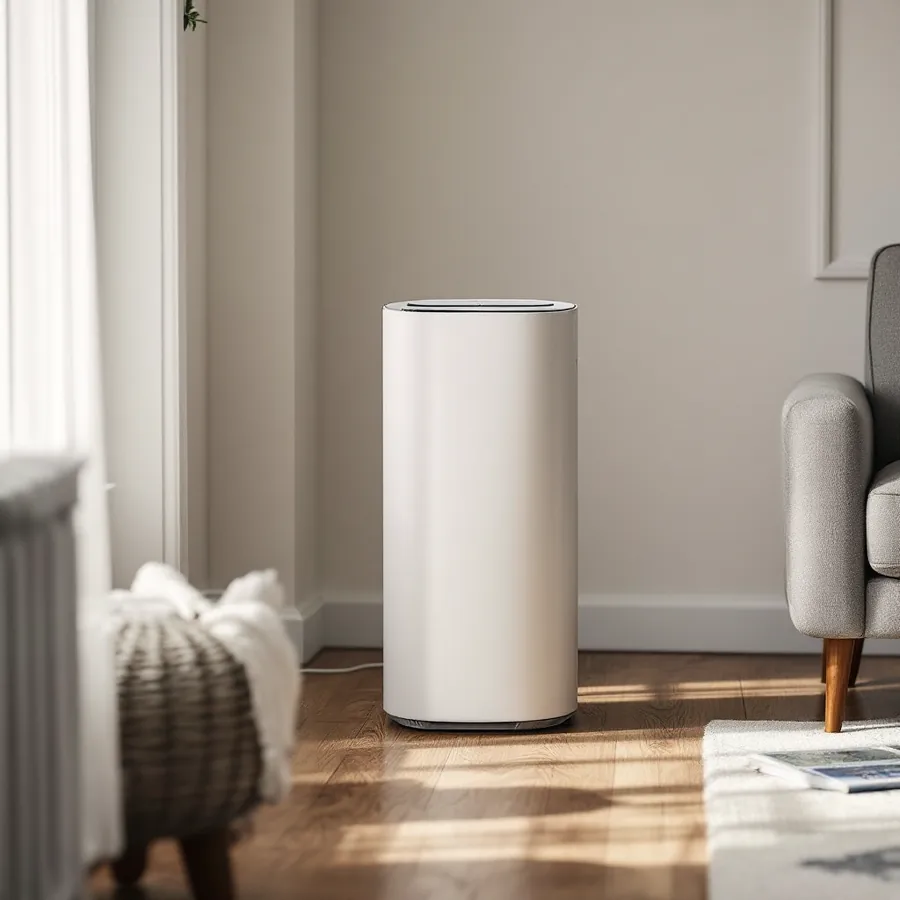
An air purifier removes particles from air. It takes air in, passes it through a filter, and puts it back with less dust, pollen or dander in it. It changes what is in the air.
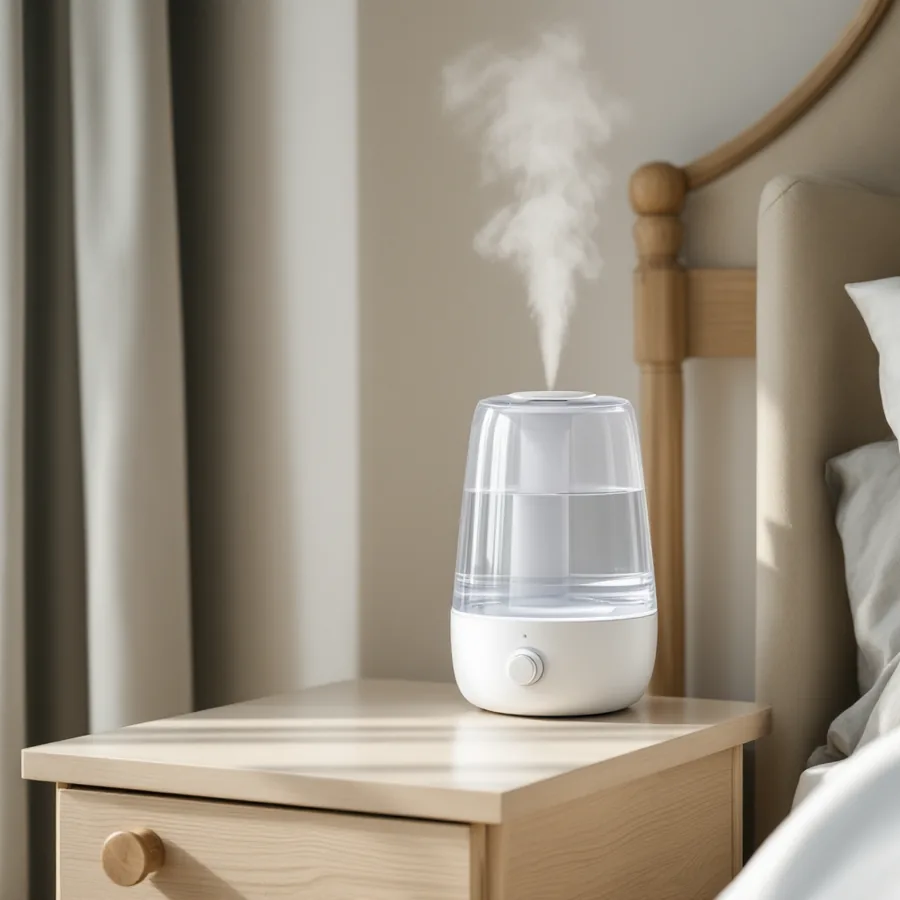
A humidifier adds water vapour to air. It changes how dry the air is. It removes nothing and filters nothing, and a humidifier that is not cleaned can itself become a source — standing water grows things, and a machine that then aerosolizes them is working against you.
So which one do you need
Match the machine to the complaint. Sneezing, visible dust, pet allergies, smoke haze: that is particles, and a purifier is the relevant device. Static shocks, cracked woodwork, dry throat in winter, nosebleeds: that is dryness, and a humidifier addresses it. Musty smell, condensation on windows, mould: that is too much moisture, and the device you need is a dehumidifier or, better, level-one source control on whatever is wet.
The combination units
They exist and they are a compromise, because the two functions want different things from the airflow path and because combining them puts a water reservoir inside the machine that is filtering your air. If you genuinely need both and space is tight, they are a reasonable purchase. If you only need one, buying both in one box is buying a maintenance burden you did not need.
Whole-house versions of both
Both exist as ducted equipment: a whole-house humidifier fed from your plumbing and controlled by a humidistat, and media or electronic air cleaners in the duct. Both are contractor-installed, both only work while the system runs its blower, and both depend on the ductwork actually reaching the rooms — which is a question about your ducts rather than about the accessory.
The One With A Number
Radon: the only home air hazard with a federal action level
No smell, no symptom, no clue — and the only item on this page where a specific measured value tells you to act.
Why it is on a heating and cooling site at all
Because it is the highest-consequence thing in the air of an ordinary house, and because the industry that sells “indoor air quality” equipment mostly does not mention it. EPA: radon is the number one cause of lung cancer among non-smokers and the second leading cause overall, and it is “responsible for about 21,000 lung cancer deaths every year”, with about 2,900 of them among people who have never smoked.
The number
The action level is 4 pCi/L (150 Bq/m3) — the level at which the Surgeon General urged Americans to test their homes and to remedy the problem as soon as possible. It is the rarest thing in this whole subject: a threshold with a decision attached.
What actually addresses it
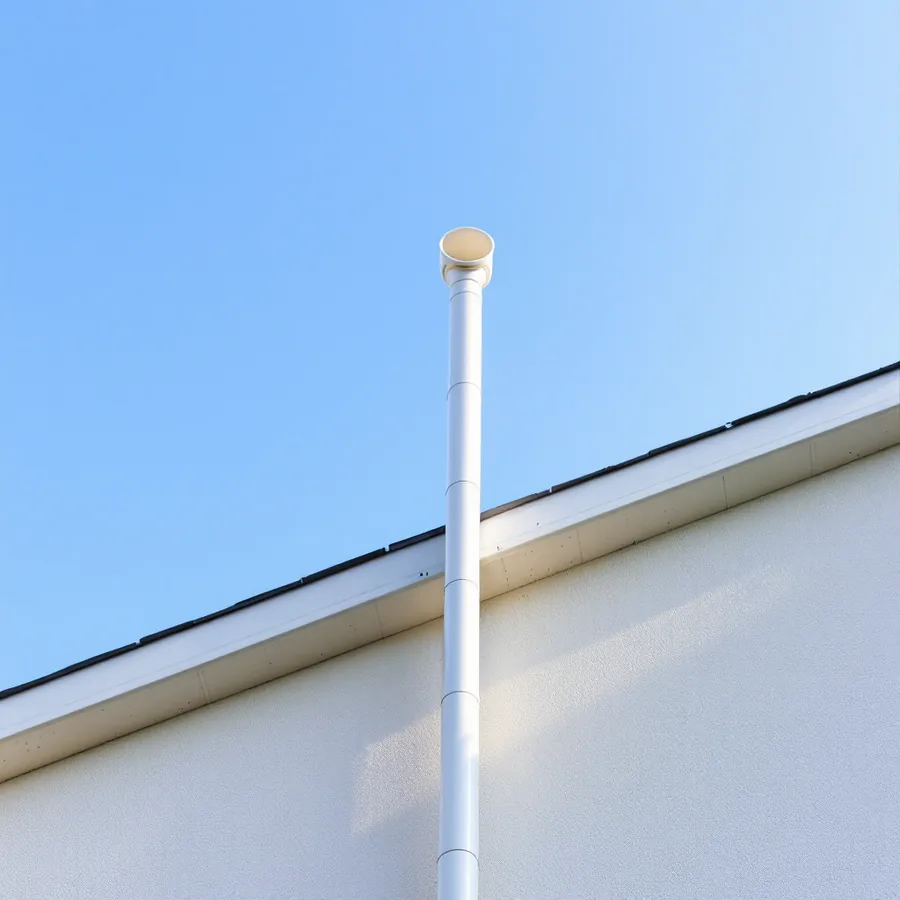
Testing, then mitigation if the result warrants it — typically a sub-slab depressurization system that vents soil gas above the roofline, which is specialist work rather than routine service. What does not address it, in EPA's own words, is an air cleaner: “At present, EPA does not recommend using air cleaners to reduce levels of radon and its decay products.”
The uncomfortable comparison
A household worried about its air will often spend several hundred dollars on a purifier and nothing on a radon test, when the test costs a fraction of that and is the only measurement here with a federal threshold behind it. If you take one action from this page and your house has never been tested, make it that one.
Measuring
Testing: what is worth measuring, and what is theatre
Searches for indoor air quality testing, monitors, meters and check-ups run to thousands a month. Some of it produces a decision and some of it produces a number you cannot act on.
Worth measuring: radon
A short-term test kit is inexpensive, widely available, and produces a result against a published action level. It is the clearest cost-to-value ratio in this entire subject, and it is the only test here where the number tells you what to do.
Worth measuring: humidity
A hygrometer costs almost nothing and settles arguments. A great many households convinced they have an air quality problem have a humidity problem, and the two get treated with entirely different equipment.
Worth measuring: carbon monoxide, as an alarm rather than a test
Not a measurement you take once, but a device you install and keep. Alarms on every level of the home and outside sleeping areas, as covered on our furnace safety section. This is protection rather than diagnosis.
What a consumer air quality monitor can and cannot tell you
The popular indoor air quality monitors and meters typically report particulate matter, carbon dioxide, temperature and humidity, and sometimes a composite “VOC” index. What they are genuinely good at is showing you change: the spike when you cook, the decay curve after you open a window, whether a room recovers overnight. That is useful and it is how to use them.
What they are not is a laboratory. A consumer device that reports a single VOC index is not identifying which compound, at what concentration, against which guideline — and without those three there is no action attached to the reading. Treat the trend as information and the absolute number as decoration.
Professional assessment: when it earns its fee
When you have a specific, persistent, unexplained problem after level one has been attempted — a smell nobody can locate, symptoms in one room, a suspected mould source behind a surface. Then a professional assessment with a defined scope and a written report is worth paying for. Booking one instead of looking for the source is paying somebody to do step one for you at professional rates.
Buying The Service
What an indoor air quality service actually includes
The phrase covers everything from a genuine diagnostic visit to a sales call with a filter attached. These are the questions that separate them, and they work on any local indoor air quality service you find.
| Ask | What it tests | A weak answer |
|---|---|---|
| What will you do before recommending equipment? | Whether the visit has a diagnostic half at all. The federal order puts source control first, so a visit that starts at products has skipped two levels. | A product catalogue. |
| Will you measure duct leakage and static pressure? | Both are numbers, both are cheap to take, and both decide whether any added equipment can work. | Unfamiliarity, or “we don’t normally.” |
| Does anything you install produce ozone? | The one question with a federal answer behind it. Some ionizing devices produce ozone as a by-product. | “Only a tiny amount”, or a change of subject. |
| What will this change, and how would we know? | Turns a purchase into a testable claim. If nothing is measured before, nothing can be shown after. | “You’ll feel the difference.” |
The upsells worth questioning
- Ultraviolet lamps. Their usefulness is specific to keeping the wet surfaces of the cooling coil and drain pan clean. They are not a treatment for the air in your rooms, and they do nothing about a source elsewhere in the house.
- Duct cleaning as a first move. If dust returns within days, it is being drawn in through leaks and cleaning treats the symptom. Sealing first, cleaning second, if at all. That order is covered on our ductwork page.
- Filter subscriptions. Convenient, and worth checking that the rating being shipped is the one your system can actually carry rather than the highest number available.
- Whole-house purification on an unmeasured duct system. It can only treat the air the ducts move. If the ducts are leaking or unbalanced, you have bought a system that treats the attic.
You Already Own Some Of This
What your heating and cooling system is already doing for your air
Three things you have paid for, that most households never adjust.
The filter
It is protecting the equipment first and your air second, and its rating decides how much of the second it does. EPA suggests at least MERV 13 where the system can carry it. Check monthly, replace when dirty.
The ducts
Leaks on the return side import whatever is in the attic, crawlspace or garage and distribute it through the house every time the blower runs. Sealing them is an air quality measure as much as an efficiency one.
The blower
Filtration only happens while air is moving. Many thermostats offer a circulate mode that runs the fan periodically without heating or cooling, which is a free way to get more air through the filter you already have.
None of the three costs anything beyond a filter, and together they do more for most houses than an added machine would. If they are neglected, added equipment is being asked to compensate for them — which is the expensive way to buy the same result.
Reading The Claims
Standards, and what a number in an advertisement means
A short section, because the honest answer is short and it is not what most pages imply.
There is no federal standard for the air inside your home
Outdoor air is regulated. Workplaces have occupational limits. The air inside a private home is not subject to a numerical federal standard, which is why guidance for homes is expressed as strategies and recommendations rather than as a limit you can be measured against.
What that means for the claims you will read
When a product or a service quotes a threshold, ask whose threshold it is. Occupational limits are designed for healthy adults over a working day and are not home guidelines. Outdoor standards describe outdoor air. A composite index invented by a device manufacturer describes that manufacturer's scale and nothing else.
The one number that is different
Radon's action level, because it is published by a federal agency for homes specifically and carries an instruction with it. That is why it appears twice on this page and why it is the measurement we would take first.
Straight Answers
Indoor air quality questions, answered
How do I improve indoor air quality?
In the federal order: remove or reduce the source, then improve ventilation, then filter what remains. EPA states that usually the most effective way is to eliminate individual sources of pollution or reduce their emissions, and that for most home problems source control is the most effective solution — and also the more cost-efficient one, because increasing ventilation increases energy costs. Almost everything sold under this heading is the third step.
Does an air purifier actually help?
For particles, yes: dust, pollen, dander, smoke particulate. For odours and gases, largely no — EPA notes that air cleaners are generally not designed to remove gaseous pollutants, and that table-top units in particular may not cope with a strong nearby source. And for radon EPA does not recommend them at all.
What is the difference between an air purifier and a humidifier?
A purifier removes particles from the air; a humidifier adds moisture to it. They address opposite complaints. Sneezing and visible dust point at a purifier; static, dry throat and cracked woodwork point at a humidifier; musty smells and window condensation point at too much moisture, which needs a dehumidifier or the source fixing rather than either of the other two.
Are ozone generators safe?
EPA's position is unusually direct. At concentrations that do not exceed public health standards, ozone is generally ineffective at controlling indoor air pollution. When inhaled it can damage the lungs, and relatively low amounts can cause chest pain, coughing, shortness of breath and throat irritation. EPA also says vendors' claims lead the public to believe these devices are always safe and effective, and calls the claim about harmless by-products misleading.
Is indoor air quality testing worth paying for?
A radon test is, unambiguously: it is cheap and it measures against a published action level of 4 pCi/L. A hygrometer is, because humidity is often the real complaint. A professional assessment is worth it when a specific problem persists after source control has been attempted. A general assessment booked before anybody has looked for a source is paying professional rates for step one.
What is a good reading on an indoor air quality monitor?
Use these devices for trends rather than verdicts. There is no numerical federal standard for the air inside a private home, so a single composite index from a consumer device is not being compared against anything official. What the device is genuinely good at is showing change: the spike when you cook, the recovery after you ventilate.
Should I have my ducts cleaned to improve the air?
Seal before you clean. If dust returns within days of a clean, it is being drawn in through leaks on the return side, and cleaning treats what is already there rather than what keeps arriving. Where there is visible mould, the moisture source has to be found and fixed or it returns regardless.
Do you sell air quality equipment?
No. We are a matching service, paid a fixed fee for an introduction, and that fee is identical whether your visit ends with a whole-house system or with somebody telling you to open a window and fix a drain. It is the reason this page ranks the free options first. How the introduction works is on our home page, and you can ask us to connect you when you actually want somebody to look.
Where This Comes From
Sources
- The three strategies, their order, and which is most effective — EPA, improving indoor air quality.
- What indoor air pollution is and where it comes from — EPA, introduction to indoor air quality, and EPA, the inside story: a guide to indoor air quality.
- Ozone generators sold as air cleaners — EPA.
- Air cleaners and filters in the home, and MERV — EPA, air cleaners and air filters, EPA, guide to air cleaners in the home, and EPA, what is a MERV rating.
- Radon: the action level, the risk and the deaths — EPA, health risk of radon.
- Carbon monoxide indoors — EPA, and U.S. Consumer Product Safety Commission.
- Duct leakage, and why sealing is an air quality measure — ENERGY STAR, benefits of duct sealing.
- Filter inspection frequency — ENERGY STAR maintenance checklist.
Our editorial standards explain how we source and check what we publish. Nothing here is medical advice, and every quoted figure is taken from the federal page linked beside it rather than paraphrased. We are a referral service rather than a contractor, and we sell no air quality equipment of any kind. Last updated .
Before you call anyone
The independent match — we are paid for the introduction, not for the size of your job
Most roofing advice is written by the company that wants to do the work. That is not a failing of the people who read it; it is a defect in who is talking. The estimate, the diagnosis and the invoice come from one party, and no amount of care on your side fixes that.
We are built the other way round. We do not repair roofs and we do not sell materials, so the payment reaches us when you are connected to a licensed, insured roofing company — the same amount whether your roof needs an eight-hundred-dollar repair or a twenty-thousand-dollar replacement. Nobody here has a reason to talk you into the larger number. How we make money and how we research are both written down.
Waiting is the one thing that actually costs money. An insurance clock runs from the date of the damage rather than the date you noticed it, and damage that sits through a season stops reading as sudden and starts reading as wear — which is the exclusion that pays nothing. And if your roof is simply worn out, say so on the call. No claim will pay for age, we will tell you that plainly, and you will have lost nothing but the call.