Air Handler
Air handler — the indoor half of the system, explained by someone who does not sell it
The box in the closet, attic or basement that nobody looks at until it leaks. What an air handler is and is not, how it differs from a furnace, what is inside the cabinet, why where it stands is an energy question the federal guidance answers directly, and the one failure that damages the house rather than the equipment.
What an air handler is, in one paragraph
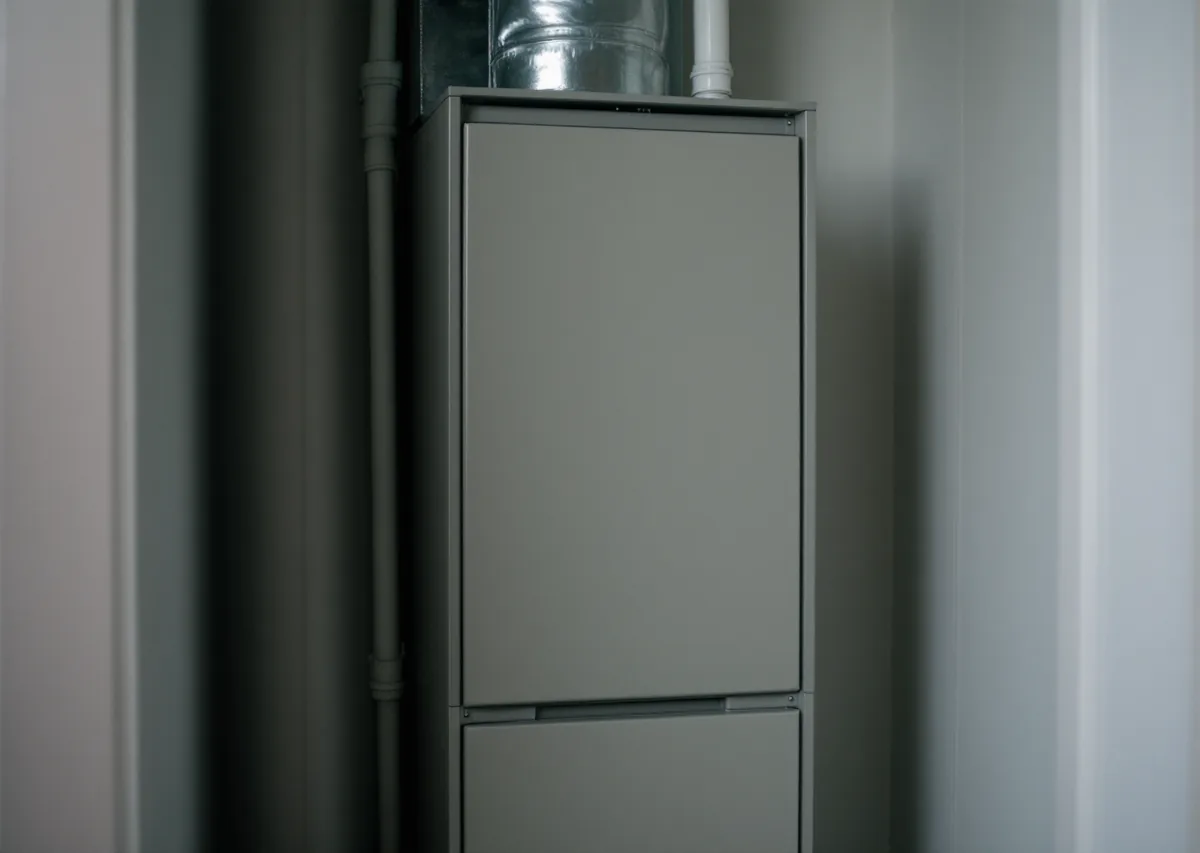
An air handler is the indoor cabinet that moves air through a house. Inside it are a blower, a coil that the refrigerant runs through, a slot for the filter, and a pan under the coil to catch the water that condenses on it. It does not burn anything. Paired with an air conditioner outside, it cools; paired with a heat pump outside, it heats and cools; with electric resistance strips fitted inside, it can heat on its own, expensively. Whether the words “air handler” describe what is in your house depends on one question — is there a burner in the cabinet — and that question is where most of the confusion around this subject starts.
- It is a fan in a box with a coil. Everything else in the cabinet supports those two parts: the filter protects the coil, the pan catches what drips off it, the controls tell the fan when to run.
- It is half of a system, never the whole. The other half is outside. The two are designed to be matched, and an unmatched pair is a common reason a new system performs worse than the old one.
- It moves air for both seasons. The same blower runs whether the house is being heated or cooled, which is why its condition and its ductwork set the ceiling on everything else.
The First Question
Air handler or furnace: which one is in your house
They look alike, they stand in the same places, and the one word decides what heats your house and what it costs to do it.
The test
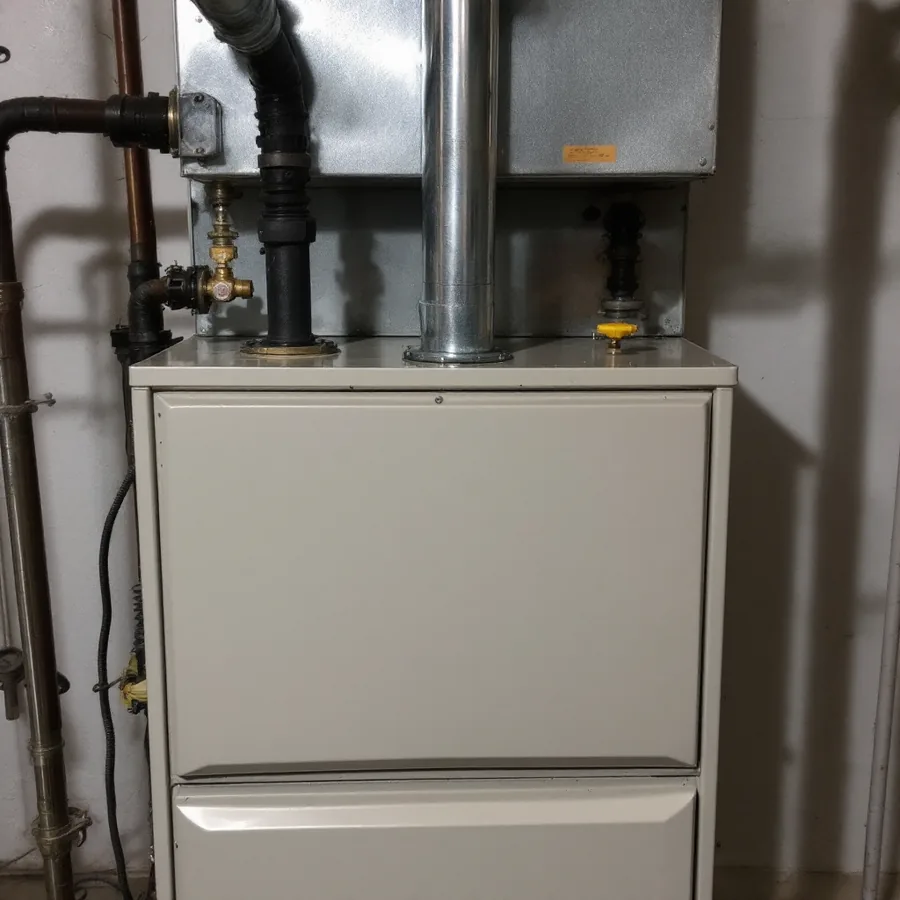
Look at the cabinet. A gas line entering it and a flue pipe leaving it mean a furnace: it makes heat by burning fuel, and if there is central cooling, a coil sits on top of it fed by the outdoor unit. No gas line, no flue, and electrical connections only: that is an air handler. The blower in either one does the same job.
Why the difference matters more than the name
A furnace makes its own heat and is indifferent to what is outside. An air handler makes no heat at all unless electric resistance strips are fitted inside it, and resistance heat turns one unit of electricity into one unit of warmth — the most expensive way to heat a house almost everywhere in the country. An air handler paired with a heat pump gets its heat from outside instead, which is the entire economic case for that configuration and is set out on our heat pump page. This page stays on the box itself.
The loose usage, so you are not confused by it
Technicians and salespeople sometimes call the whole indoor stack an air handler even when the box is a furnace with a coil on top, because functionally that stack is handling the air. It is not wrong, but it hides the question that matters. When somebody uses the phrase, ask which one they mean.

What it costs to get this wrong
The commonest expensive version: a house heated by an air handler's electric strips because the outdoor heat pump failed years ago and was never replaced, and the household has been paying resistance-heat bills since without knowing why. The second: a furnace whose blower was chosen for heating being asked to push air through a cooling coil for a house it cannot cool. Both are diagnosed from the outside of the cabinet in under a minute.
The Other Half
Air handler and condenser, heat pump and air handler: the pairs
It never works alone. What it is paired with decides what it does, and whether the pair was matched decides how well.
With an air conditioner outside
The outdoor unit — the condenser — rejects heat to the outside air. The coil inside the air handler is where the air actually gets cold. People searching “air handler vs condenser” are looking at two halves of one machine: neither cools anything without the other.
With a heat pump outside
The same coil, the same blower, but the outdoor unit runs in both directions and the air handler heats in winter through the coil that cooled in summer. The electric strips inside become back-up rather than primary heat, and how often they run is the largest single factor in the winter bill. Cold-climate performance is a property of the outdoor unit and is covered on the heat pump page.
Matched, and what the word means
Manufacturers test specific indoor and outdoor combinations and publish the results in the AHRI certified directory. A matched pair has a tested capacity and efficiency; an unmatched pair has whatever it happens to produce, which is usually less than either component's rating suggests. If you are replacing only one half, the question is whether the survivor is on the matched list for the newcomer.
The other configurations you will read about
A hydronic air handler has a hot-water coil fed by a boiler or water heater instead of electric strips. A chilled-water air handler is the commercial cousin, fed from a central chiller, and appears in large buildings rather than houses. A geothermal air handler is simply the indoor unit of a ground-source system. A mini-split air handler is the wall, floor or ceiling head of a ductless system, and a pancake air handler is a low horizontal unit made for shallow ceiling spaces. Same job in every case: move air across a coil.
Under The Panel
What is inside the cabinet
Five parts, in the order the air meets them. Knowing the names is half of understanding a quote.
The dehumidifier question
An air handler removes moisture as a by-product of cooling: water condenses on the cold coil and drains away. A unit that is too large for the house cools the air quickly and shuts off before it has removed much moisture, leaving a house that is cold and damp. That is a sizing fault rather than a missing accessory, and it is why the sizing section comes next.
Tons
What a 2, 3, 4 or 5 ton air handler means
The number is inherited from the ice trade, it describes the outdoor unit as much as the indoor one, and it is not a preference.
The unit
One ton is 12,000 BTU per hour of heat moved — the cooling produced by melting a ton of ice over a day. A 3 ton air handler is one built to move the air that a 3 ton outdoor unit needs, roughly 1,200 cubic feet per minute. Residential sizes run from 1.5 to 5 tons, with 2.5 tons a common step in between.
It has to match the outdoor unit, and the house has to match both
The air handler's tonnage must correspond to the outdoor unit's, or the pair is unmatched. But the pair's tonnage must also correspond to the house's actual load, which is calculated from insulation, windows, orientation, air leakage and climate rather than from square footage. A load calculation is the only honest way to arrive at the number, and a quote that inherits the size of the unit being removed has inherited whatever mistake was made last time.
The cost of too big
Larger is not safer. An oversized system satisfies the thermostat quickly, runs short cycles, removes less humidity, starts more often, and wears faster. Bigger costs more at purchase and more every month afterwards.
Where It Stands
Why the location is an energy question, not a convenience
Attic, crawlspace, garage, closet, basement. The federal building-science guidance has a clear view on which of these are good addresses, and it is not the one most houses use.
What the Department of Energy says about attics and crawlspaces
The Building America Solution Center puts it in one sentence: “Heating and cooling equipment and ducts are often located in uninsulated attics and crawlspaces where humidity and temperature extremes can prematurely age the equipment and encourage unwanted heat loss or heat gain to the conditioned air traveling through the ducts.” Two costs are named there. The equipment ages faster in a space that reaches extreme temperatures and humidity, and the air it has just conditioned loses heat or gains it on the way to the rooms.
And what it recommends instead
“Interior comfort delivery systems with the air handler and ducts located inside the conditioned environment of the home minimize the effects of duct leakage. Any conditioned air that does leak from the ducts leaks into the conditioned areas of the home.” That last clause is the whole argument. Every duct system leaks somewhat; if the air handler and its ducts are inside the conditioned envelope, the leakage lands in the house rather than in the attic.
What this means when you are not building a house
You are unlikely to move an existing air handler out of an attic, and this page does not suggest you should. It means three practical things. First, an attic unit needs its ducts sealed and insulated more urgently than a basement unit does. Second, an attic unit needs condensate protection, because when it leaks it leaks into a ceiling — the water section below. Third, if you are replacing the unit anyway and there is a closet or utility room available inside the envelope, the federal guidance says that is the better address and it is worth asking what it would cost to use it.
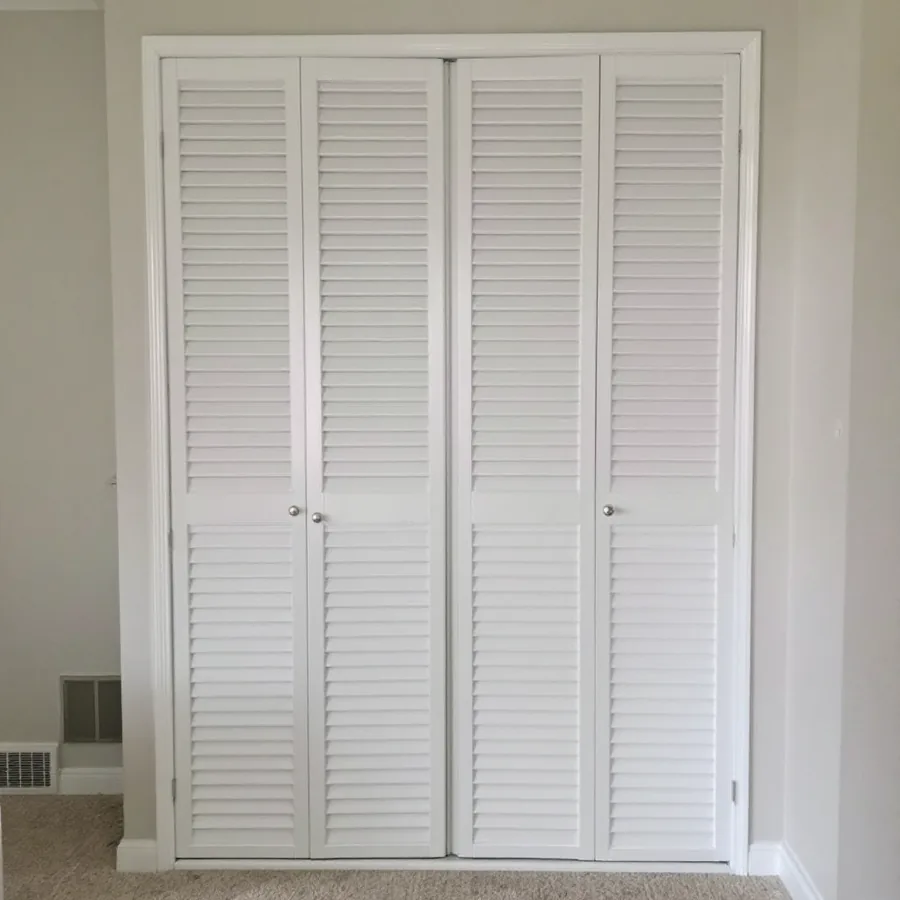
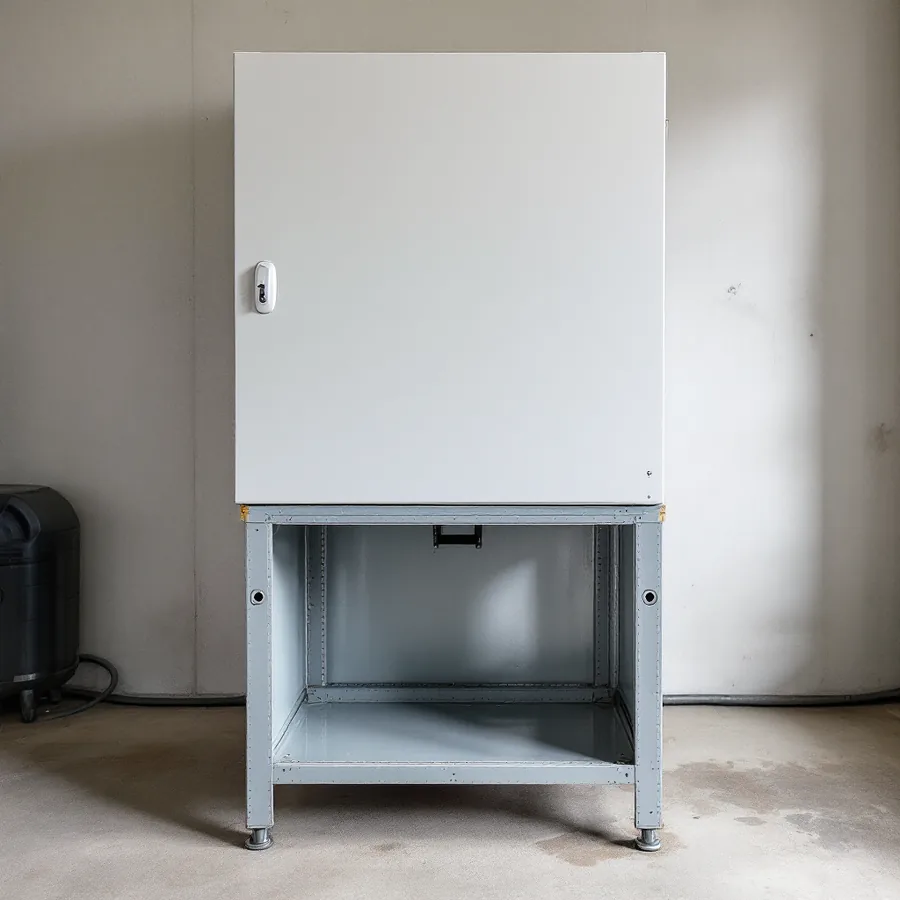
Orientation, stands and the mobile home case
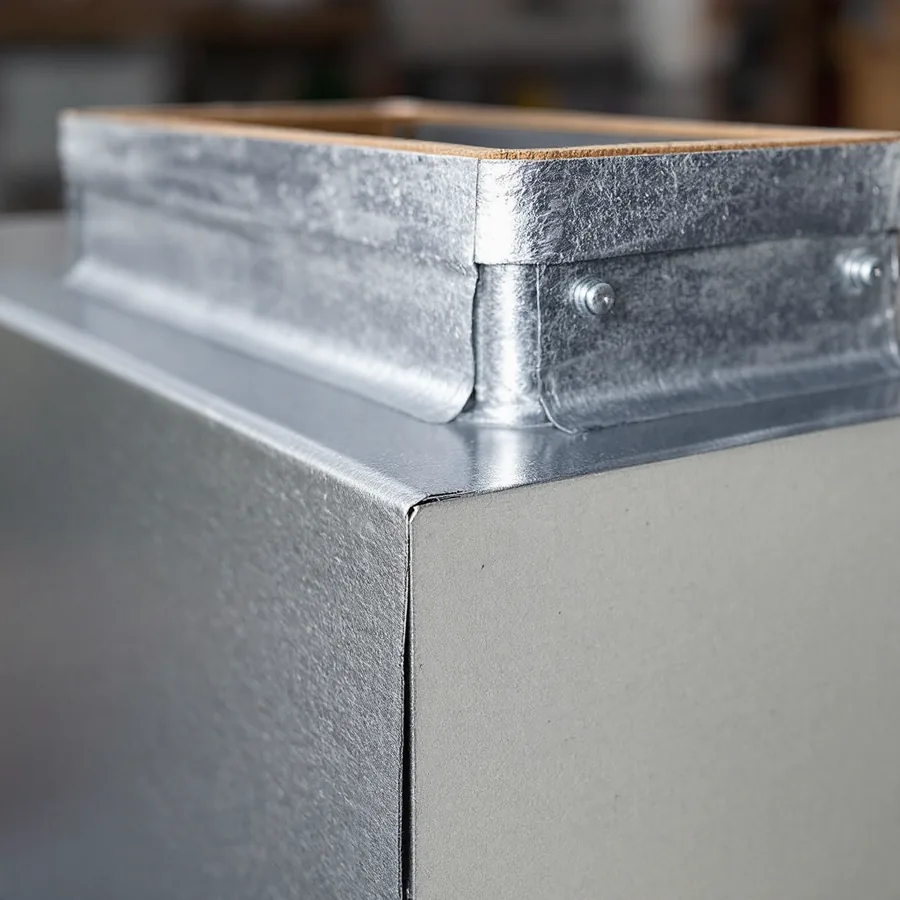
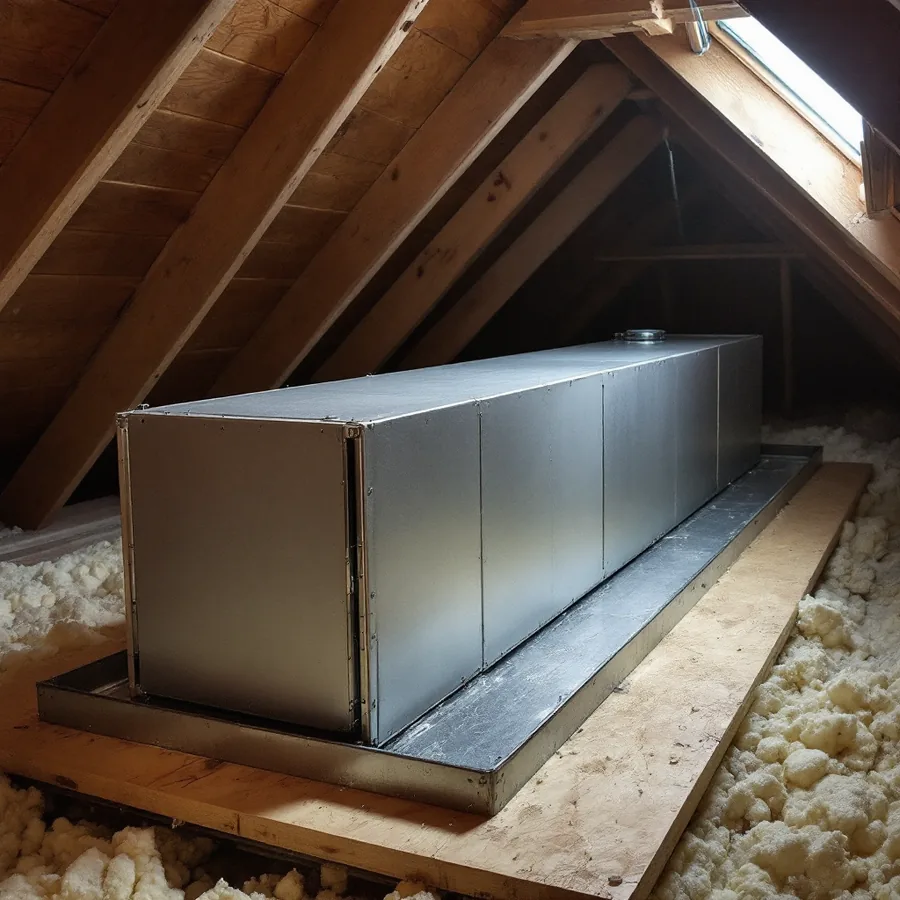
Air handlers come as upflow, downflow and horizontal units, and many modern ones are multi-position — convertible on site. A horizontal unit lies on its side in an attic or crawlspace; a ceiling-mount unit is a compact horizontal made for shallow spaces. A stand lifts an upflow unit off a floor so return air can enter from below and so a wet floor does not become a wet cabinet. Mobile and manufactured homes use their own class of downflow unit built for the smaller duct system beneath the floor, and they are not interchangeable with site-built equipment. Insulating the cabinet and the ducts is the standard mitigation where the unit has to live outside the envelope.
Work It Out
Which configuration is in your house
Three questions, nothing sent anywhere. Most people who search this subject do not know what they own, and everyone selling equipment knows that.
Our fee for an introduction does not change with what you buy, which is why a page about a piece of equipment can afford to spend this long on what you already own.
The Slot
The filter lives here
Every filter question on this site ends up at the air handler, because the slot is part of the cabinet and the blower behind it is what a dense filter fights.
What the slot allows
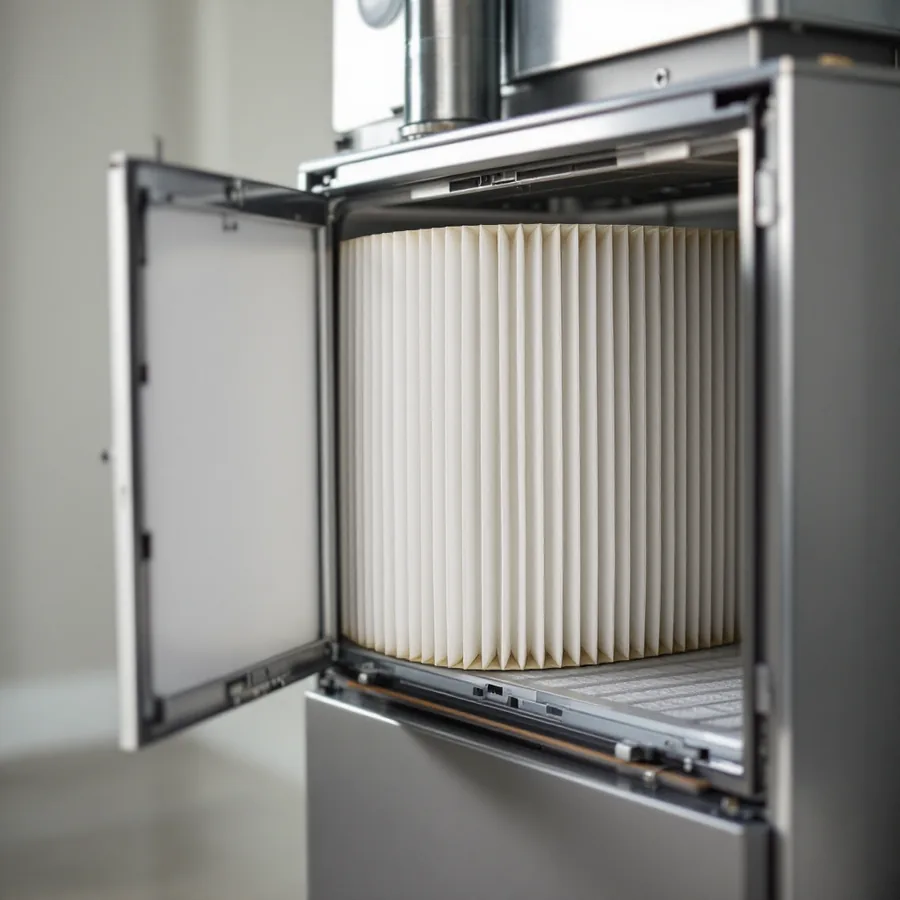
A one-inch slot takes a one-inch filter, which has little surface area and clogs fast; a four- or five-inch media cabinet holds a deep pleated filter that lasts months and restricts less at the same rating. If you keep buying one-inch filters and changing them monthly, the slot is the reason, and changing the slot is a small job compared with anything else on this page.
Rating against restriction
EPA suggests a filter of at least MERV 13, or as high as the system fan and filter slot can accommodate. That second clause is about this blower. A dense filter in a one-inch slot on an older PSC motor can drop airflow enough to freeze the coil in summer and overheat the strips in winter. The number that resolves it is static pressure, measured at the cabinet with the filter in place, and a technician can take it in minutes.
Return leaks make the filter irrelevant
A filter only cleans the air that passes through it. Return ducts leaking in an attic, garage or crawlspace pull unfiltered air into the blower downstream of the slot, which is why a house can have a new MERV 13 filter and a dusty coil at the same time. Sealing returns is a ductwork job, and it comes before any filter upgrade.
The Failure That Hits The House
Water: the one problem that damages the ceiling, not the equipment
An air handler leaking water is nearly always a condensate problem. It is cheap to prevent, cheap to fix early, and expensive to discover through a stain.
Where the water comes from
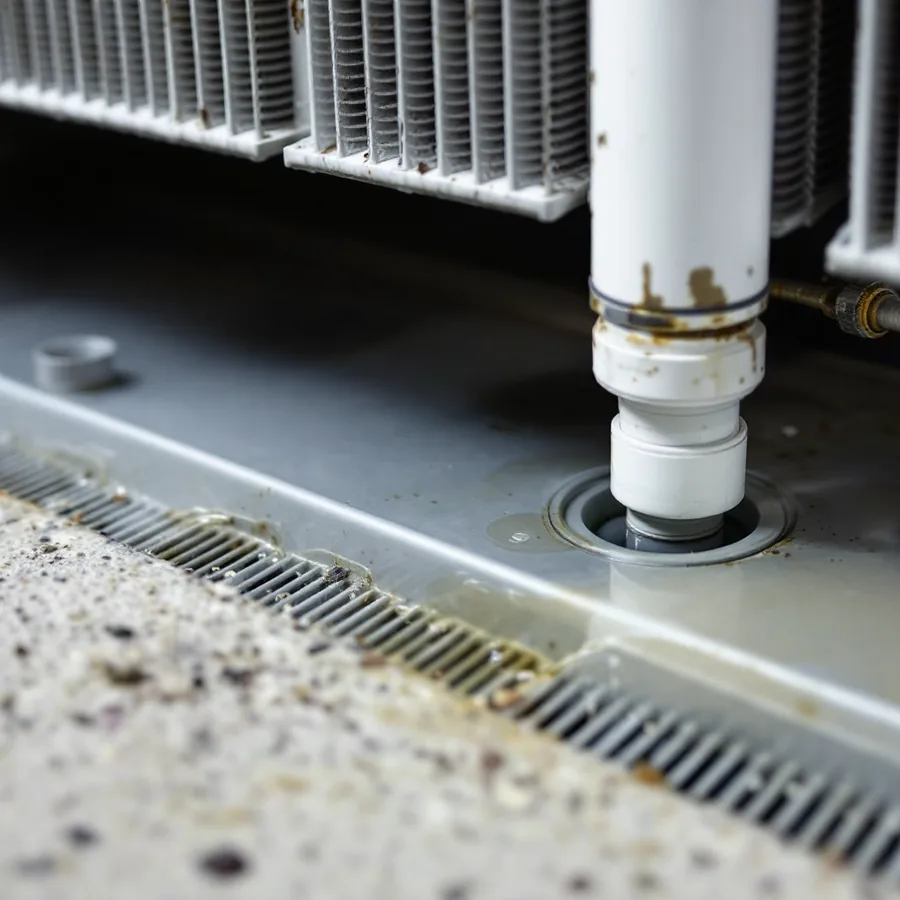
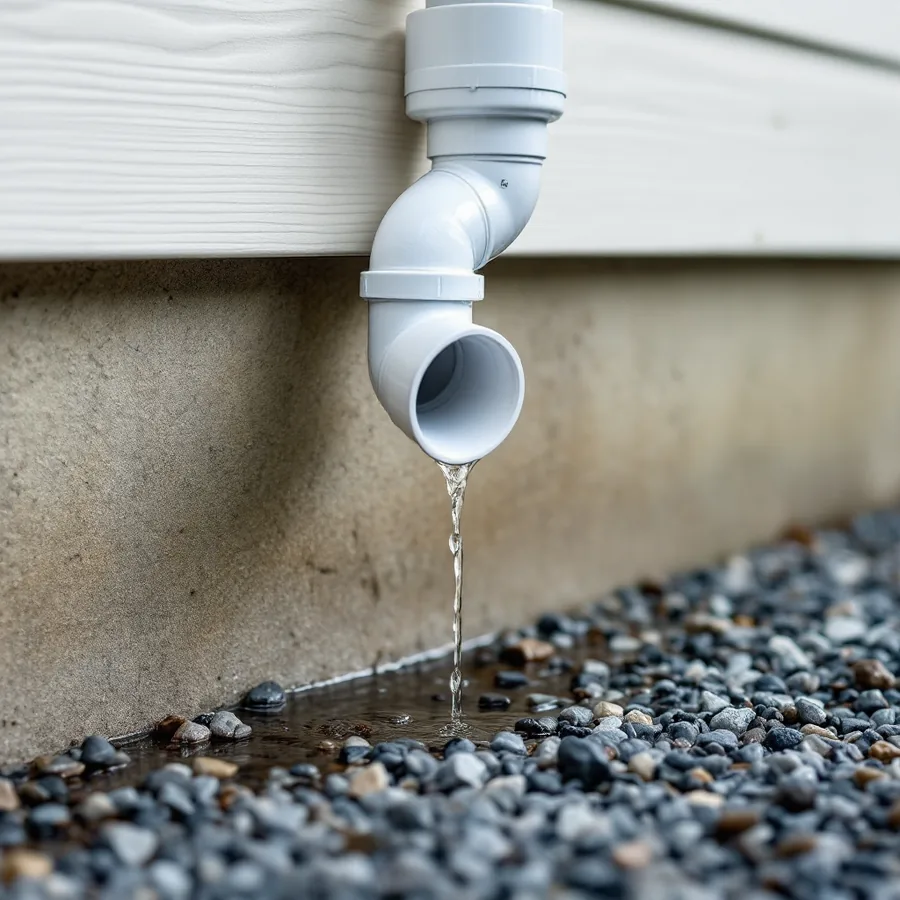
In cooling mode, moisture condenses on the coil and drips into the pan beneath it, then leaves through a drain line — gallons a day in a humid climate. When the drain slows or blocks, usually with the biological slime that grows in a warm wet pipe, the pan fills and overflows. That is the “air handler dripping water” that people search for in July.
The two protections a unit should have
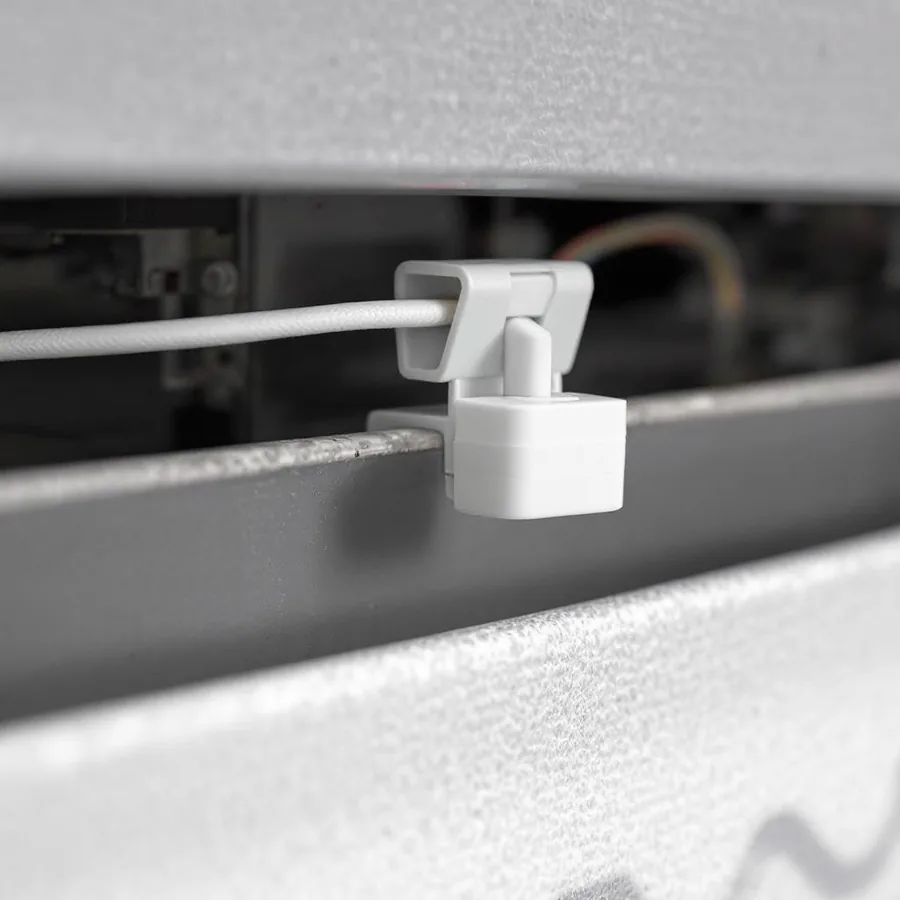
A secondary drain pan under the whole cabinet catches an overflow from the primary. A float switch in either pan shuts the system off when water rises, so the unit stops making condensate before the pan spills. Both are inexpensive, both are standard on a competent attic installation, and an attic unit without them is a ceiling waiting to happen — the location section above is why.
What to do when it is already dripping
Switch the system off at the thermostat, which stops new condensate. Look for the drain line's outlet outside and see whether anything is coming out; a clear line drips steadily when the system runs, a blocked one does not. Clearing a blocked line is a routine service call. What is not routine is a coil frozen into a block of ice, which also produces water when it thaws — and that is a different fault with a different cause, covered on the page about a system that is not cooling.
Insurance, briefly
Sudden overflow from a blocked drain is often treated differently from long-term seepage by home insurers, and the distinction turns on how quickly the damage was noticed. That is one more argument for a float switch: it converts a slow, hidden leak into an immediate, obvious shutdown.
What EPA Says
Mould in the air handler, and the cleaning you will be offered
A wet coil in a dark cabinet grows things. The question is what to do about it, and the federal answer is not the one the industry sells.
The federal position on duct cleaning
“Duct cleaning has never been shown to actually prevent health problems.” That is EPA, on its own page about whether to have ducts cleaned, and it continues: “Little evidence exists that cleaning only the ducts will improve the efficiency of the system.” Cleaning is warranted, in EPA's view, in three situations: substantial visible mould growth inside hard-surface ducts or on other components of the system, infestation with rodents or insects, or ducts so clogged with debris that particles are released into the home.
The cause comes first
“Controlling moisture is the most effective way to prevent biological growth in all types of air ducts.” For an air handler that means the coil and the pan: EPA's own checklist includes making sure the condensate pan drains properly. Mould on a coil that keeps being wet because the drain is slow will return however thoroughly it is cleaned, and the drain is the cheaper fix.
The part that cannot be cleaned
EPA is specific about fibreglass duct liner and insulation: once it is contaminated with mould, “cleaning is not sufficient to prevent re-growth” and it should be removed and replaced. If the inside of your air handler cabinet is lined with exposed fibreglass and it is visibly mouldy, the honest quote is for replacement of the liner, not a spray.

Cleaning the coil, and the ultraviolet lamp
The coil itself is a hard surface and can be cleaned, which is a normal part of an annual service. Ultraviolet lamps mounted at the coil are sold to keep it clean between visits; they act on the surface they shine on and do nothing for the air passing by, so they are a coil-hygiene accessory rather than an air purifier, and should be priced and judged as one. The wider subject of what actually improves the air in a house is a page of its own.
Noise, No Air, No Power
Noise, no airflow, and the blower
The three complaints that point at the cabinet rather than at the outdoor unit, and what each usually means.
| Symptom | Usually | What to check first |
|---|---|---|
| Will not turn on at all | No power to the control side: a tripped breaker at the air handler, a blown low-voltage fuse on the board, a failed 24 volt transformer, or a float switch that has done its job and cut the system because the pan is full | The air handler's own breaker, the pan for water, then the fuse on the board — the same fuse discussed on the thermostat page |
| Humming, no air | The blower motor is trying and cannot start: a failed run capacitor on a PSC motor, or a seized motor | Whether the wheel turns freely with the power off; a capacitor is a small part, a motor is not |
| Rattling or vibration | A loose panel, a blower wheel out of balance or caked with dirt, or a mounting that has worked loose | Panels and screws first; a dirty wheel is a cleaning job that also restores airflow |
| Squealing or grinding | Bearings in the motor, or on older belt-driven units a worn belt | Stop running it; a bearing that is squealing is on its way to seizing |
| Weak airflow, motor running | A clogged filter, a dirty coil, a frozen coil, or ducts collapsed or disconnected somewhere downstream | The filter, then the coil, then the static pressure reading that tells you whether the ducts are the ceiling |
The line to stop at
Breakers, the filter, the pan, and looking at the drain outlet are all homeowner territory. Capacitors hold a charge after the power is off and boards carry line voltage; from the panel inward, that is a technician's work.
When It Is Time
Repair or replace, and what moves the number
No national prices, by policy. What decides between the two, and what changes the figure when the answer is replace.
The repair-versus-replace fork
A blower motor, a capacitor, a board or a drain repair on an otherwise sound unit is a repair. A leaking coil on a unit past its middle age is usually the point at which replacement wins, because a coil is a large share of the unit's value and the refrigerant it holds may no longer be the current type. Age alone is not a reason; a fifteen-year-old air handler in a basement can have years left, while a ten-year-old one in an attic may not, for the reasons the federal guidance gives.
Can you replace just the air handler
Sometimes. If the outdoor unit is sound and there is a matched indoor unit for it in the AHRI directory, yes. If the outdoor unit uses a refrigerant the current indoor units are not built for, or if no matched combination exists, the honest answer is a matched pair, which is a bigger project. The question to ask is precisely that: is there a listed match for what I am keeping.
What moves the cost of the unit itself
- Capacity and blower type. Tonnage, and whether the blower is variable-speed. The second adds to the price and subtracts from every electricity bill afterwards.
- The heat kit. Electric strips are sized in kilowatts and priced accordingly, and they may require an electrical upgrade the old unit did not.
- Access. An attic or crawlspace unit costs more to remove and more to install than the same unit in a basement, for reasons that have nothing to do with the equipment.
- What has to change around it. Condensate protection, the filter cabinet, the plenum transitions, and any ductwork the new unit's airflow exposes as inadequate.
How those lines sit inside a full system quote, and how to compare two of them, is on our replacement cost page.
Before You Sign
What to ask about the indoor unit
Four questions that separate a company that measured from one that estimated.
| Ask | What it tests | A weak answer |
|---|---|---|
| Is this indoor unit a listed match for the outdoor one? | Whether the pair has a tested capacity and efficiency, or just a hope. | “Same brand, it’ll be fine.” |
| What is the static pressure with the filter I want to use? | Whether the blower and ducts can carry the filter rating you are paying for. | A MERV number with no measurement behind it. |
| What condensate protection is included? | Whether the unit will shut itself down before it floods a ceiling. | “It has a drain.” |
| Could this go inside the conditioned space instead? | Whether the installer knows the federal guidance on location, and whether your house has the option. | “They all go in the attic here.” |
What we do, and what we do not
We are not a contractor and we do not sell equipment. We are paid a fixed fee for an introduction — the same for a capacitor and a matched system — which is why this page spends its length on what you already own rather than on what to buy. When you want somebody to look at the unit, we connect you with independent licensed and insured heating and cooling companies. Who pays us and how is on our about page, and the rest of what we publish starts from the home page.
Straight Answers
Air handler questions, answered
Is an air handler the same as a furnace?
No. A furnace burns fuel to make heat and has a gas line and a flue; an air handler burns nothing and has only electrical connections. Both contain the blower that moves air through the house, and a furnace with a cooling coil on top does the air handler's job, which is why the words get mixed up. Look at the cabinet: a flue means furnace.
Does an air handler heat the house?
Only in two ways. Paired with a heat pump, it delivers the heat the outdoor unit collects. Fitted with electric resistance strips, it can heat on its own, but resistance heat is the most expensive kind almost everywhere, and a house being heated that way full time usually has a failed heat pump nobody replaced.
Can you replace just the air handler?
If the outdoor unit is sound and a matched indoor unit for it is listed in the AHRI directory, yes. If the outdoor unit uses a refrigerant that current indoor units are not made for, or no listed match exists, the honest answer is a matched pair.
How long does an air handler last?
It depends more on where it stands than on its age. The federal building-science guidance says equipment in uninsulated attics and crawlspaces, exposed to temperature and humidity extremes, ages prematurely. A basement unit can serve well past fifteen years; an attic unit often does not.
Why is my air handler leaking water?
Almost always the condensate drain: the coil condenses gallons of water a day in humid weather, and a slow or blocked drain line overflows the pan. Switch the system off at the thermostat to stop new condensate, check whether water is coming out of the drain outlet outside, and have the line cleared. A secondary pan and a float switch prevent the next one from reaching the ceiling.
Is it bad to have the air handler in the attic?
The Department of Energy's building-science guidance says attics and crawlspaces age equipment prematurely and lose conditioned air through duct leakage, and recommends locating the air handler and ducts inside the conditioned space. If yours is in the attic, seal and insulate the ducts, make sure it has condensate protection, and if you are ever replacing it, ask whether a location inside the envelope is available.
Should I have the air handler and ducts cleaned for mould?
EPA states that duct cleaning has never been shown to prevent health problems, and that little evidence exists that cleaning the ducts alone improves efficiency. It considers cleaning warranted when there is substantial visible mould on hard surfaces of the system, an infestation, or ducts clogged with debris. In every case it says controlling moisture is the most effective prevention, which for an air handler means the coil and the condensate drain.
What does variable speed mean on an air handler?
The blower motor can run at many speeds rather than one. It runs slower and longer, moves air more quietly, removes more humidity in cooling mode, and uses considerably less electricity than a single-speed motor. It costs more to buy and less to run.
Where This Comes From
Sources
- Air handler and duct location, and the case for conditioned space — U.S. Department of Energy, Building America Solution Center.
- Duct insulation where ducts must stay outside the envelope — U.S. DOE Building Science Education.
- Duct cleaning, mould and moisture control in air systems — U.S. Environmental Protection Agency.
- Mould and moisture in the home — EPA, a brief guide to mold, moisture and your home.
- Filter ratings and what a system can accommodate — EPA, what kind of filter to use in a home HVAC system.
- Duct sealing and typical losses — ENERGY STAR, duct sealing.
- Matched indoor and outdoor combinations, tested — AHRI certified product directory.
Our editorial standards explain how we source and check what we publish. Every quotation on this page is taken from the federal page linked beside it, and we publish no price averages. We are a referral service rather than a contractor. Last updated .
Before you call anyone
The independent match — we are paid for the introduction, not for the size of your job
Most roofing advice is written by the company that wants to do the work. That is not a failing of the people who read it; it is a defect in who is talking. The estimate, the diagnosis and the invoice come from one party, and no amount of care on your side fixes that.
We are built the other way round. We do not repair roofs and we do not sell materials, so the payment reaches us when you are connected to a licensed, insured roofing company — the same amount whether your roof needs an eight-hundred-dollar repair or a twenty-thousand-dollar replacement. Nobody here has a reason to talk you into the larger number. How we make money and how we research are both written down.
Waiting is the one thing that actually costs money. An insurance clock runs from the date of the damage rather than the date you noticed it, and damage that sits through a season stops reading as sudden and starts reading as wear — which is the exclusion that pays nothing. And if your roof is simply worn out, say so on the call. No claim will pay for age, we will tell you that plainly, and you will have lost nothing but the call.