HVAC Maintenance
HVAC maintenance — what a real visit contains, what it costs, and whether a plan is worth it
The federal government publishes the checklist a contractor should work through on a seasonal visit. That single fact changes the conversation: instead of trusting an invoice, you can ask which of eleven items were performed and what the readings were. We do not service equipment and we are paid a fixed fee for an introduction, so a maintenance plan earns us exactly what a repair does — which is why this page is willing to tell you when a plan is not worth signing.
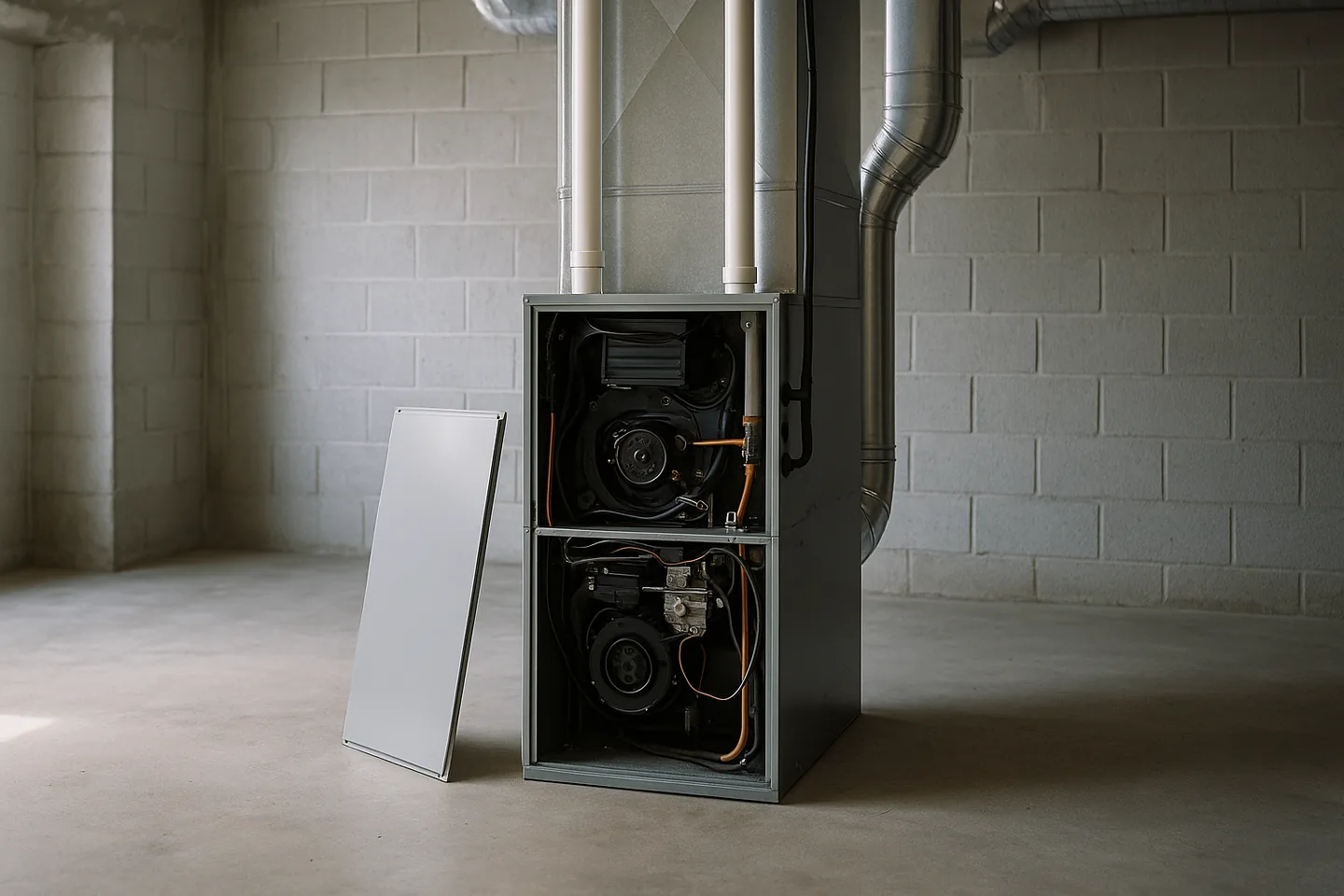
Four things worth knowing before you book
- Maintenance is measurement. Everything on the federal list produces a number or a condition: voltage and current on the motors, refrigerant charge, gas pressure, drain flow. A visit that generates no readings has inspected nothing, whatever the invoice calls it.
- The cheap tune-up is a lead product. A visit advertised below the cost of the labor to perform it is bought as an opportunity to find something. That does not make it dishonest, and it does make the incentive worth knowing before the technician is in your basement.
- A maintenance plan is a prepayment with a subscription attached. Two visits, priority scheduling and a repair discount, sold annually. Whether it is worth the money is arithmetic you can do in two minutes, and almost nobody is asked to do it.
- Airflow is the thing maintenance is actually protecting. ENERGY STAR is direct about the cost of getting it wrong: airflow problems can reduce your system's efficiency by up to 15 percent, and a dirty filter can increase energy costs and damage your equipment, leading to early failure.
Definitions That Matter
What HVAC maintenance actually is, and what it is not
The word covers three different activities with three different prices, and quotes routinely blur them.
Preventive maintenance
Scheduled work performed on a working system to keep it working: cleaning, tightening, lubricating, adjusting and measuring. It is the subject of this page, and it is what a tune-up, a seasonal check-up and preventive or preventative maintenance all describe. The routine is calendar-driven rather than symptom-driven, which is precisely the point.
Reactive maintenance, which is just repair
Work performed because something has broken. It is not maintenance in any useful sense, and when a company quotes hvac installation and maintenance as a package, it is worth asking which of the two the price actually covers.
Predictive and condition-based, and why you rarely see it at home
Industrial programmes talk about four phases of planned maintenance — reactive, preventive, predictive and reliability-centred — where sensors and trend data decide when to intervene. Residential equipment mostly lacks the instrumentation for that. What a house can do is the poor relation of predictive maintenance and still valuable: keep the readings from each visit and compare them year to year. A capacitor drifting, a motor drawing more current, a charge that keeps needing topping up are all trends, and a trend is information a single visit cannot give you.
What is done during HVAC maintenance, in one sentence
The technician verifies that the electrical, mechanical, airflow and combustion or refrigeration parts of the system are within specification, cleans what has become dirty enough to matter, and writes down what they found. Everything else on an invoice is either a repair or a sale.
The Federal Checklist
What a real visit contains, item by item
This is the ENERGY STAR maintenance checklist, quoted rather than paraphrased, because its value to you is that it exists in public and you can hold an invoice against it.
On every visit, heating or cooling
- Thermostat settings — checked to ensure the system keeps you comfortable when you are home and saves energy when you are away.
- Electrical connections — all of them tightened, with voltage and current measured on the motors. This is the item that most often separates a real visit from a look, because it takes time and produces numbers.
- Lubrication — all moving parts. Under-lubricated motors increase friction and electricity use.
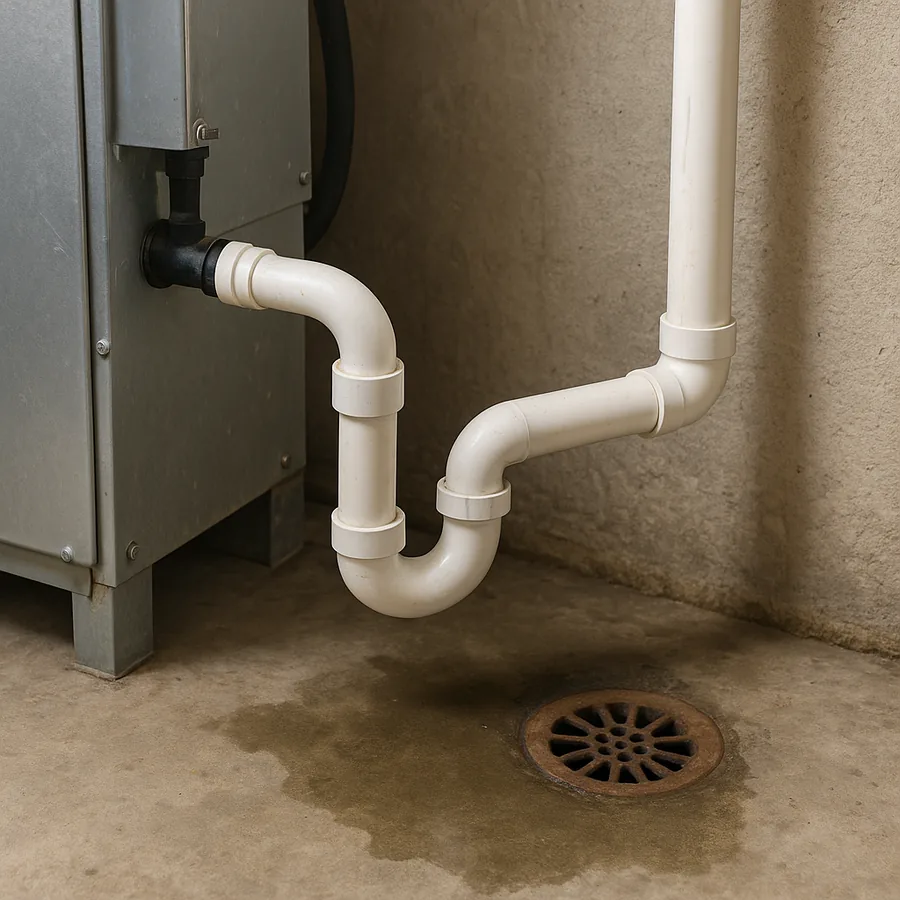
- Condensate drain — inspected in the central air conditioner, furnace or heat pump. A plugged drain is how a small maintenance omission becomes a water-damaged ceiling.
- System controls — checked for proper and safe operation, including that the equipment starts, runs and shuts off correctly.
Cooling season additions
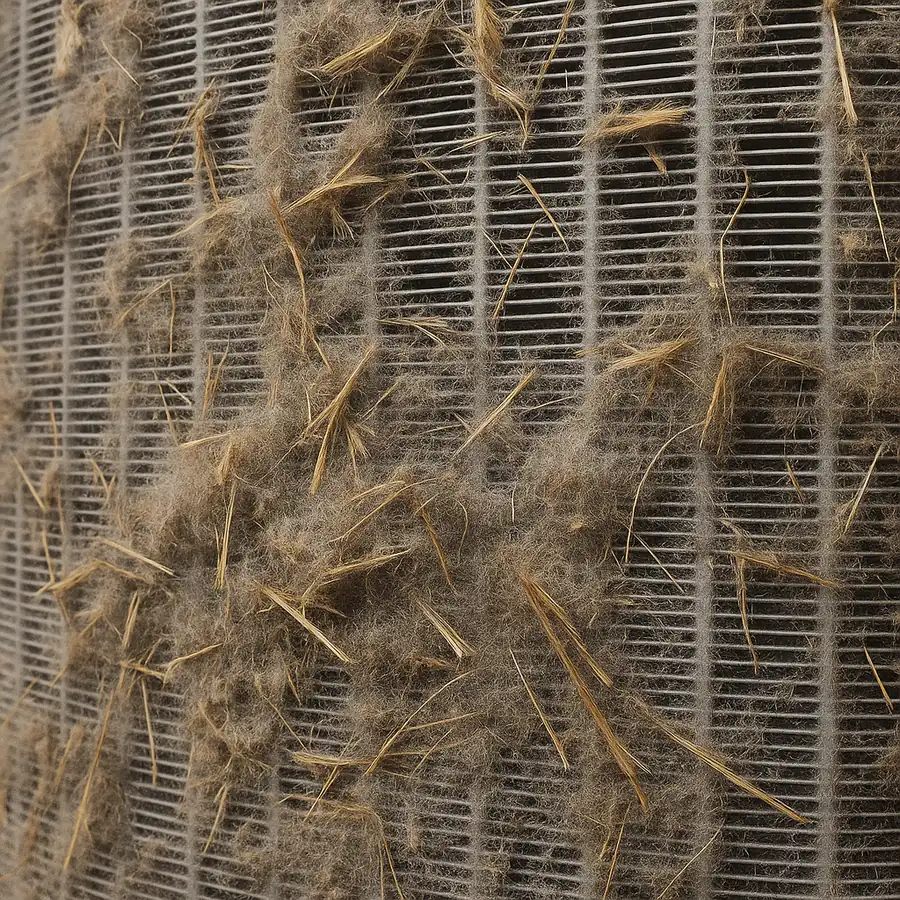
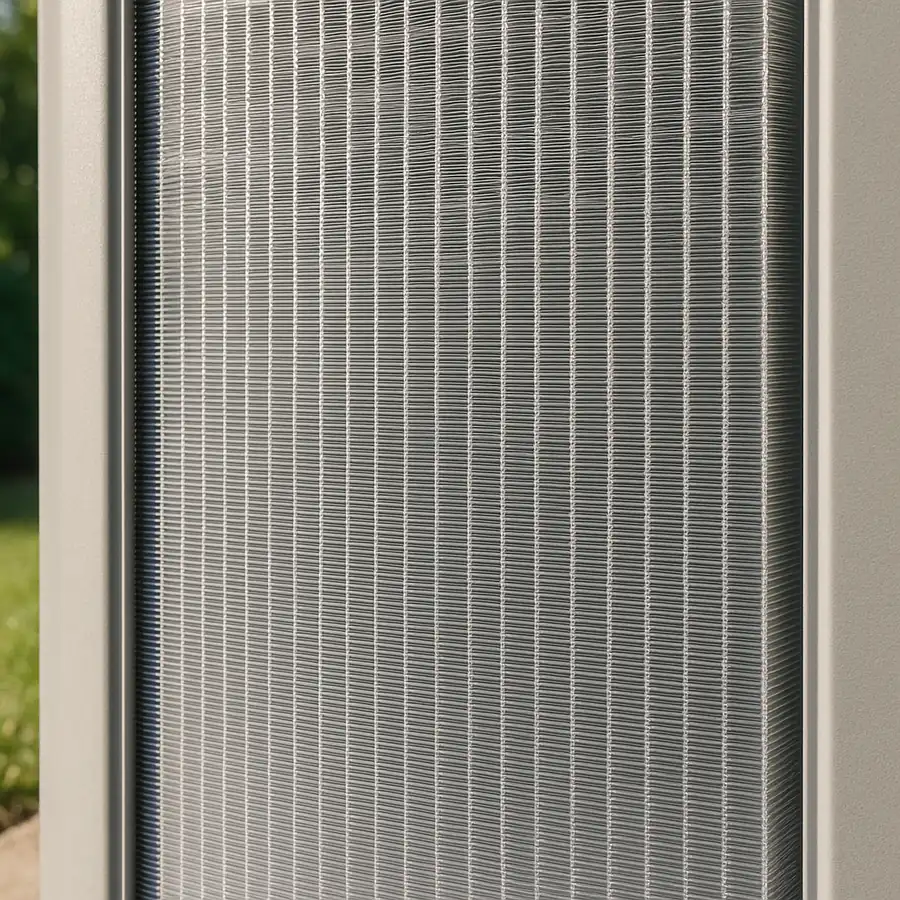
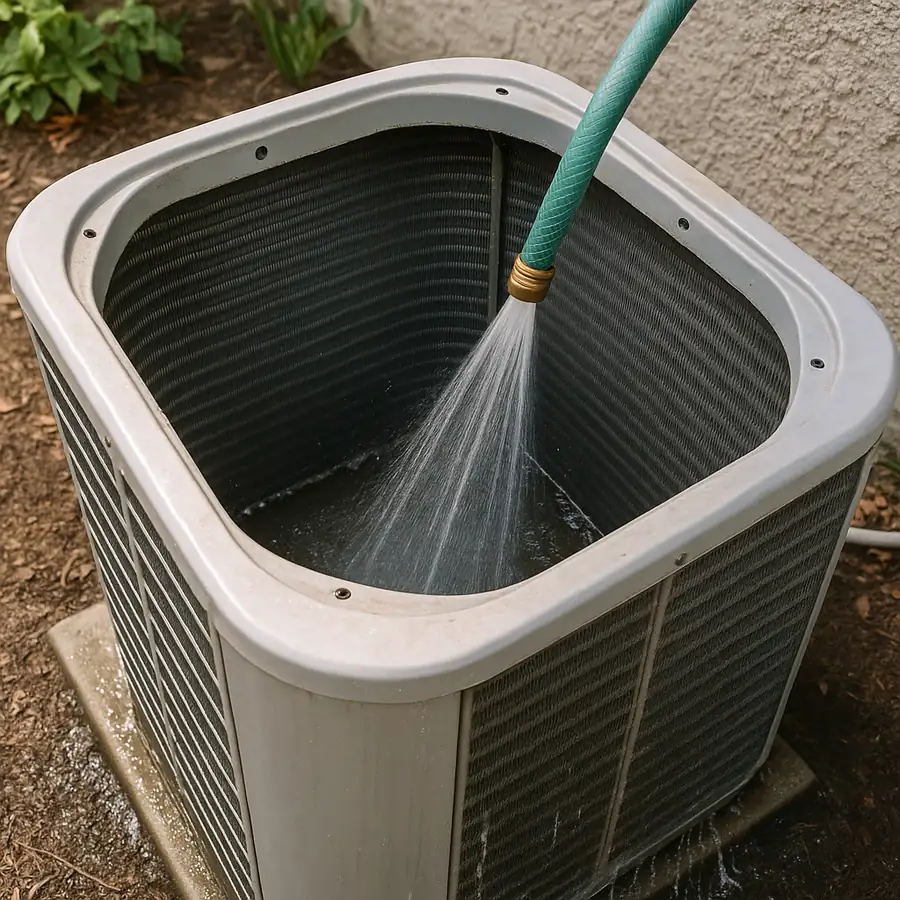
- Clean the evaporator and condenser coils. ENERGY STAR is explicit that dirty coils reduce the system's ability to cool your home.
- Check the refrigerant level and adjust if necessary. This requires gauges and time, and it is the item most often quietly skipped on a cheap visit — the same reading that settles whether a system is low on refrigerant or has a leak.
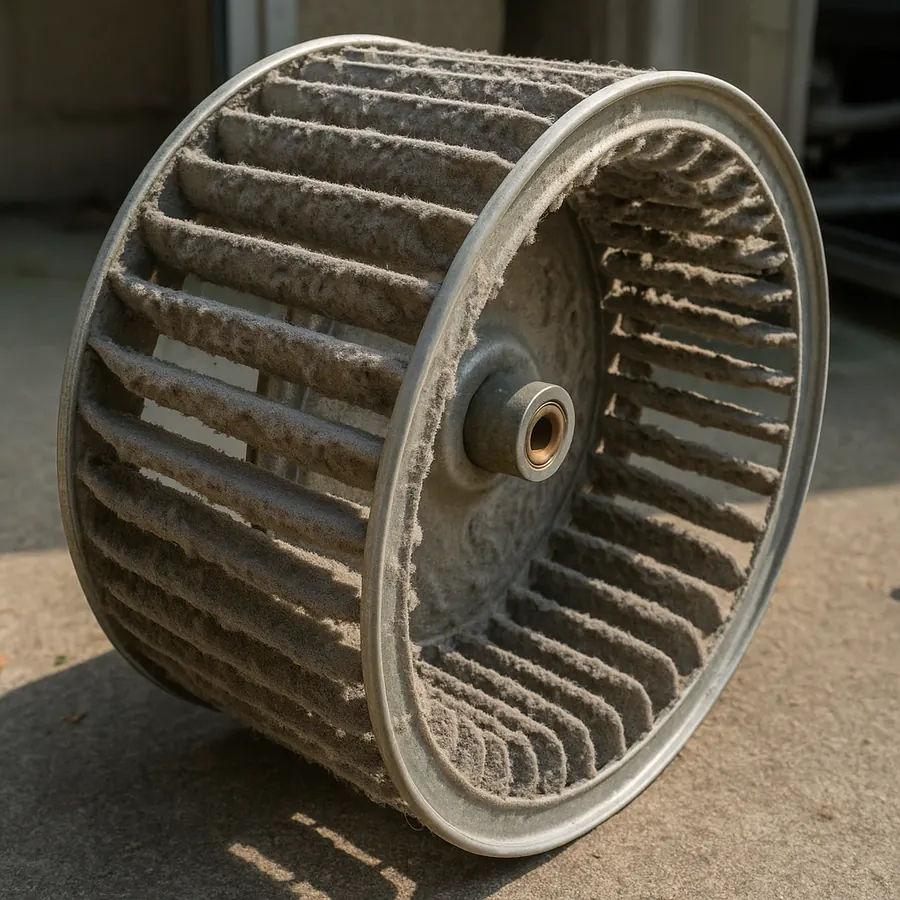
- Clean and adjust blower components to provide proper system airflow — the same airflow whose absence costs up to 15% of efficiency.
Heating season additions
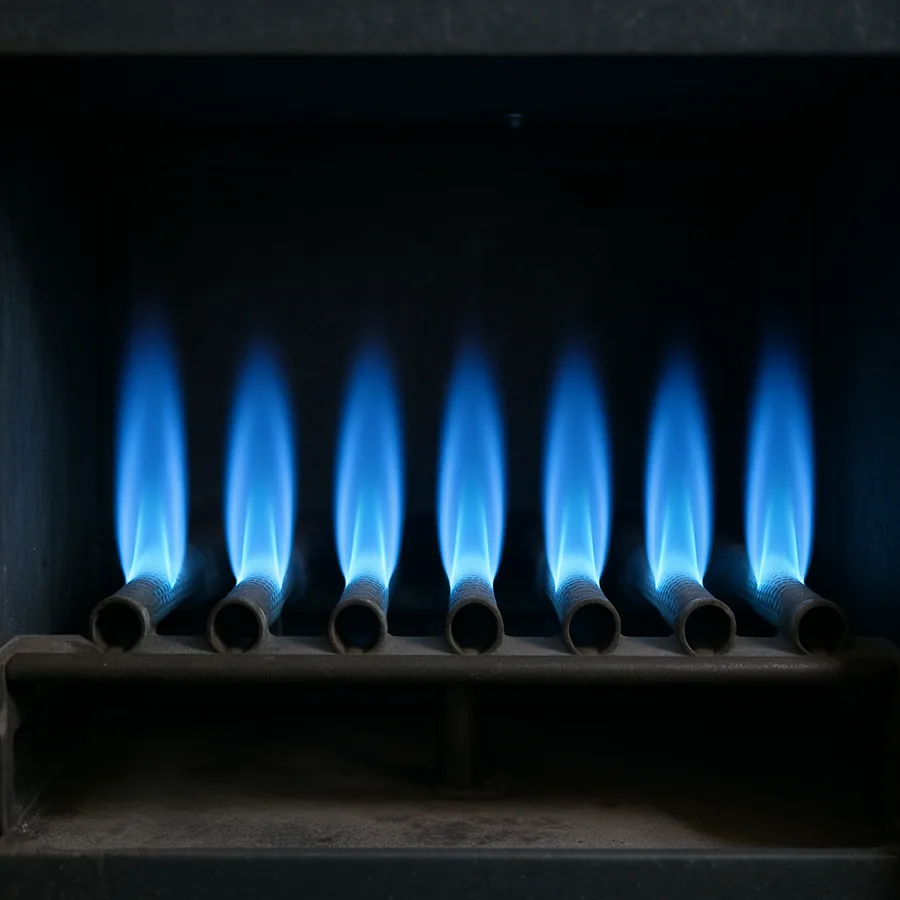
- Gas or oil connections, gas pressure, burner combustion and heat exchanger. One line on the checklist and four separate checks in practice. It is also the safety item, and the reason an autumn visit is not an interchangeable copy of a spring one.
How to use the list
Do not read it out to the technician. Ask afterwards for a written report, and see how many of these items appear on it with a value beside them. A company that performs the work has the sheet already; a company that does not will offer reassurance instead. That difference is the whole of what you are buying.
Grade Your Last Visit
Did you buy maintenance, or did you buy a look?
Three questions, nothing sent anywhere. It compares what happened at your house against the federal checklist and tells you what to ask next time.
A maintenance plan pays us the same fixed introduction fee as an emergency repair, so we have nothing to gain from telling you to sign one. If the arithmetic on your house says the plan is not worth it, that is what this tool will say.
The Money
What it costs, and why the same visit carries two prices
We do not publish a national average for HVAC maintenance cost or furnace tune up cost, and the reason is structural rather than coy: two visits advertised at the same name can differ by an hour of skilled labor, and the price gap between them is the work.
What the price is made of
A seasonal visit is a technician, a vehicle, and between forty minutes and two hours depending on what is actually performed. The checklist above is the variable. Tightening electrical connections and measuring current on the motors, cleaning coils properly rather than rinsing them, and taking a refrigerant charge reading are the items with time attached, and they are the items that vanish first when the headline price falls.
Why furnace tune up specials exist
A visit priced below the cost of performing it is a customer-acquisition cost, not a service. The company expects to find something — sometimes because something is genuinely there, sometimes because a technician is measured on what they sell. Neither the offer nor the finding is automatically dishonest. What you should know before the visit is that the economics of it depend on the second conversation rather than the first.
Two practical protections: ask what the visit includes in terms of checklist items rather than in terms of minutes, and decline to authorize any repair on the day unless the system has actually stopped working. A part that needs replacing at four in the afternoon still needs replacing tomorrow, after you have read what it does.
HVAC yearly maintenance cost: what the annual figure is made of
Two visits a year is the standard recommendation — cooling in spring, heating in autumn — so the annual figure is roughly twice a single visit, plus filters. On a heat pump the same box works in both seasons, and what that changes about living with it is set out separately. In an all-electric house with a heat pump, the same equipment serves both seasons and is often covered by two visits anyway, because it runs all year and therefore wears all year. What we can tell you without inventing a number: the range between the cheapest advertised visit and a full checklist visit in the same city is wide enough that comparing prices without comparing scope is meaningless. When you ask for a yearly maintenance cost, ask for it as two priced visits with the scope of each attached, and the figure becomes something you can compare between companies.
The comparison worth making
Not maintenance against nothing, but maintenance against the failure it is meant to prevent. A capacitor found drifting during a visit is a small part. The same capacitor found in July is an emergency call, a weekend rate, and a house that will not cool. That is the actual value proposition, and it is worth more in older equipment than in new.
Service Agreements
Maintenance plans: a prepayment, priced like a subscription
The most-searched question in this whole subject, and every page answering it is written by somebody who sells them. Here is the arithmetic instead.
What you are actually buying
A typical HVAC maintenance plan or service agreement bundles three things: two seasonal visits, priority scheduling when the system fails, and a discount on repairs, usually ten to twenty percent. Some add a waived diagnostic fee, a small parts allowance, or a transferable balance. The bundle is sold annually and, in most cases, renews on its own.
The two-minute valuation
- Start with the visits. Take the plan price and subtract two single visits at the same company's own published rate. If the remainder is negative, the plan is already paying for itself and everything else is upside.
- Value the discount at your own history. Not at the average homeowner's. Add up what you have actually spent on repairs for this system over three years, divide by three, and take the discount percentage of that. For most households with equipment under ten years old, this number is small.
- Price the priority. This is the part with real value and no published number. It is worth most if you live somewhere with genuine weather, have older equipment, or have someone in the house for whom a failure in a heatwave is a medical matter rather than a discomfort.
- Then compare. If the plan costs materially more than two visits and your own repair history suggests the discount is worth little, you are paying a premium for priority scheduling. That can still be the right decision — but it should be the decision you are actually making.
Three clauses to read before signing
The headline price is rarely where the cost lives. First, automatic renewal and the renewal price: many agreements renew at a rate the first-year discount concealed. Second, transferability: if you sell the house, does the balance transfer to the buyer, and does that make the plan a selling point or a write-off? Third, cancellation: whether you can stop mid-term, and whether visits already taken are then recharged at the full single-visit rate, which can turn a cancellation into a bill.
The honest case for a plan
It exists, and it is not about money. A plan converts a decision you have to remember twice a year into one you make once. Households that sign plans get maintained systems; households that intend to call in the spring frequently do not. If the plan is what makes the maintenance actually happen, it has bought you something real, and the arithmetic above is then a check on the price rather than an argument against the idea.
The One Job That Is Yours
Filters, and the trap that exists on both sides of the question
Buy too little filter and you foul the equipment. Buy too much and you strangle it. The federal advice and the physics point in opposite directions, and almost nobody puts the two together.
How often, and why the two answers differ
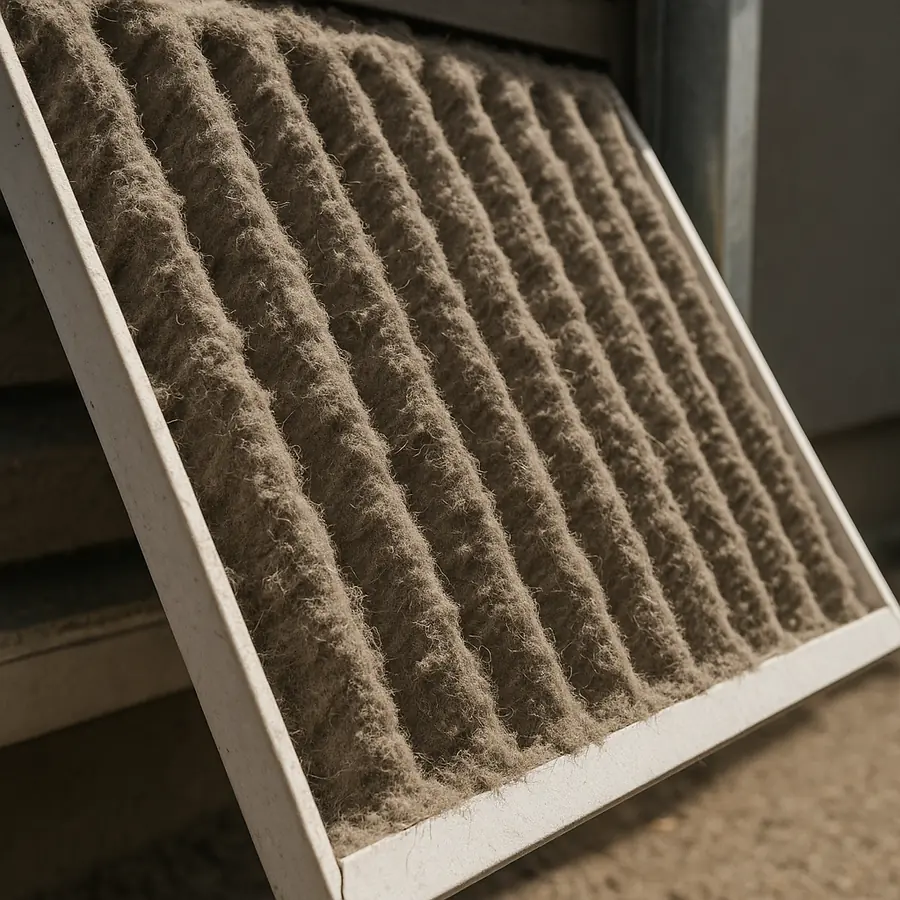
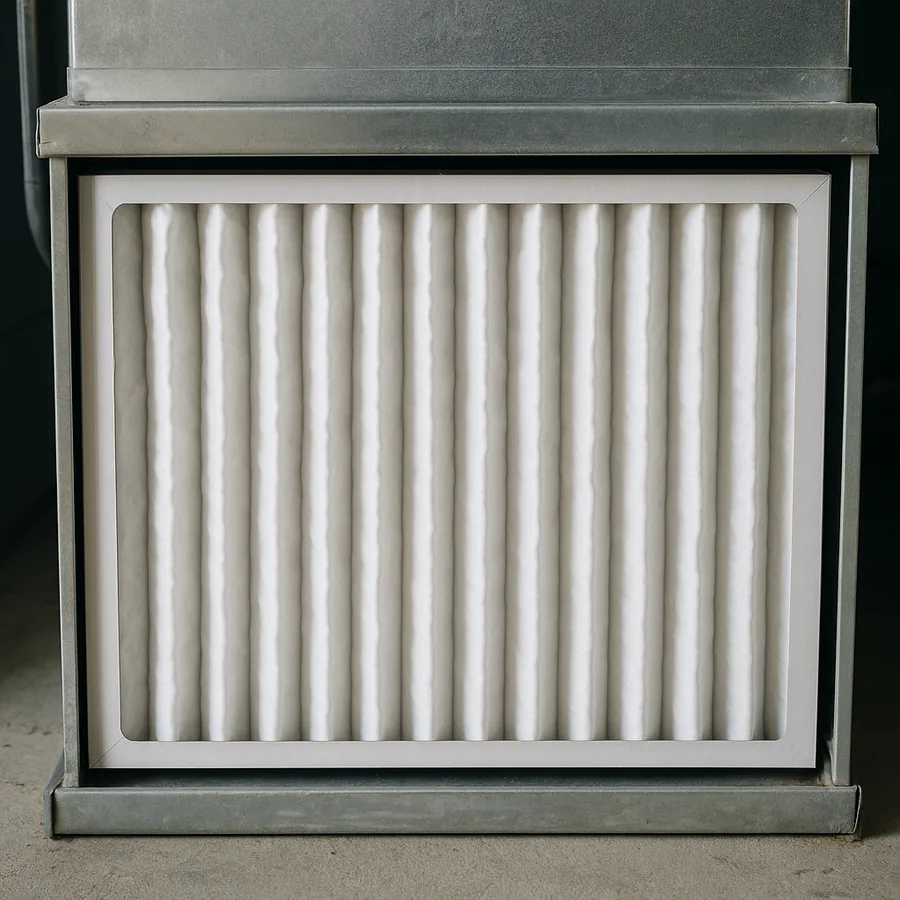
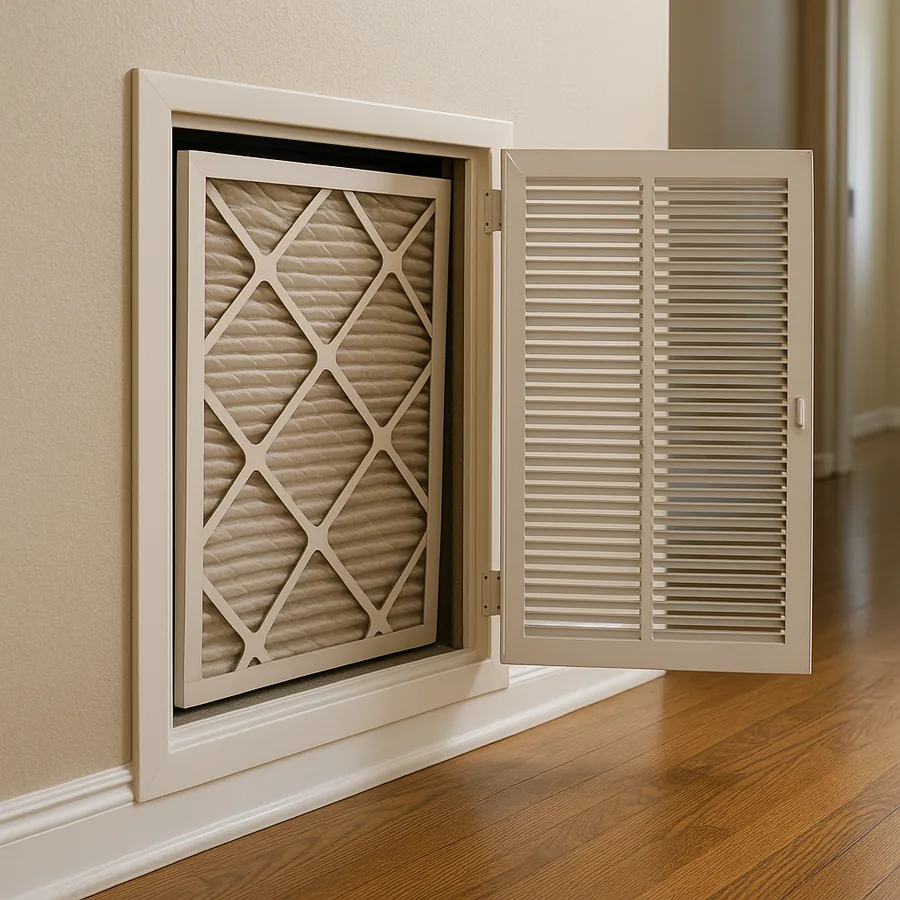
ENERGY STAR says to inspect, clean or change air filters once a month in a central air conditioner, furnace or heat pump. The manufacturer of a thick pleated filter will say every three months. Both are right, because they are answering different questions: monthly is when to look, quarterly is a typical replacement interval for a deep filter in an ordinary house. Look monthly, replace when it is dirty, and expect the interval to be shorter with pets, with construction nearby, and during heavy running seasons.
The MERV question, answered properly
MERV is the Minimum Efficiency Reporting Value, and EPA defines it as a filter's ability to capture particles between 0.3 and 10 microns. The scale runs from 1 to 16, and the higher the rating, the better the filter is at trapping particles of a given size. EPA's recommendation for a home is to choose a filter of at least MERV 13, or as high a rating as your system fan and filter slot can accommodate.
That last clause is doing a great deal of work, and EPA says why elsewhere in the same guidance: selecting a higher-efficiency furnace filter has to account for compatibility with the existing ducted system, so that airflow is not impeded by the added resistance of the filter. A denser filter is a restriction, and restriction is exactly what raises static pressure.
So which do you buy
MERV 13 if the system can carry it, and the way to know is not to guess. Static pressure measured across the system with the filter in place is the answer, and it takes a technician a few minutes with a manometer. This is one of the few genuinely useful things to ask for during a maintenance visit, because it settles the filter question permanently and tells you something about the ducts at the same time. If the reading is already at or above what the equipment is designed for, a denser filter is the wrong purchase and the duct system is what needs attention.
Can a dirty furnace filter cause no heat
Yes, and it is one of the commonest no-heat calls that turns out not to be a fault. A blocked filter starves the furnace of airflow, the heat exchanger runs hotter than designed, and the high-limit switch shuts the burner off to protect it. The blower keeps running, so you get air from the registers that is not warm, then a cycle that repeats. Short cycling of this kind is a safety device doing its job. Change the filter, and if the pattern continues after that, it is a fault rather than a habit.
Washable filters, and other things sold to you
A washable filter saves consumables and generally sits at the low end of the MERV scale, so it protects the equipment more than the air. Ultraviolet lamps, ozone generators and duct-mounted purifiers are a separate subject from maintenance and should be evaluated separately from it. None of them substitutes for a filter of the right rating, changed when it is dirty.
DIY HVAC Maintenance
What you can do yourself, and exactly where to stop
More than people think on one side of the line, and nothing at all on the other. The tools involved are a screwdriver, a garden hose and a shop vacuum.
Five maintenance tips that are worth more than the rest
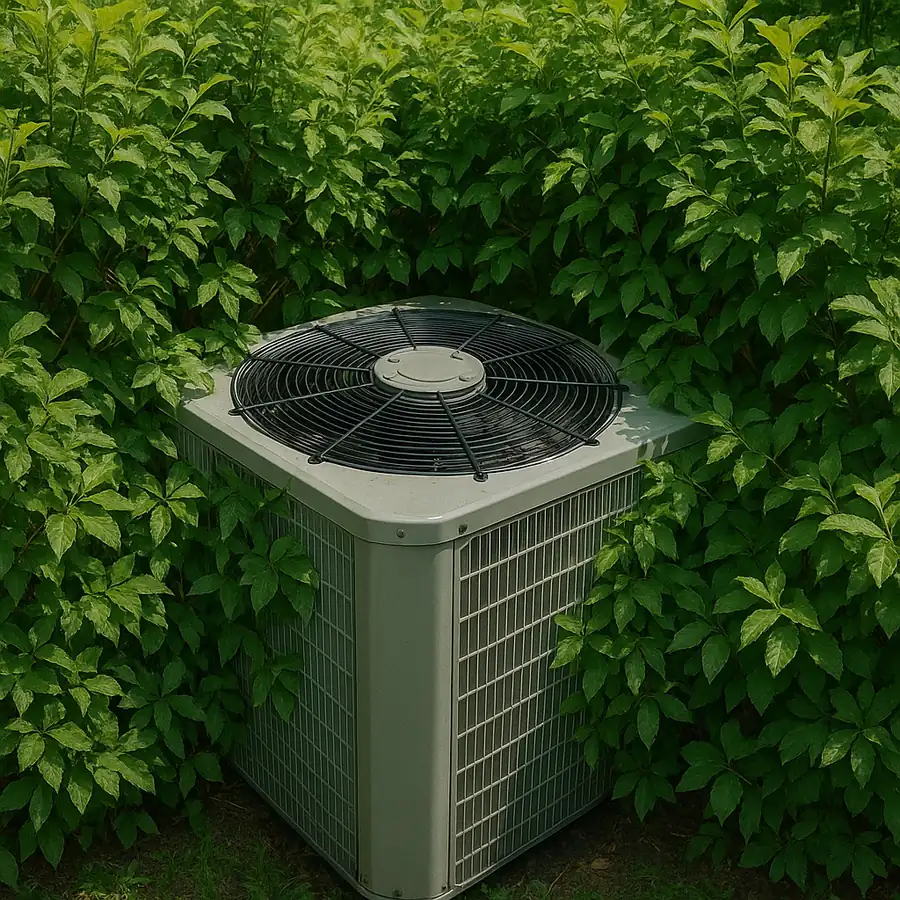
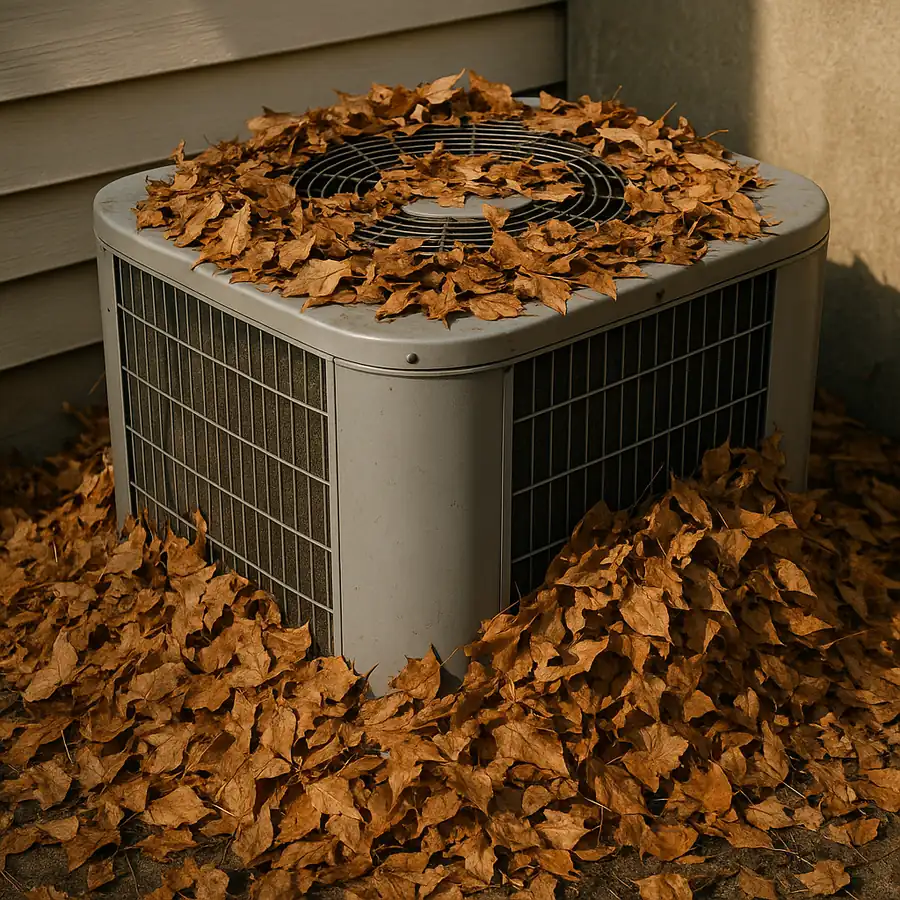
If you do nothing else on this page: check the filter monthly rather than seasonally, keep two feet clear around the outdoor unit in every season, book the seasonal visit in the quiet months, keep the written report from each visit so that next year’s readings have something to be compared against, and ask for static pressure once. Those five cost almost nothing and cover most of what maintenance is actually protecting.
Where to stop, without exception
Refrigerant, gas, and anything behind a panel with a warning label. Refrigerant work requires certification and gauges, and topping up a system that is losing charge treats the symptom of a leak. Gas connections, burner adjustment and the heat exchanger are the safety items on the federal list and are not homeowner territory in any circumstances. Electrical panels and capacitors hold a charge after the power is off.
Timing
Spring for cooling, autumn for heating, and book early
ENERGY STAR puts it in one line: schedule a check-up of the cooling system in the spring and the heating system in the fall. The reasoning behind the timing is worth spelling out, because it is also the reasoning behind the price.
Why the shoulder seasons
A system checked in April has time for a part to be ordered before it is needed. The same fault found in the first heatwave is an emergency: overtime rates, a queue, and no leverage to compare quotes. Contractors know their calendar too, which is why maintenance is discounted in the quiet months and impossible to book in the loud ones.
The winter list, in the order it matters
- Book the heating check before the first cold snap, not during it. Everything below is easier when the system is not already failing.
- Test the carbon monoxide alarms and replace the batteries, on every level of the home.
- Fit a fresh filter at the start of the heating season, because heating runs long and steady and loads the filter differently from cooling.
- Clear the outdoor unit if you have a heat pump, which unlike an air conditioner works all winter and needs air on all sides in January. Snow drifts and roof-edge ice both matter, and the details are on our page about living with a heat pump.
- Check the flue and combustion air openings from the outside for blockage — nests, debris, drifted snow.
Safety, Without The Scare
Carbon monoxide, honestly
This is the argument used to sell autumn visits, and it is real. It is also smaller than the way it is usually presented, and you deserve the actual proportions.
What the numbers say
The Consumer Product Safety Commission counts more than 200 a year deaths in the United States from accidental non-fire carbon monoxide poisoning associated with consumer products — and more than 100 of those deaths are linked to portable generators. So the largest single cause in that count is a generator run in or near a house during a power cut, not a furnace. Anyone quoting CO statistics at you to sell a tune-up is quoting a figure that is mostly about something else.
What is nevertheless true about your furnace
A gas or oil furnace produces combustion gases, and it is the heat exchanger that keeps them separate from the air you breathe. A cracked heat exchanger allows those gases into the supply air, and this is why the federal checklist puts the heat exchanger, gas connections, gas pressure and burner combustion in one line for the heating visit. It is a genuine safety inspection, and it is the item that makes an autumn visit different in kind from a spring one.
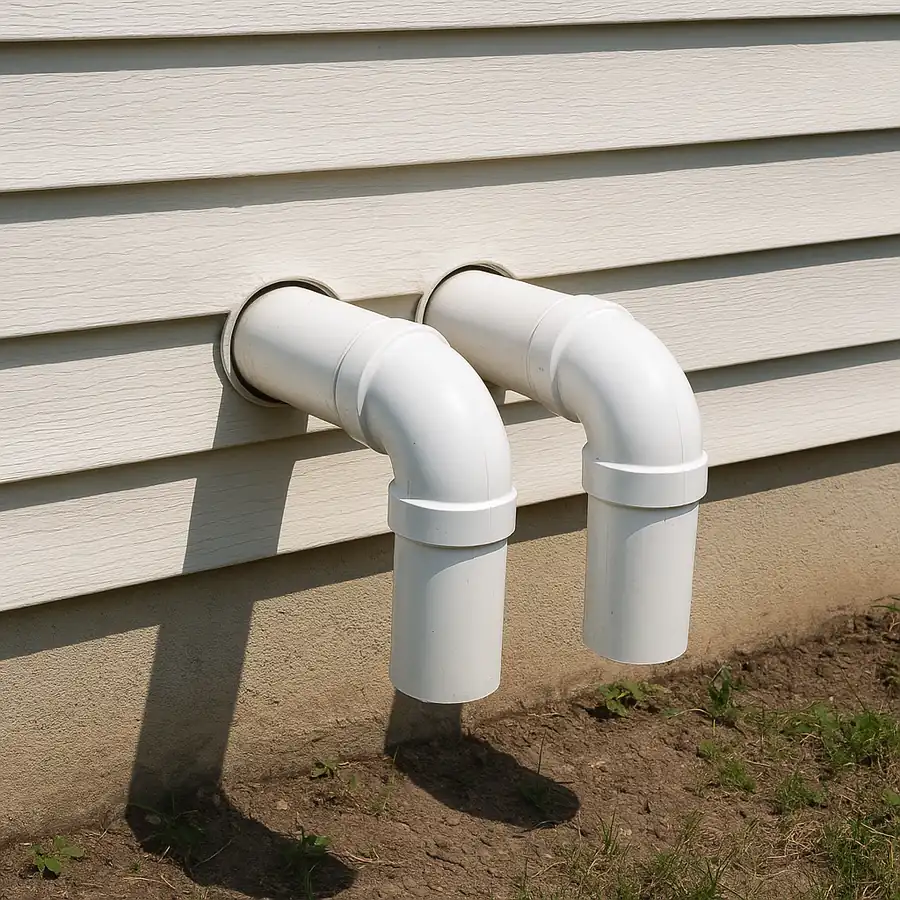
Duct leakage belongs in the same conversation for a different reason: leaks change the pressure balance of a house, and an unbalanced house can pull combustion gases back down the flue instead of venting them. ENERGY STAR names this risk directly in its guidance on sealing ducts, and we cover it on the ductwork page.
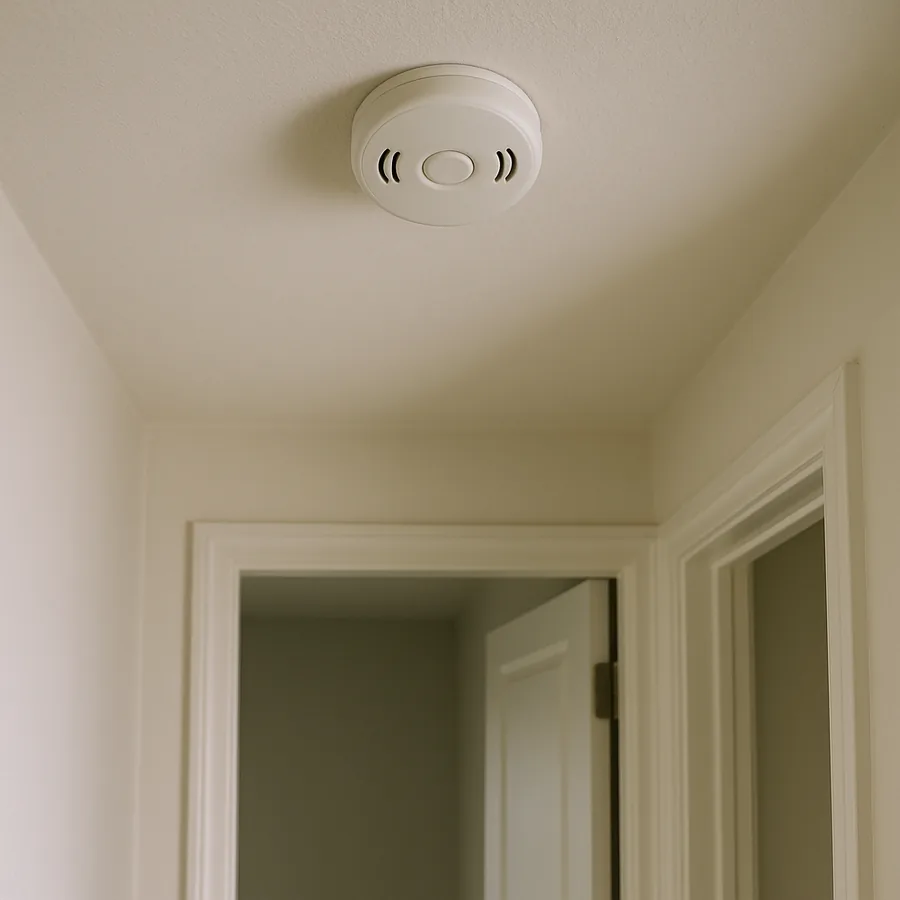
The measure that actually protects you
CPSC's own instruction, which costs less than any service visit: install battery-operated CO alarms, or alarms with battery backup, on every level of the home and outside sleeping areas, and interconnect them so that when one sounds they all sound. An annual heat exchanger inspection is worth having. A working alarm is what stands between a fault and a casualty, and it does not depend on anybody's schedule.
The Paperwork Argument
Does maintenance keep the warranty valid?
Frequently claimed, rarely quoted, and worth checking rather than believing — in either direction.
What is generally true
Manufacturer warranties on heating and cooling equipment commonly contain two conditions that catch people out. The first is registration: many manufacturers offer a longer parts warranty if the equipment is registered within a set window after installation, and the shorter default applies if nobody does it. The second is a maintenance clause, requiring that the equipment has been maintained in accordance with the manufacturer's instructions, with documentation available if a claim is made.
What that does and does not mean
It does not mean a missed year automatically voids the warranty. It means that if a component fails and the manufacturer looks for a cause, a system with no maintenance record and visible neglect — a blocked filter, a coil packed with debris — gives them a reason to decline. Documentation is the point. A written report from each visit, filed somewhere findable, is worth more than a plan sticker on the cabinet.
Parts and labor are two different warranties
The manufacturer covers parts. The installing contractor covers labor, usually for a much shorter period and under their own terms. A failed part in year six can therefore be free as a part and chargeable as three hours of work, which surprises people at exactly the wrong moment. Both documents are worth reading once, when nothing is broken.
What to actually do
Find your equipment's warranty document rather than relying on what anybody says about it. Check whether registration was completed and when the parts coverage expires. Keep the reports. If you are on a maintenance plan, ask whether the company files the documentation on your behalf, because that is a real service and it is one of the few plan features that is hard to replicate yourself. Warranty terms also decide part of what a replacement actually costs you when equipment fails inside its coverage.
Where It Stops Paying
What maintenance cannot fix
A well-maintained system that was designed wrong is a well-maintained wrong system. Maintenance protects a design; it does not correct one.
- Duct leakage. No amount of coil cleaning recovers air being delivered to an attic. ENERGY STAR puts typical losses at a fifth to nearly a third of the air moved, which dwarfs anything a tune-up recovers. That is a separate project with a separate price.
- Sizing. Equipment too large for the house cycles short, removes less humidity and wears its compressor, and it does that just as reliably when it is clean. The remedy is a load calculation at replacement time, covered on our replacement cost page.
- Static pressure from the duct design. A system fighting its own ductwork will keep fighting it after every visit. The measurement is the diagnosis, and the fix is in the ducts.
- Age. There is a point at which maintenance becomes the annual purchase of one more year on failing equipment, and the honest test is arithmetic: the cost of the visit plus the expected repair against the same money applied to a replacement. Our page on repairing versus replacing sets that out.
The uncomfortable version
If your house has one room that is never right, or bills that climb while the equipment stays clean, maintenance is not the intervention that will change it. Sealing ducts, correcting airflow, or replacing equipment that was wrong for the house are. A contractor whose only offer is a plan has one tool; the question worth asking is what they measured before recommending it.
Before You Book
What to ask, and what a weak answer sounds like
All four are answerable in one sentence by any company that does the work, and awkward for any company that does not.
| Ask | What it tests | A weak answer |
|---|---|---|
| Do you leave a written report with readings? | Whether the visit produces evidence. Everything on the federal checklist generates a value worth writing down. | “We’ll let you know if we find anything.” |
| Which checklist items does this price include? | Separates a scope from a duration. It also tells you whether the advertised price is the whole visit. | An amount of time, or “a full service”. |
| Will you measure static pressure and tell me the number? | The single most informative reading in a house, and it settles the filter question at the same time. | Unfamiliarity with the term. |
| On a heating visit: how do you inspect the heat exchanger? | The safety item. There are real methods and there is looking at the front of the cabinet. | “We check everything.” |
What we do, and what we do not
We are not a contractor. We do not service, repair or install equipment and we do not sell maintenance plans. We are paid a fixed fee for an introduction, identical whether you book a seasonal visit or replace an entire system, which is the only reason a page about maintenance plans can afford to spend four paragraphs on how to value one. When you want somebody to look, we connect you with independent licensed and insured heating and cooling companies, and the rest is between you and them. How that works and who pays us is on our about page.
Straight Answers
Maintenance questions, answered
How often should HVAC be serviced?
Twice a year for a system that both heats and cools: the cooling side in spring and the heating side in autumn, which is what ENERGY STAR recommends. A heat pump runs in both seasons and therefore wears in both, so it is the clearest case for two visits. Separately, and more importantly, inspect the filter once a month.
What is a furnace tune up, and how long does it take?
It is the heating half of the seasonal checklist: thermostat, electrical connections tightened with voltage and current measured, lubrication, condensate drain, controls, and then gas connections, gas pressure, burner combustion and the heat exchanger. Performed properly it is not a fifteen-minute job. If you want a single number to judge by, ask what was measured rather than how long it took.
Is HVAC maintenance worth it?
It is worth most on older equipment, in harsh climates, and where a failure would be genuinely disruptive — the same conditions that shift the repair-or-replace decision; it is worth least on new equipment in a mild climate with a homeowner who changes the filter. The honest framing is not maintenance against nothing, but a small part replaced in April against the same part replaced in July at an emergency rate.
Do I need a maintenance plan?
Need, no. It can still be the right purchase. Take the plan price, subtract two single visits at that company's published rate, value the repair discount against your own three-year repair history rather than an average, and decide whether what remains is a fair price for priority scheduling. And read the renewal, transfer and cancellation clauses before signing, because that is where the real cost usually is.
Can I skip a year?
Nothing fails the next morning. What you lose is the trend: readings compared year to year are what turn a visit into information. On equipment under warranty you also weaken your position if a claim is ever made, because the manufacturer can ask for a maintenance record and you will not have one.
Can a dirty furnace filter cause no heat?
Yes. A blocked filter starves the furnace of airflow, the heat exchanger overheats, and the high-limit switch shuts off the burner to protect it — so the blower runs and the air is not warm. It is a protective device working correctly. Change the filter first; if the pattern repeats afterwards, it is a fault.
What MERV filter should I use?
EPA recommends at least MERV 13, or as high as your system fan and filter slot can accommodate — and that second clause matters, because a denser filter adds resistance and can restrict airflow on a system that is already working hard. The way to settle it is a static pressure measurement, which any competent technician can take during a maintenance visit.
Do you sell maintenance plans?
No. We are a matching service, paid a fixed fee for the introduction rather than a share of anything sold afterwards, so a plan earns us exactly what a one-off repair does. We publish research and connect homeowners with independent licensed and insured heating and cooling companies. How the introduction works is on our home page.
Where This Comes From
Sources
- The seasonal checklist, filter frequency and the airflow figure — ENERGY STAR maintenance checklist.
- When to schedule check-ups, and monthly filter inspection — ENERGY STAR, how to keep your HVAC system working efficiently, and ENERGY STAR, heat and cool efficiently.
- MERV ratings and the recommendation for homes — EPA, what is a MERV rating.
- Filter selection, airflow resistance and consulting a technician — EPA, guide to air cleaners in the home, and EPA, air cleaners and air filters in the home.
- Carbon monoxide deaths and the alarm guidance — U.S. Consumer Product Safety Commission, carbon monoxide information center.
- Carbon monoxide and indoor air quality — EPA, and CDC on carbon monoxide poisoning.
- Duct leakage, backdrafting and why sealing outranks a tune-up — ENERGY STAR, benefits of duct sealing.
- Equipment ratings as tested — AHRI certified product directory.
Our editorial standards explain how we source and check what we publish. We do not publish national price averages for maintenance, because scope rather than geography is what moves the number. Nothing here is a quote or a diagnosis, and we are a referral service rather than a contractor. Last updated .
Before you call anyone
The independent match — we are paid for the introduction, not for the size of your job
Most roofing advice is written by the company that wants to do the work. That is not a failing of the people who read it; it is a defect in who is talking. The estimate, the diagnosis and the invoice come from one party, and no amount of care on your side fixes that.
We are built the other way round. We do not repair roofs and we do not sell materials, so the payment reaches us when you are connected to a licensed, insured roofing company — the same amount whether your roof needs an eight-hundred-dollar repair or a twenty-thousand-dollar replacement. Nobody here has a reason to talk you into the larger number. How we make money and how we research are both written down.
Waiting is the one thing that actually costs money. An insurance clock runs from the date of the damage rather than the date you noticed it, and damage that sits through a season stops reading as sudden and starts reading as wear — which is the exclusion that pays nothing. And if your roof is simply worn out, say so on the call. No claim will pay for age, we will tell you that plainly, and you will have lost nothing but the call.