Cost By Metro
HVAC cost by metro — what your city actually changes, and what it does not
You searched for a number for your city. You will not find one here, and the reason is not coyness: the city changes three separate things about what you pay, and the installation price is the smallest of the three. This page uses federal wage and energy data to show which of the three is worth your attention — and it is almost certainly not the one you came for.
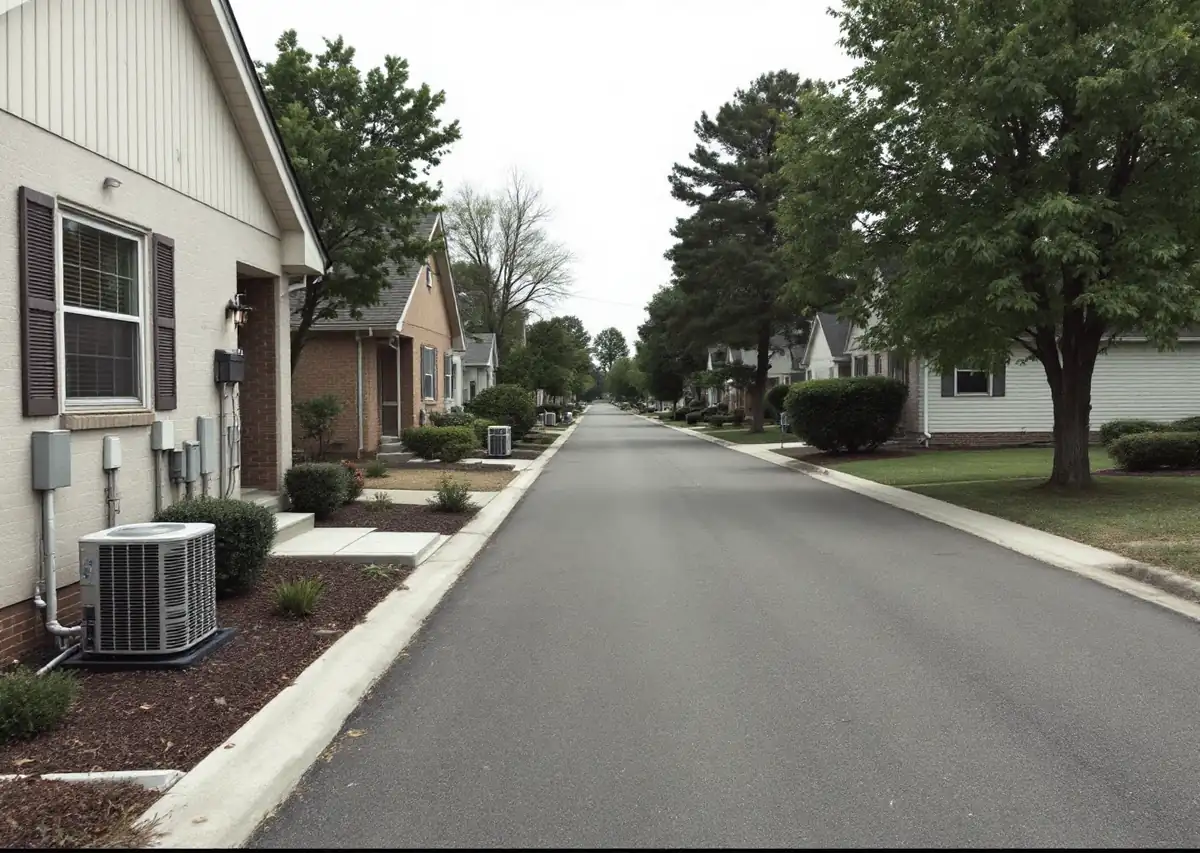
Why there is no number for Atlanta, Austin or Chicago on this page
- An average without a scope is not information. Replacing a furnace in an open basement and replacing a furnace plus coil plus ductwork in a two-storey house with a finished ceiling are the same words and a different project by a multiple. A city average pools both and describes neither.
- Every page above us is written by somebody who wants the call. A published average is a hook: it anchors you low, and the real number arrives after somebody has been in your crawlspace. We are paid a fixed fee for an introduction, identical for a small job and a large one, so we have nothing to gain from anchoring you anywhere.
- The variables that dominate are not geographic. Access, scope, and whether the ducts can carry what you are buying move the number more than which metro you live in — and those are set by your house, not your zip code.
- What geography does change is measurable, and it is below. Three things, in ascending order of how much money they move over the life of the system.
The Actual Answer
Your city changes three things, and they are not equally important
Ranked by how much money each one moves across fifteen years of owning the system, rather than by how much attention each one gets.
Third: the labor rate
Real, measurable, and the smallest of the three. It is what everybody searches for and what every competitor publishes, because it is the part that arrives as a single number on a quote.
Second: the rules
Permits, inspection and what your city requires when you replace rather than repair. Occasionally this changes what you are allowed to install at all, which is a bigger deal than a percentage on a labor rate.
First: the price of energy
The cost of running the thing you just bought, every month, for fifteen years. It varies more than fourfold between states, and almost nobody checks it before signing.
Third: Labor
What the federal wage data says, and what it does not
The Bureau of Labor Statistics publishes what this trade earns. It is the only honest starting point for a conversation about why the same work costs different money in different places.
The national figure
Median pay for heating, air conditioning and refrigeration mechanics and installers is $61,010 a year, or $29.33 an hour as of May 2025, across 440,900 jobs. Employment is projected to grow 11 percent from 2025 to 2035, much faster than the average for all occupations.
What that growth figure is really telling you
A trade growing much faster than the average is a trade that is short of people. Short trades do not discount, and they do not discount least in the month when everybody needs them at once. When a quote in July feels high, the shortage is a large part of the reason, and it is national rather than local.
The sentence in the federal handbook that explains your July quote
BLS describes the working conditions of this occupation directly: workers “may be on call for emergencies and sometimes work overtime or irregular schedules during peak heating and cooling seasons.” Overtime is not a surcharge somebody invented to take advantage of you. It is a documented feature of the occupation, written down by the federal statistical agency, and you are paying for it whenever you buy in the peak.
Why we do not publish per-metro wages
BLS does publish wage tables by metropolitan area, and they live in spreadsheet files rather than on a readable page. We are not going to retype numbers out of a spreadsheet and present them as our research, and we are certainly not going to estimate them. The national median above is the figure we can quote and stand behind; if you want your own metro, the tables are linked in the sources at the foot of this page and they are free.
The Lever You Actually Control
Season beats city
Of everything on this page, this is the one that can change your number today, and it has nothing to do with where you live.
The two markets
There are effectively two markets for this work. In the peak — the first heatwave, the first hard freeze — you are buying from a queue, at overtime rates, with no leverage and no time to compare. In the shoulder seasons you are buying from a company that has capacity, will spend an hour producing a written scope, and would quite like the work.
What that is worth
More than the difference between two metros, in most cases. It is also the only variable on this page that a homeowner can move unilaterally, and the only one that costs nothing to exercise: you simply decide in April rather than in July.
The exception, stated plainly
If the system has failed and the weather is dangerous, buy now and stop reading. A house at 95°F with somebody elderly in it, or a house heading below freezing, is not a negotiation. What you can still do is separate the emergency from the project: get the heat or cooling running, then take the replacement decision when you are not standing in it. Our pages on a furnace that will not heat and an air conditioner that will not cool are written for exactly that hour.
Work It Out
What is actually moving your number
Three questions, nothing sent anywhere. The first one is when, not where, because that ordering is the point of this page.
Our fee for an introduction is the same whether you spend a little or a lot, which is why this tool spends its first answer telling you when not to buy.
Second: The Rules
Permits, inspection, and what your city requires when you replace
This is the part that genuinely is local, and occasionally it changes not what you pay but what you are allowed to install.
A permit is normal, and it is not a formality somebody sells you
Most jurisdictions require a mechanical permit for equipment replacement, and an inspection afterwards. Denver, for example, lists residential air conditioning among the work eligible for its quick-permit route for single-family and duplex homes, with an issued residential construction permit required first on new builds and additions. Whether the permit and the inspection are included in the quote is a line item you should see, and an offer to skip the permit is not a discount — it is the removal of the only independent check on the work.
The rule that surprises people: replacement can pull you up to new-construction standards
Denver's own energy-code guidance for existing homes states it plainly: “The replacement HVAC system must meet the code requirements for new construction.” That single sentence can change what equipment is permissible, what efficiency it must reach, and what else has to be brought along with it. Cities vary, and the question to ask is exactly that one: does replacing this pull anything else up to current code?
And the myth, corrected from the source
You will read that certain cities have banned gas furnaces in existing homes. Before repeating it, read what the city actually publishes. Denver's guidance for existing residential projects says: “We encourage project teams to consider electric equipment or appliances when feasible.” Encourage. Not require. There is a real and consequential policy direction here, and it is not the same thing as a prohibition — and if you are deciding between a furnace and a heat pump, the difference between those two words is the whole of your decision. What that choice actually turns on is on our heat pump page.
How to check yours in five minutes
Search your city's own domain for “mechanical permit” and for “residential energy code”. City building departments publish this material and it is written for homeowners more often than you would expect. What a contractor tells you about local code is usually right and is always second-hand; the city's own page is first-hand and takes less time to read than a review.
First: The Running Cost
The number that varies four times more than the quote
Here is the part nobody searching for an installation price is looking at, and it is the part that moves the most money.
The federal spread
The U.S. Energy Information Administration reports that in 2025 residential electricity ranged from 8.20 cents per kilowatt-hour in North Dakota to 35.72 cents per kilowatt-hour in Hawaii, against a national average of 17.30 cents per kilowatt-hour. That is more than a fourfold difference between the cheapest and the most expensive state in the same country, in the same year.
Why it differs, in EIA's own words
“Electricity prices vary by locality based on the availability of power plants and fuels, local fuel costs, and pricing regulations.” Hawaii sits at the top of that range, EIA explains, mainly because most of its electricity is generated with petroleum fuels that have to be imported. None of that is within your control, and all of it lands on your monthly bill for as long as you own the equipment.
What this does to the decision you are actually making
Two households buy the same system in the same week. One pays near the bottom of that range for electricity and one near the top. Fifteen years later the difference in what they have spent running it is not a rounding error against the install price — it is a multiple of the difference between the two most expensive quotes either of them received. And the household that agonised over which installer was three hundred dollars cheaper never looked at it.
The check that takes ten minutes
Find your price per kilowatt-hour on your own electricity bill, and your price per therm or per gallon on your gas or oil bill. The ratio between those two numbers decides whether a heat pump lowers your bills or leaves them flat — and it is the single most consequential piece of local information in this entire subject — more so than anything on the maintenance side. We set the arithmetic out on the heat pump page; the numbers to put into it are on paperwork you already have.
What Your Weather Buys
Climate changes the specification, not just the price
The third genuinely local variable, and the one that determines what you should be buying rather than what it costs.
Cold metros: the specification is a temperature
If you are considering a heat pump in a place with real winters, one number matters more than any other: rated capacity at your design temperature rather than at 47°F. ENERGY STAR certification requires third-party verified performance at low temperatures, with air-source heat pumps tested down to 5°F, and equipment carrying that designation is a different proposition from equipment that does not. In a cold metro that certification is the decision; everywhere else it is a nice-to-have.
Hot and humid metros: the specification is size
Where summers are long and wet, the failure mode is not insufficient capacity but too much of it. Oversized cooling equipment reaches the setpoint quickly, shuts off, and never runs long enough to pull moisture out of the air, producing a house that is cold and clammy and a compressor that starts far more often than it should. The remedy is a load calculation, it costs nothing extra to insist on, and it is covered on our replacement cost page.

Dry heat, coastal air, and altitude
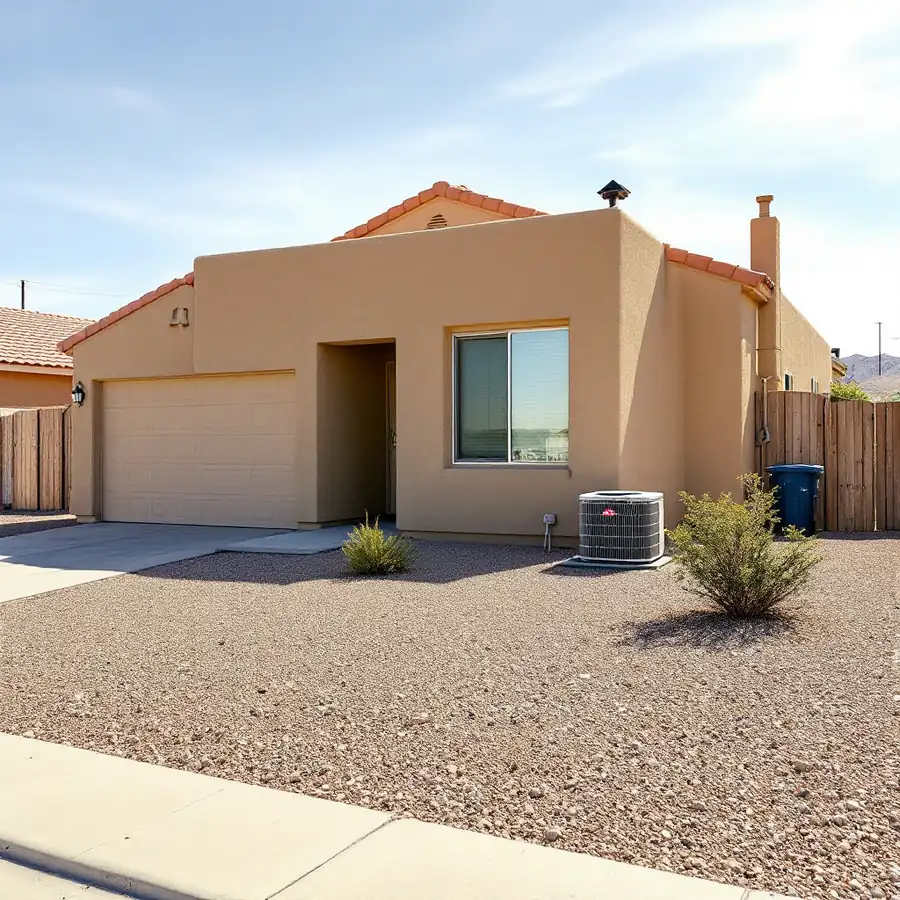
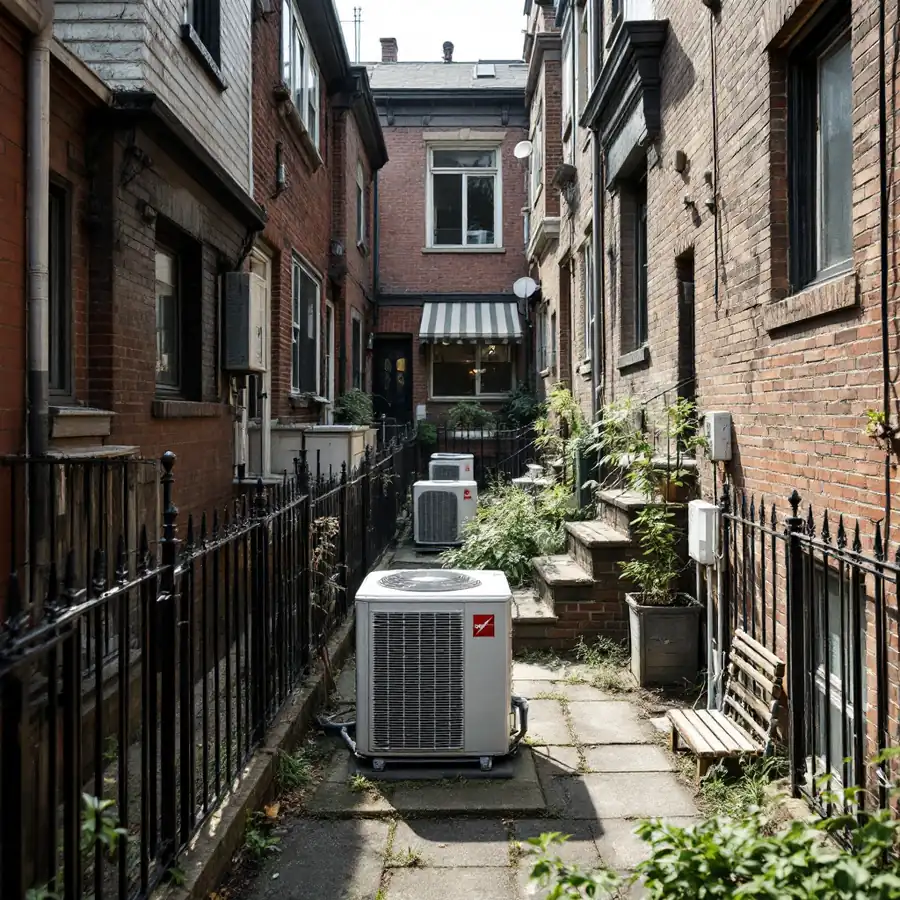
Local conditions produce local details. Coastal salt air is hard on outdoor coils. Very dry climates change how much humidity control you need and sometimes make evaporative options viable that make no sense elsewhere. High-altitude cities affect how combustion appliances are configured, and installers there work to manufacturer instructions written for that elevation, which is one of the questions worth asking alongside controls compatibility. None of these change the price much. All of them are worth one question to a local company that will know the answer instantly if they actually work there.
What Does Not Change
The things that are the same in every city
Worth listing, because it is a short list and everything on it is more important than geography.
- The equipment costs roughly the same everywhere. Manufacturers do not price by metro. Distribution and volume produce some variation, and it is small compared with labor and scope.
- The right way to size a system is identical in every state. A load calculation for your house, room by room, and equipment selected against it. A quote that inherits the size of the box being removed is inheriting whatever mistake was made last time, and it does that in Atlanta exactly as it does in Chicago.
- Duct leakage wastes the same share of your air anywhere. ENERGY STAR puts it at a fifth to nearly a third of the air moving through a typical duct system, which is more than any efficiency upgrade recovers, and it is a separate project with a separate price.
- What makes a quote comparable is a written scope. Which equipment, what is done to the ducts, what electrical work is included, whether the permit is in the price, and what making good covers. Two totals from two cities tell you nothing; two scopes tell you everything.
The Ones People Ask About
Seven metros, and what is genuinely specific to each
Not prices. The local variable that a homeowner in each of these places should actually be asking about, which is a different and more useful thing.
| Metro | The local variable that matters | The question to ask |
|---|---|---|
| Atlanta | Long humid cooling season with real winter nights. Sizing for moisture removal rather than peak capacity. | “What load calculation gave you this size, and what does it do to humidity at part load?” |
| Austin | Extreme and lengthening cooling season, with occasional hard freezes that expose heating that was never specified seriously. | “What happens to this system in a multi-day freeze, and what is the back-up heat?” |
| Houston | Humidity above all, plus flood-prone equipment locations in many neighbourhoods. | “Where is the indoor equipment, and how high is it off the floor?” |
| Chicago | Genuine cold. Cold-climate certification and capacity at design temperature move from optional to decisive. | “What is the rated capacity at my design temperature, not at 47°F?” |
| San Diego | Mild both ways, so the case for large equipment is weak and the case for right-sized equipment is strong. Many homes have no ducts. | “Given this climate, what is the smallest system that will do the job?” |
| Charlotte | Mixed climate where both seasons matter, which is where dual fuel and heat pump arithmetic is most sensitive to local energy prices. | “Show me the comparison using my own electricity and gas rates.” |
| New Jersey | Older housing stock, cold winters, and electricity prices well above the national average, which sharpens every running-cost question. | “What will this cost me per year to run at my rates?” |
Every one of those questions is answerable by a competent local company in a sentence, and none of them is about price. That is deliberate: the quality of the answers sorts companies faster than the totals do.
Federal Money, State Hands
Rebates are the one incentive that genuinely depends on your address
Tax credits are federal and identical everywhere. Rebates are federally funded and administered by your state, which makes them the most geographically variable money in this whole subject.
Why two households in different states get different answers
The federally funded home energy rebate programme is run by each state's own energy office, and states opened their programmes at different times and in stages. The money is national; the schedule, the paperwork and the approved-contractor list are not. That is why a neighbour two states away can describe a process that bears no resemblance to yours.
What is worth knowing before you talk to anybody
The rebate is means-tested, capped per measure, and in most cases it flows through the contractor rather than to you afterwards — which means the company you choose has to be on whatever approved list your state maintains. Choosing an installer who is not on it can quietly cost you the rebate, and that is a geographic constraint on your choice of company rather than on your choice of equipment. The caps and the income bands are set out on our heat pump page.
The check, in order
First, whether your state's programme is open and accepting applications. Second, whether the contractor you like is approved under it. Third, what happens to the quote if the rebate does not come through — because a price that only works with a rebate is a price with a condition attached, and the condition should be in writing.
The Shortcut That Usually Backfires
Buying equipment cheaply from somewhere else
A predictable consequence of searching for prices by city: if it costs less over there, why not buy it over there and hire labor here?
What actually happens
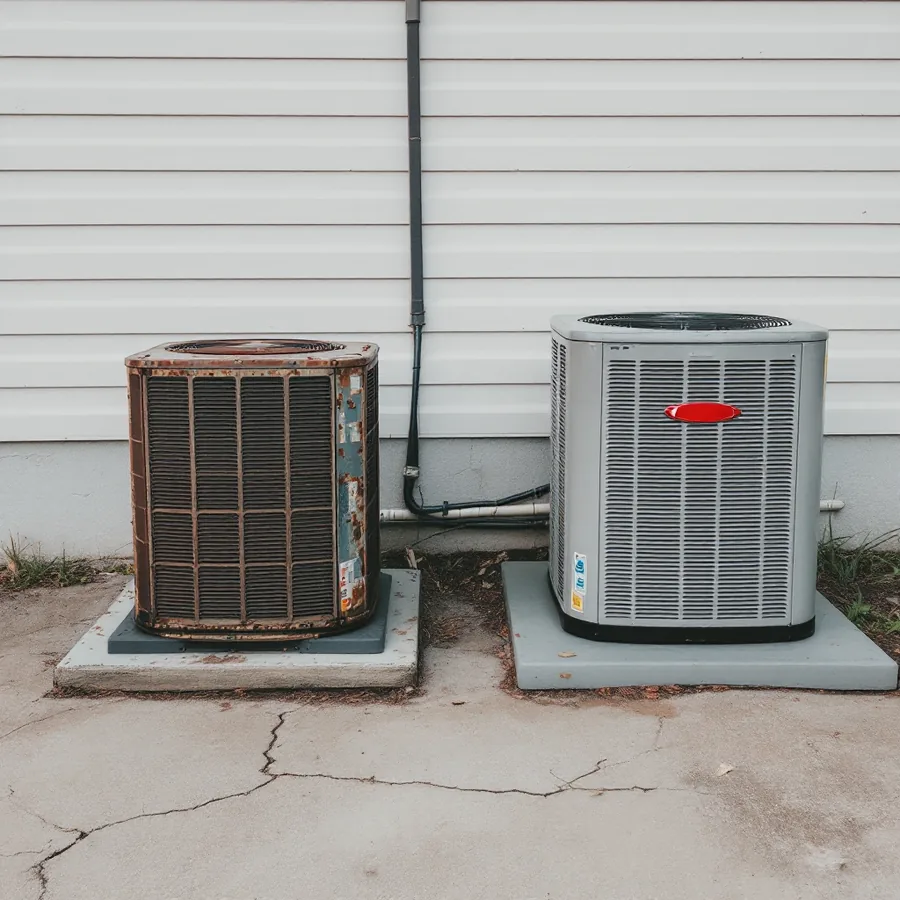
Three things, and all of them are worth knowing in advance. Manufacturer warranties commonly depend on who bought and who installed the equipment, so a unit sourced outside the normal channel can arrive with different coverage or none. Many established companies decline to install equipment they did not supply, because the labor warranty then covers somebody else's box. And when something fails in year three, the conversation about whose responsibility it is happens between you and two parties who have no relationship with each other.
The version that does work
Comparing scopes across companies in your own metro, and being willing to wait for the shoulder season. That captures most of the saving people are chasing, without moving the warranty or the accountability anywhere.
Ask this before assuming
“Do you install equipment I supply, and what happens to the parts and labor warranties if I do that?” The answer is quick, it is specific to that company, and it usually ends the idea on its own merits rather than on ours.
Any City
If your metro is not in the table
The method transfers. Four things to look up, none of which requires a contractor to tell you.
What you will notice
Three of those four take five minutes and none of them involves a price. That is the point of this page: the useful local information is not a number, and the number everybody publishes is not local information.
Transparency
What we could not verify, and therefore left out
Three things we wanted on this page and did not publish, with the reason for each. We would rather show the gap than fill it with something plausible.
- Wages by metropolitan area. BLS publishes them in spreadsheet files rather than on a readable page. We quote the national median, which we can source directly, and link the tables so you can look up your own. We will not retype a spreadsheet and call it research.
- A rule of thumb for combustion equipment at altitude. High-elevation cities do affect how gas appliances are configured, and the specific figure that circulates online has no source we could open and read. It is therefore absent here, and the section on altitude asks a question instead of asserting a number.
- Utility rebate amounts. They change, they differ by utility rather than by city, and the pages that publish them are applications rather than documents. We point at the programme instead, because a stale rebate figure is worse than none.
The same standard applies to the rest of this site: our editorial standards set out how we source and check what we publish, and every figure above is quoted from the federal source linked beside it.
Reading Two Quotes
How to compare quotes, in one city or across two
The method is the same whether you are comparing two companies in your own metro or trying to work out whether the figure a relative quoted you from another state means anything.
Before You Sign
Four questions, wherever you live
Each one separates a company that measured from one that estimated, and none of them is about the total.
| Ask | What it tests | A weak answer |
|---|---|---|
| Is the permit and inspection included in this price? | Whether the job will be independently checked, and whether the quote is complete. | “We don’t usually bother for a swap.” |
| Does replacing this pull anything up to current code? | Local knowledge. In some cities replacement must meet new-construction requirements, and that changes the scope. | Vagueness, or irritation at the question. |
| What load calculation produced this capacity? | Whether you are buying a design or an inheritance. | “Same as what you have now.” |
| What will this cost to run at my rates? | Whether they have looked at the variable that outweighs their own quote over the life of the system. | A national average, or a brochure figure. |
What we do, and what we do not
We are not a contractor, we do not sell equipment, and we do not publish price averages for any city. We are paid a fixed fee for an introduction — the same fee for a small job and a large one — which is why this page spends its length telling you which questions matter rather than quoting you a number. When you want somebody to look at your house, we connect you with independent licensed and insured heating and cooling companies. How that works and who pays us is on our about page, and the rest of what we publish starts from the home page.
Straight Answers
Metro cost questions, answered
How much does HVAC replacement cost in my city?
We do not publish city averages, because an average without a scope describes nothing: the same words cover a straightforward swap in an open basement and a full system with ductwork in a finished two-storey house. What your city does change is the labor rate, the local code and permit requirements, and above all the price of the energy you will spend running the system. Those three are what this page covers, and only the first of them appears on a quote.
Is HVAC replacement cheaper in another state?
The equipment costs roughly the same everywhere; manufacturers do not price by metro. Labor differs, and the federal median for the trade is $61,010 a year or $29.33 an hour as of May 2025. But the difference that compounds is energy: residential electricity ranged from 8.20 cents per kilowatt-hour in North Dakota to 35.72 cents in Hawaii in 2025, against a 17.30 cent national average. Over fifteen years that gap dwarfs any difference in the installation price.
Why is my quote higher than the average I found online?
Usually because the average was for a different job. Access, scope, whether ductwork or electrical work is included, and what has to be opened and made good are the variables, and they are set by your house rather than your city. The productive move is not to argue with the total but to ask for the scope in writing and compare it against a second one.
Does the season really change the price?
Yes, and it is the one variable you control. The federal occupational handbook says of this trade that workers may be on call for emergencies and sometimes work overtime or irregular schedules during peak heating and cooling seasons. Buying in the first heatwave or the first hard freeze means buying overtime labor from a queue, with no time to compare. Buying in spring or autumn means buying from a company with capacity that will produce a written scope.
Do I need a permit to replace my system?
In most jurisdictions yes, with an inspection afterwards. Check your own city's building department page rather than relying on what anyone tells you. An offer to skip the permit is not a discount: it removes the only independent check on the installation, and it can surface later when you sell the house.
Have some cities banned gas furnaces?
Read the city's own words before believing it. Denver's guidance for existing residential projects, for example, says that it encourages project teams to consider electric equipment or appliances when feasible — encouragement rather than prohibition — while separately requiring that a replacement HVAC system meet the code requirements for new construction. Policy direction and prohibition are different things, and city pages are usually clearer about the difference than the articles written about them.
Do you publish price averages anywhere on this site?
No, and that is deliberate rather than an oversight. We publish what moves the number and what to ask, because we are paid a fixed introduction fee that is identical for a small job and a large one, so an anchoring figure would serve us and not you.
Where This Comes From
Sources
- Wages, employment and working conditions for the trade — U.S. Bureau of Labor Statistics, Occupational Outlook Handbook.
- Wage tables by metropolitan area — BLS Occupational Employment and Wage Statistics for this occupation, if you want your own metro rather than the national median.
- Electricity prices and why they differ by state — U.S. Energy Information Administration, and the EIA state electricity profiles.
- Natural gas prices — EIA natural gas data.
- An example of a city energy code and what replacement triggers — City and County of Denver, energy code for existing residential buildings.
- An example of city permit routes for residential work — City and County of Denver, central air conditioning permits.
- Cold-climate certification and what it verifies — ENERGY STAR, air-source heat pumps.
- Duct losses in a typical house — ENERGY STAR, duct sealing.
- Equipment ratings as tested — AHRI certified product directory.
Our editorial standards explain how we source and check what we publish. We do not publish price averages for any city, and every figure on this page is quoted from the federal source linked beside it rather than estimated. We are a referral service rather than a contractor. Last updated .
Before you call anyone
The independent match — we are paid for the introduction, not for the size of your job
Most roofing advice is written by the company that wants to do the work. That is not a failing of the people who read it; it is a defect in who is talking. The estimate, the diagnosis and the invoice come from one party, and no amount of care on your side fixes that.
We are built the other way round. We do not repair roofs and we do not sell materials, so the payment reaches us when you are connected to a licensed, insured roofing company — the same amount whether your roof needs an eight-hundred-dollar repair or a twenty-thousand-dollar replacement. Nobody here has a reason to talk you into the larger number. How we make money and how we research are both written down.
Waiting is the one thing that actually costs money. An insurance clock runs from the date of the damage rather than the date you noticed it, and damage that sits through a season stops reading as sudden and starts reading as wear — which is the exclusion that pays nothing. And if your roof is simply worn out, say so on the call. No claim will pay for age, we will tell you that plainly, and you will have lost nothing but the call.