Air Conditioner Not Cooling
Air conditioner not cooling — what the symptom actually tells you
Almost every page on this subject hands you a numbered list of causes and hopes one of them fits. A technician does not work that way. They start with a single question that splits the possibilities in half, and then they measure. This page walks the same path, and it is written by a referral service that does not repair air conditioners — which is why it can tell you when the answer is a twelve-dollar filter.
Four things worth knowing before you call anyone
- The fan tells you which half of the system to suspect. If air is moving but it is not cold, the indoor blower is doing its job and the problem lies in heat removal — outside, or in the refrigerant circuit. If nothing runs at all, it is power, control or a safety switch. That one observation eliminates most of the list before anyone opens a panel.
- Ice on the pipe means stop, not run harder. A frozen coil cannot cool, and it cannot be diagnosed while it is frozen. Switching cooling off and the fan on is the first move, and it costs nothing.
- “It just needs a top-up” is a sentence about a leak. A sealed system does not consume refrigerant. The federal energy agency's own advice is to have the leak found and repaired rather than topped off, and only a certified technician may legally buy the refrigerant in the first place.
- One warm room is usually not the air conditioner. When the rest of the house is comfortable, the equipment is making cold air — the air is not arriving. That is ducts, dampers and return air, and replacing the equipment does not fix it.
Start Here
The fork: air is moving, but it is not cold
This is by far the commonest way the problem gets described, and it is genuinely diagnostic rather than just a complaint.
What it means when the fan runs and the air is warm
Your system has two jobs. The indoor half moves air across a cold coil. The outdoor half takes the heat it collected and dumps it outside. When air is moving normally but arrives at the register at room temperature, the first job is being done and the second is not. That points outdoors — to the condenser, the compressor, the capacitor that starts it, or the refrigerant that carries the heat between them.
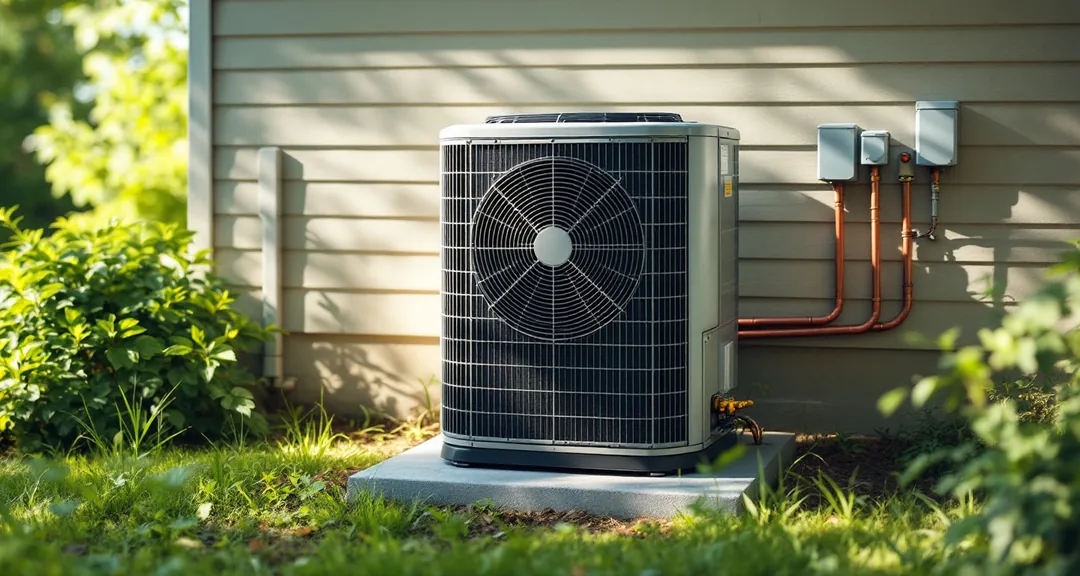
Go and look at the outdoor unit while the thermostat is calling for cooling. There are only three things to see, and you do not need tools for any of them. The fan on top should be spinning. The unit should be making a steady working noise rather than a hum or a click every few minutes. And the air leaving the top should be noticeably warm — that is your house's heat being thrown away, and its absence is informative.
The hum that costs the most
A condenser that hums but does not start, or starts and stops within seconds, is the classic signature of a failed start capacitor. It is one of the cheapest parts in the system and one of the most common failures, particularly after a run of hot days. It is also the reason to switch the system off at the thermostat rather than leave it trying: a compressor repeatedly attempting to start against a dead capacitor is being damaged while you wait for the appointment.
Do not open the condenser
The capacitor stores a charge after the power is disconnected, and it is large enough to be lethal. This is the point where a page written by someone selling you a repair says “consult a professional” and moves on. We will be specific instead: the difference between a five-minute part swap and a fatal accident is knowing how to discharge a capacitor safely, and that is not something to learn from a video while standing in the sun next to a live unit.
When nothing runs at all
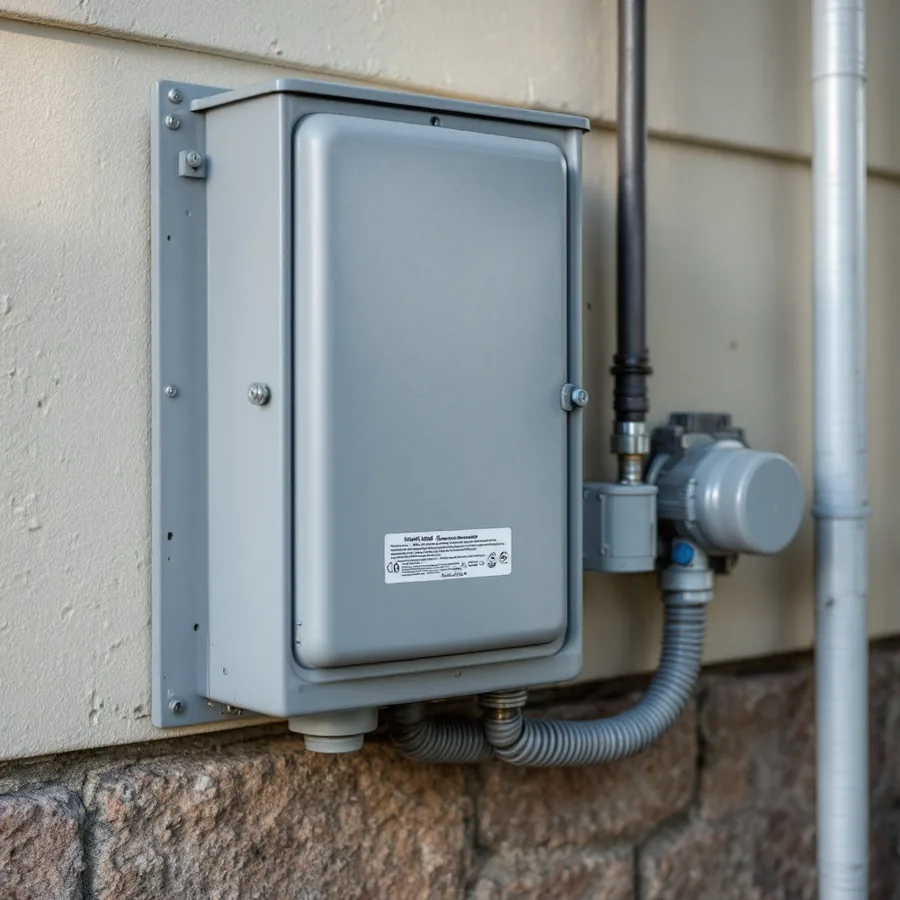
The opposite symptom has a friendlier list. Thermostat batteries, thermostat setting, the breaker, the outdoor disconnect, and the switch on the wall beside the indoor unit that looks exactly like a light switch and gets turned off by people who think it is one. There is also a float switch in most systems that deliberately shuts everything down when the condensate drain blocks — it is doing its job, and it is telling you about a drain rather than an air conditioner.
In The Order A Technician Checks Them
What actually causes it, ranked by how often it turns out to be true
The federal Energy Saver programme publishes its own list of common air conditioner problems, and it is short. Ours follows the same order, with what each one looks like from where you are standing.
Restricted airflow
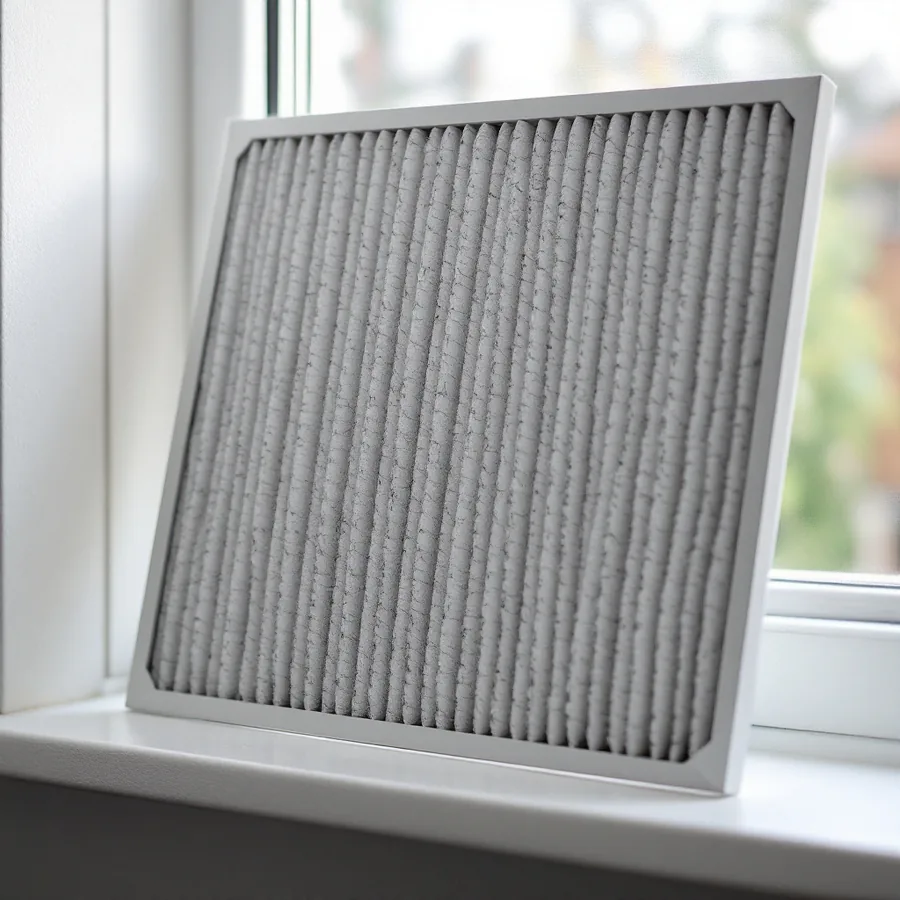
A loaded filter, closed registers, or a return grille behind furniture. The federal guidance is blunt about the mechanism: a clogged filter restricts airflow through the unit, decreasing its efficiency and reducing its ability to cool the air. It is first on the list because it is first in reality, and because it is the one you can fix in the time it takes to read this section.
Dirty coils
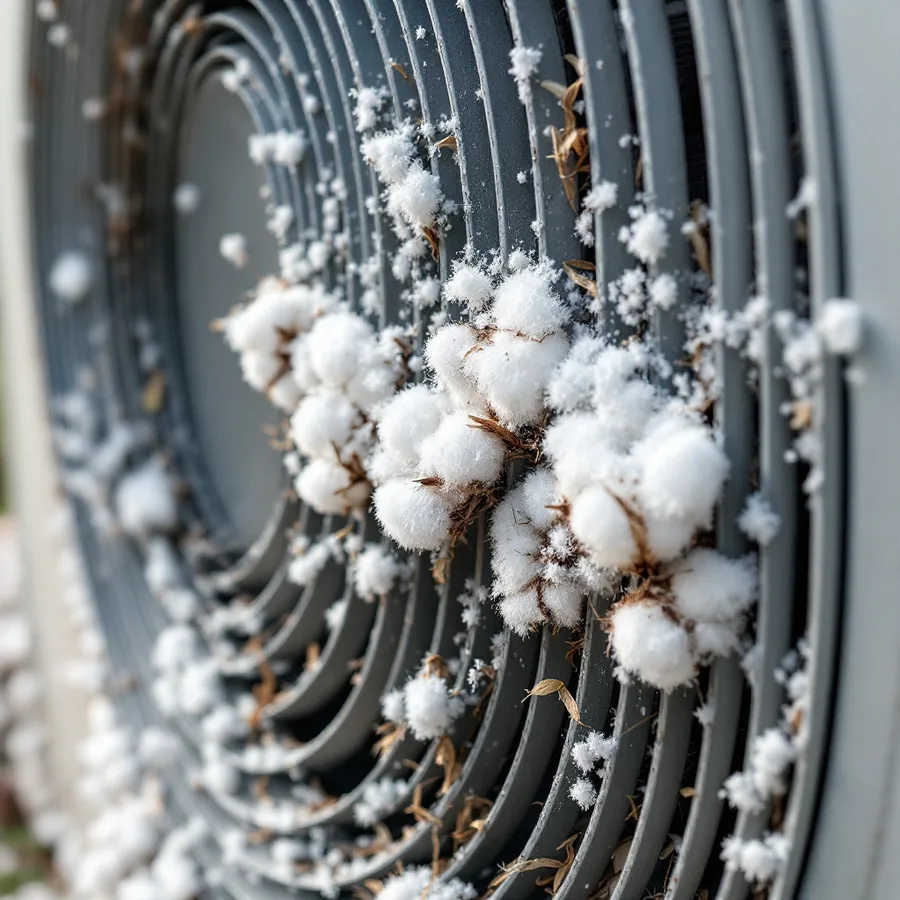
The indoor coil collects what the filter missed; the outdoor coil collects grass clippings, cottonwood and dust. ENERGY STAR states the consequence plainly — dirty coils reduce the system's ability to cool your home and cause the system to run longer. A coil you cannot see through cannot exchange heat.
Refrigerant charge
Too little and the system cannot move heat; too much is equally bad. Both make it less efficient, raise the bill and shorten equipment life. A charge that is low did not evaporate — it left, and where it left is the actual repair.
Electrical controls
Capacitors, contactors and control boards. The federal list describes compressor and fan controls wearing out from the system cycling on and off too frequently. This is the family of faults that produces the humming condenser and the system that starts and stops within seconds.
Thermostat
Dead batteries, wrong mode, a schedule nobody remembers programming, or a sensor reading a temperature that is not the room's. Worth ruling out first precisely because it is embarrassing to discover after paying for a call-out.
Ductwork
Leaking, crushed or disconnected runs, and returns too small for the equipment. This is the cause behind most “it cools downstairs but not upstairs” complaints, and it is invisible from the thermostat.
The Counter-Intuitive One
Ice on the line: switch it off, and wait
A frozen coil is the one fault where the instinctive response — run it harder, it will catch up — makes everything worse and can turn a cheap repair into an expensive one.
Why a cooling coil freezes
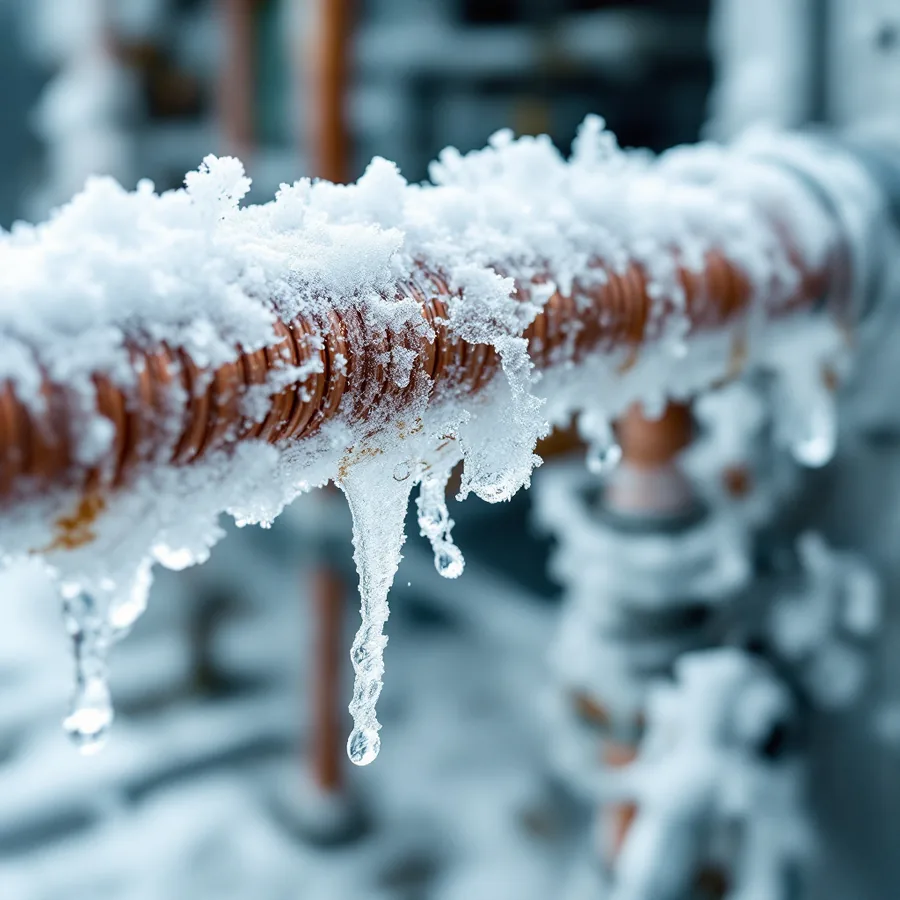
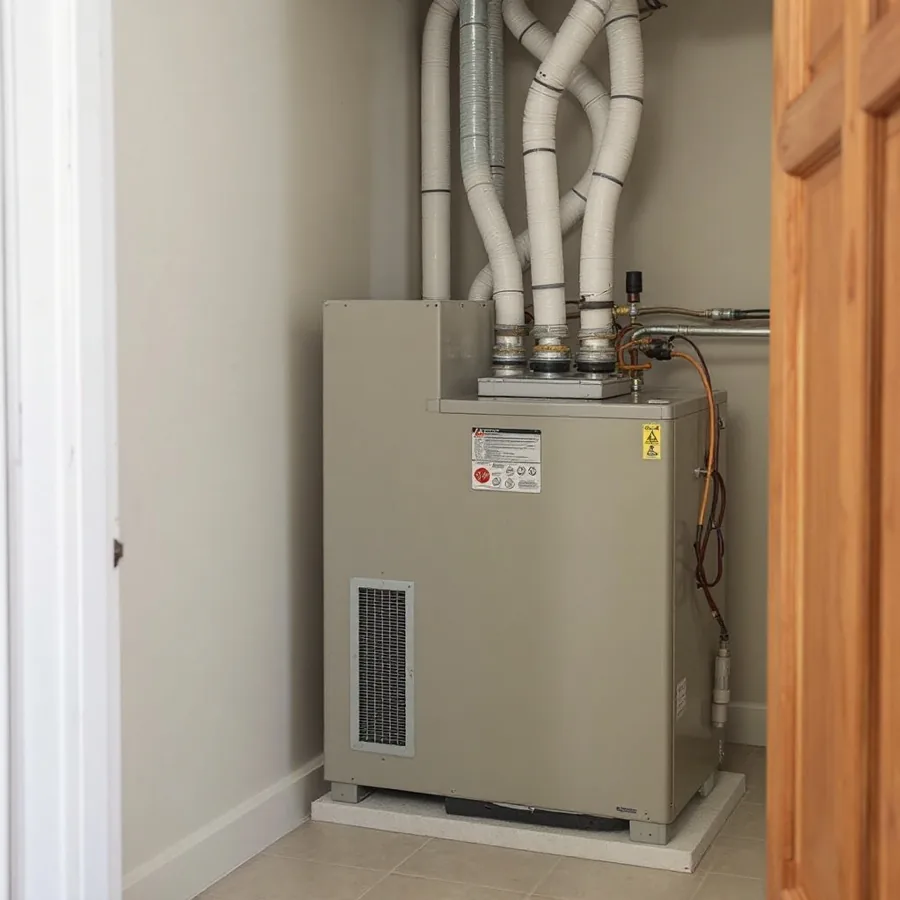
The coil inside your air handler sits below freezing by design. What stops it turning into a block of ice is a steady stream of warm house air passing over it. Interrupt that stream, or reduce the refrigerant that sets the temperature, and the moisture condensing on the coil stops draining and starts accumulating as frost. The frost blocks what airflow remains, which makes the coil colder still, which makes more frost. It is a runaway, and it usually completes in a few hours.
What it looks like from the house
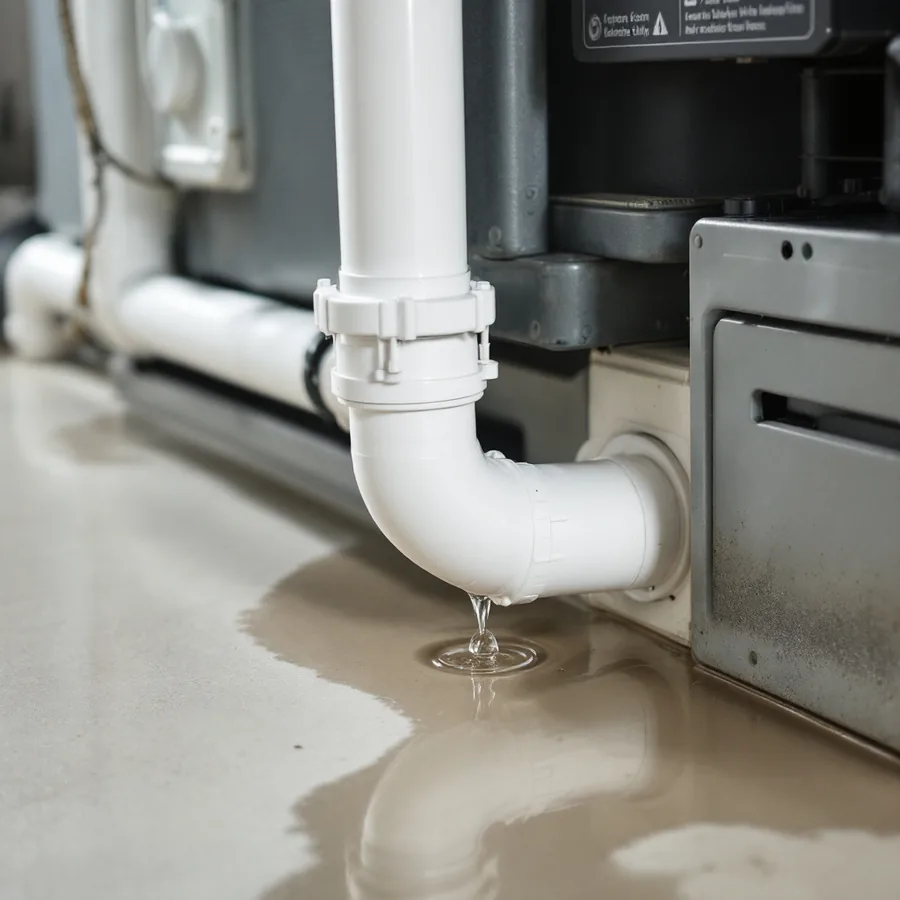
Air from the registers weakens over an afternoon and eventually stops being cold at all. The copper line running to the outdoor unit wears a white sleeve of frost, sometimes a solid one. Water appears near the indoor unit — not from a leak, but from ice melting faster than the drain pan was designed to handle.
The first move, and why it is not a repair
Set the thermostat to off for cooling and fan to on. House air moving across a frozen coil melts it faster than anything else you have available, and the fan does not risk the compressor. Depending on how much ice formed, this takes anywhere from an hour to most of a day. Put towels down.
Then — and this is the part that matters — understand that melting the ice fixed nothing. The coil froze for a reason, and there are only two: it could not get enough air, or it did not have enough refrigerant. If you changed a filthy filter and it never freezes again, you had the first. If it freezes again within days, you have the second, and that is a leak.
What running it through the freeze costs
A frozen coil stops boiling refrigerant into gas, which means liquid refrigerant can return to a compressor built to compress vapor. Compressors do not survive that indefinitely, and a compressor is the most expensive component in the system by a wide margin. The hours between noticing the ice and switching it off are the part of this fault you control.
The Sentence To Push Back On
“It just needs a top-up” describes a leak
This is the single most useful thing a homeowner can understand about air conditioning, and it is missing from almost every page that answers this question.
Refrigerant is not a consumable
Your system is a sealed loop. The refrigerant inside it circulates, changes state, and circulates again. It is not burned, not used up, and not gradually depleted by normal operation. A system that is low on refrigerant has lost it to the atmosphere through a hole, a failed joint, a corroded coil or a loose fitting. There is no other route out.
So a quote to “add a couple of pounds” is not maintenance and is not a repair. It is a decision to postpone the repair and pay for the postponement, and it will be offered again next season with the same wording. The federal Energy Saver guidance says it directly: if your air conditioner leaks, ask the technician to locate and repair the leak rather than topping it off.
Why the charge has to be right, not just present
ENERGY STAR's maintenance checklist puts it in one line: too much or too little refrigerant will make your system less efficient, increasing energy costs and reducing the life of the equipment. Overcharging is a real failure mode, not a theoretical one, and it is what happens when somebody adds refrigerant to a system whose actual problem was airflow.
What the law says, and what it does not
Two things are commonly confused here, so it is worth separating them.
You cannot legally buy the refrigerant yourself. Under the federal sales restriction, refrigerant in cylinders, cans or drums may be sold only to technicians holding Section 608 certification, or to their employers. The one exception is small cans of the substitute refrigerant used in car air conditioning, which is why the shelf at the auto parts store is not evidence that the rule is loose. Handling refrigerant in home cooling equipment requires certification under 40 CFR Part 82, Subpart F.
The thirty-day leak repair rule is not about your house. You will see it cited as though a technician is legally required to fix your leak within thirty days. That rule applies to appliances with a full charge of fifty pounds or more — commercial and industrial equipment. A residential system holds a small fraction of that, and the federal leak-rate thresholds do not reach it. The argument for fixing your leak is that a top-up is money spent on nothing, not that somebody will be fined.
Ten Minutes, No Tools
What you can check yourself — and the line not to cross
Everything in the first list is free and often decisive. Everything in the second has killed people or destroyed equipment, and we would rather say so than write “consult a professional” and leave you to guess where the boundary is.
Where DIY stops being thrift and starts being a hospital visit
- The capacitor. Holds a lethal charge with the power off. This is not a caution, it is the reason electricians treat capacitors as live components.
- Anything refrigerant. You cannot legally buy it, gauges on a system you cannot read tell you nothing, and venting refrigerant is prohibited. The parts-store can with the gauge on top is for cars.
- The contactor and control board. Line voltage, and a contactor that welds itself closed will run the compressor with the thermostat off.
- Bending the fins with a pressure washer. Flattened fins are permanent airflow damage, and pressure washers do it in seconds.
- Repeated breaker resets. The breaker is not being difficult. It is reporting a fault, and it is the last thing between that fault and a fire.
The Expensive Misdiagnosis
It cools downstairs but not upstairs
This description appears constantly, and it is almost never answered correctly. If the rest of the house is comfortable, the equipment is producing cold air. The question is why that air is not arriving.

Cold air is heavy and lazy
Air conditioning fights physics upstairs. Heat rises, the roof loads the top floor all afternoon, and cold air delivered through a long duct run has lost some of its edge before it reaches the register. A system perfectly capable of holding the ground floor at seventy-two can be genuinely incapable of doing the same upstairs on a hot afternoon, without a single component having failed.
What is usually wrong
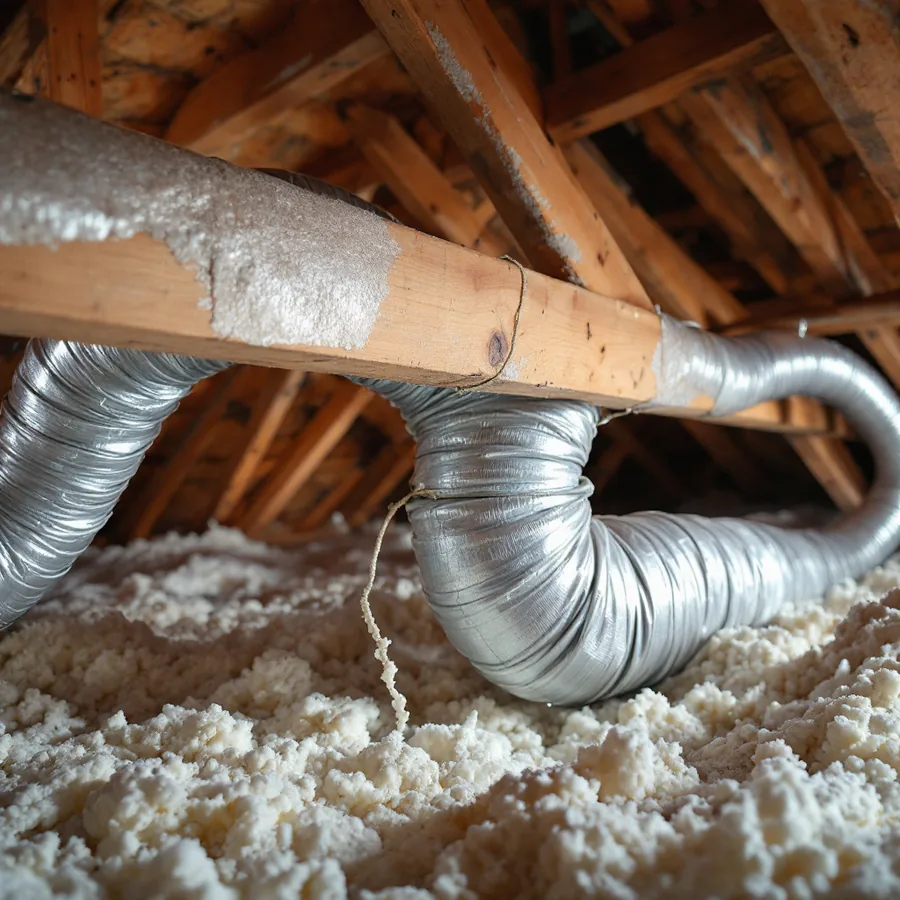
Undersized ducts and undersized returns come first. A duct run that was cheap to install and is too small to carry its share of the air will underperform for the life of the house. Crushed flexible duct in an attic, a run that has come apart at a joint, or a damper somebody closed years ago account for most of the rest. So does return air: if a bedroom has a supply register and no path back out, closing the door turns the room into a pressure vessel that resists the air you are trying to push into it.
The measurement that settles it
A technician who takes this seriously measures static pressure across the air handler and airflow at the registers. Those numbers separate a duct problem from an equipment problem in about twenty minutes, and they are the difference between a repair that works and a new system that changes nothing. If a company proposes replacing equipment to solve a one-room complaint without having measured anything, get a second opinion — that is the most expensive wrong answer in this trade.
Before you spend anything
Open every register and every interior door, clear the return grilles, and run the system for an afternoon. If the gap closes, you had a distribution problem and you have just proved it for free. If nothing changes, you have narrowed the search rather than wasted a day.
It Was Fine Yesterday
When it stopped right after something happened
A fault with a timestamp is a much easier fault. What happened immediately before is usually the fault itself.
After a power cut or a surge
Start with the breaker and the outdoor disconnect, then cycle the thermostat off and on. Systems interrupted mid-cycle sometimes need that. A surge can also take out a capacitor or a control board, and those present exactly like the faults described above — the humming condenser, the system that will not start.
After service or a cleaning
Call whoever did the work, first, and say what changed. This is not the moment to start a relationship with a new contractor: a fault that appears immediately after somebody was inside the equipment belongs to that company, and most will come back without charging. A disconnected wire, a float switch left tripped, a panel not seated and a filter fitted the wrong way round are all things that happen and all things that are quick to correct if the right person looks.
After a storm
Look at the outdoor unit for debris, and at the fins for hail damage — flattened fins reduce heat rejection permanently and are visible from a meter away. If the unit sat in standing water, say so when you call; water in the electrical compartment is a different conversation from water around the pad.
On the first genuinely hot day of the year
Systems fail in June because June is when they are asked to work. A capacitor that was marginal in April fails on the first thirty-five-degree afternoon, along with everyone else's, which is also why that is the worst week of the year to need an appointment. If your system is over ten years old, a pre-season check-up is worth booking in spring rather than discovering the problem in a queue. ENERGY STAR recommends annual pre-season check-ups for exactly this reason.
Reading The Evidence
Water, ice and noises: what each one narrows down
Secondary signs are more useful than the main complaint, because they are specific. These are worth noting before you call, because they are the questions you will be asked.
Water around the indoor unit
Normal operation produces condensate, and normal operation drains it. Water on the floor means the drain is blocked, the pan has rusted through, or a coil has been freezing and thawing. Switch it off — especially if the unit is above a ceiling.
Frost or ice on the copper line
The freeze described above. Off for cooling, on for fan, and expect a wait.
Hissing or bubbling
Refrigerant moving where it should not, or through a restriction. Worth reporting precisely, because it points at the circuit rather than the electrics.
Buzzing at the outdoor unit
Typically the contactor or a compressor trying and failing to start. Buzzing that continues while nothing turns is a reason to switch off at the thermostat now.
Loud metallic clatter
Something loose in the fan path. Turn it off before the something finds the fan blade.
Smells
Musty means moisture sitting somewhere it should not, usually the drain pan or a damp filter. Burning means stop and call, in that order.
New, Old, And In Between
A new system that never cooled, and an old one that stopped
The age of the equipment changes what is likely and, more importantly, who should be paying to look at it.
Under five years old
Failures happen, but a young system that has never cooled properly is usually not a failure at all — it is a design or installation problem. Equipment sized for the wrong load, ductwork that cannot carry the air the new unit produces, or a charge that was never set correctly on commissioning. The distinction matters commercially, because manufacturer warranties commonly exclude faults caused by improper installation, which is precisely why the installer should be the one answering for it. Call them, in writing, while the warranty is live.
Five to twelve years
The ordinary repair years. Capacitors, contactors, fan motors and drain problems are all normal at this age and all worth fixing on equipment that otherwise works. This is also the age at which annual maintenance stops being optional if you want the second half of the equipment's life to be uneventful.
Twelve years and beyond
Repairs stay reasonable until one of them is the compressor or the coil. At that point the arithmetic changes, and it changes further if the system uses a refrigerant that is being phased down — the cost of a recharge on older equipment is not what it was five years ago and is not going back. The honest framing is not “repair or replace” in the abstract but “what does this specific repair buy, on equipment with this much life left”.
What we are not going to do
Tell you a number. The cost of any of these repairs varies enormously by region, by equipment and by how the failure is diagnosed, and a page that invents a national average for a capacitor replacement is guessing in public. What we will say is which faults are cheap in every market (filters, capacitors, contactors, drain clearing), which are mid-range (fan motors, coils cleaned properly, duct repairs), and which put you in a conversation about the whole system (compressor, evaporator coil replacement, a leak that cannot be located).
Different Machine, Different List
Window and portable units that stopped cooling
The complaint sounds identical and almost none of the causes above apply, so it is worth answering separately rather than pretending one page covers both.
What usually goes wrong
Filters on window units are small and clog fast, and on most models they slide out from the front in seconds. Coils get blocked because the machine sits in a window collecting everything the outdoors offers. The federal problem list flags one cause specific to these units: the thermostat sensor sitting near the evaporator coil can be knocked out of position, and the fix is to bend the wire holding it back into place so that it reads air rather than metal.
Portable units and the hose that undoes them
A portable air conditioner exhausts hot air through a hose to a window. If that hose is long, sagging, uninsulated or kinked, a good part of the heat you just removed radiates back into the room. Single-hose designs also pull their exhaust air from the room itself, which pulls unconditioned air in through every gap in the house to replace it. A portable unit struggling in a hot room is often working exactly as designed and simply losing the argument.
When it is not worth pursuing
Sealed refrigerant circuits in small units are rarely economic to repair. If the compressor runs, the coils are clean, the filter is clean and it still will not cool, the honest answer is usually that this machine has reached the end rather than that it needs a technician.
Same Symptom, Different Machine
If your system is a heat pump
In summer a heat pump is an air conditioner and everything above applies. It also has two failure modes of its own, and both look like “not cooling”.
The reversing valve
A heat pump cools by running the refrigeration cycle in one direction and heats by reversing it. The valve that does the reversing can stick or fail, and when it does the system runs, sounds normal, and delivers air at the wrong temperature. A heat pump blowing warm air in July with everything else apparently working is the classic presentation, and it is not something to diagnose from the thermostat.
Freezing in summer
Outdoor coils frosting in winter is normal heat pump behavior and there is a defrost cycle for it. A heat pump freezing in summer is the same coil-freeze fault described earlier, with the same two causes and the same first response: cooling off, fan on, wait for it to clear.
Emergency heat and the thermostat
Heat pump thermostats have modes that ordinary air conditioner thermostats do not, and a system left in the wrong mode after a season change behaves like a broken one. Check the mode before you check anything else — it costs nothing and it is a genuinely common answer.
Narrow It Down
Fault decoder
Pick what you can see and when it started. This is the same fork a technician uses on the phone, and it will tell you whether the next step is yours or theirs.
We are a matching service, not a contractor. If the answer above says technician, we can connect you with an independent licensed and insured company covering your area on the terms set out here — and if it says filter, we would rather you spent twelve dollars.
Straight Answers
Questions people actually ask
Why is my AC running but not cooling?
Because the indoor half of the system is working and the outdoor half is not. Air moving normally means the blower and the ducts are doing their job; air arriving warm means heat is not being removed. That points at the condenser, the compressor, the capacitor that starts it, or the refrigerant charge. Go and look at the outdoor unit: if the fan is still and the unit hums, switch the system off at the thermostat rather than leaving it to keep trying.
Why is my air conditioner not cooling but the fan is running?
Same fault family as above, and the fan is the useful clue rather than the problem. The blower is a separate motor from everything outdoors, so it happily keeps running while the cooling side is dead. If the air from the registers is at room temperature and the outdoor fan is not turning, that is the answer to give when you call.
My AC is not cooling upstairs but is fine downstairs. What is wrong?
Usually not the equipment. If the rest of the house is comfortable, cold air is being made and it is not arriving. Ducts that are too small, a crushed or disconnected run, a closed damper, or return air that cannot get back out of the room. Open all the registers and interior doors, clear the return grilles and try again. A company proposing to replace equipment for a one-room complaint without measuring static pressure and airflow is guessing with your money.
Should I add refrigerant to my air conditioner?
You cannot legally buy it. Refrigerant in cylinders and cans may only be sold to technicians certified under the federal Section 608 rules or to their employers, and handling it requires that certification. More to the point, a sealed system does not consume refrigerant, so being low means it leaked. Federal energy guidance is to have the leak located and repaired rather than topped off, and overcharging causes its own damage.
My AC is frozen. What do I do?
Set cooling to off and the fan to on, and wait for the ice to melt fully — possibly several hours. Put towels down. Running a system with a frozen coil risks returning liquid refrigerant to the compressor, which is the most expensive part in the system. Once it has thawed, remember that nothing has been fixed: the coil froze because of restricted airflow or low refrigerant, and if a new filter does not settle it, the second is the answer.
How often should I change the filter?
ENERGY STAR recommends inspecting, cleaning or changing filters once a month in a central air conditioner, furnace or heat pump. Most households do it seasonally, which is why a clogged filter is one of the commonest causes of exactly the symptom you are searching for. A dirty filter increases energy costs and damages equipment, leading to early failure.
Why did my AC stop working after a power outage?
Check the breaker, the outdoor disconnect, and then cycle the thermostat off and on. A system interrupted mid-cycle sometimes needs that. If those do not restore it, a surge may have taken out the capacitor or the control board, which present as a humming condenser or a system that will not start.
Is a one-year-old air conditioner supposed to stop cooling?
No, and that is the point. Early failure on new equipment is more often an installation or sizing problem than a broken part — ductwork that cannot carry the airflow, a charge that was never set correctly, or capacity that does not match the house. Contact the installer in writing while the warranty is live, because manufacturer warranties commonly exclude faults caused by improper installation.
Do you repair air conditioners?
No. We are a matching service. We publish research on heating and cooling and connect homeowners with independent licensed and insured HVAC companies. We do not repair, install or service equipment, we do not sell it, and we are paid for the introduction rather than for the size of the job.
Where This Comes From
Sources
- Filters, coils, refrigerant level and annual check-ups — ENERGY STAR maintenance checklist.
- Common air conditioner problems and what each one does — U.S. Department of Energy, Energy Saver 101: home cooling.
- Who may buy refrigerant — EPA refrigerant sales restriction, and EPA Section 608 technician certification (40 CFR Part 82, Subpart F).
- Equipment ratings as tested rather than as advertised — AHRI certified product directory, the industry register of measured equipment performance.
- The fifty-pound threshold that does not apply to homes — EPA stationary refrigeration leak repair requirements.
Our editorial standards explain how we source and check what we publish. We deliberately do not quote national average prices for repairs: they vary too much by region and equipment for an average to be useful, and inventing one would be guessing in public. Nothing here is a diagnosis of your system; we are a referral service, not a contractor.
Before you call anyone
The independent match — we are paid for the introduction, not for the size of your job
Most roofing advice is written by the company that wants to do the work. That is not a failing of the people who read it; it is a defect in who is talking. The estimate, the diagnosis and the invoice come from one party, and no amount of care on your side fixes that.
We are built the other way round. We do not repair roofs and we do not sell materials, so the payment reaches us when you are connected to a licensed, insured roofing company — the same amount whether your roof needs an eight-hundred-dollar repair or a twenty-thousand-dollar replacement. Nobody here has a reason to talk you into the larger number. How we make money and how we research are both written down.
Waiting is the one thing that actually costs money. An insurance clock runs from the date of the damage rather than the date you noticed it, and damage that sits through a season stops reading as sudden and starts reading as wear — which is the exclusion that pays nothing. And if your roof is simply worn out, say so on the call. No claim will pay for age, we will tell you that plainly, and you will have lost nothing but the call.