Replacement Cost
HVAC replacement cost — what decides it, and what the quote leaves out
Every page on this subject opens with a national average. We are not going to give you one, and the reason is not coyness: the number varies so much by equipment, region and access that an average has no referent. What we can do is tell you exactly what moves the price, what is usually missing from the quote, and which four questions make two quotes comparable.
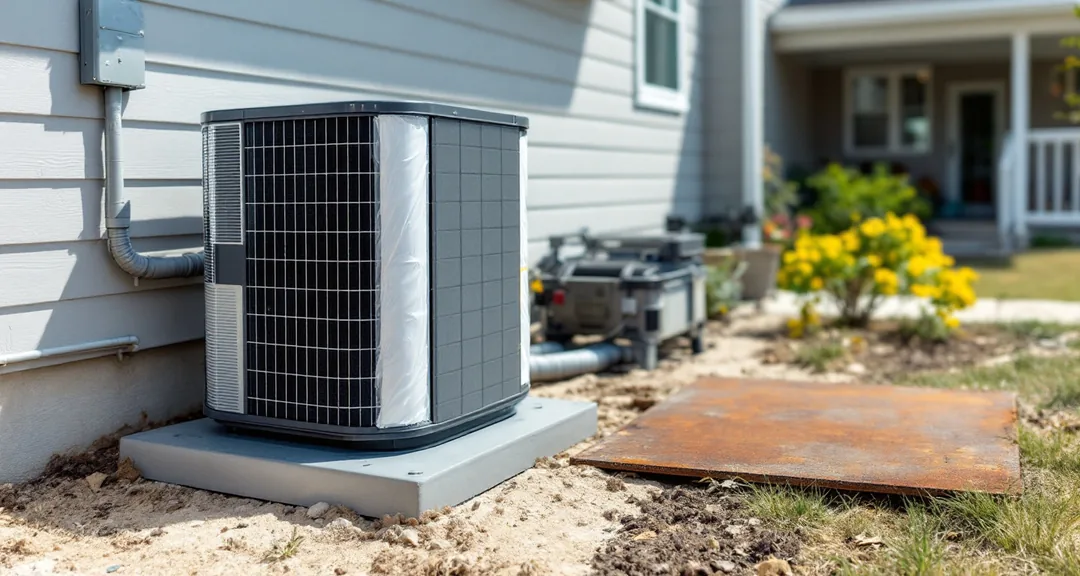
Four things that decide the number
- Whether you are replacing one half or the whole system. The cheapest quote usually replaces the outdoor unit alone. The certification body for this equipment says plainly that a mismatched pair will not deliver the efficiency either component promises, and at worst fails early.
- What the ducts are like. Equipment is the part with a price list. Ductwork is the part that decides whether the equipment can do what it is rated to do, and it is quoted from a look far more often than from a measurement.
- How hard the equipment is to reach. The same furnace costs differently in a basement, an attic in July and a crawl space. Access is labor, and labor is most of the difference between two honest quotes.
- That the federal tax credit is over. The 30% energy-efficiency credit applied to equipment placed in service through 31 December 2025. For work done now there is no federal credit, whatever the page you read last said.
What The Money Is For
You are buying three things, and only one has a price list
Understanding the split is what lets you read a quote instead of just comparing totals.
The equipment
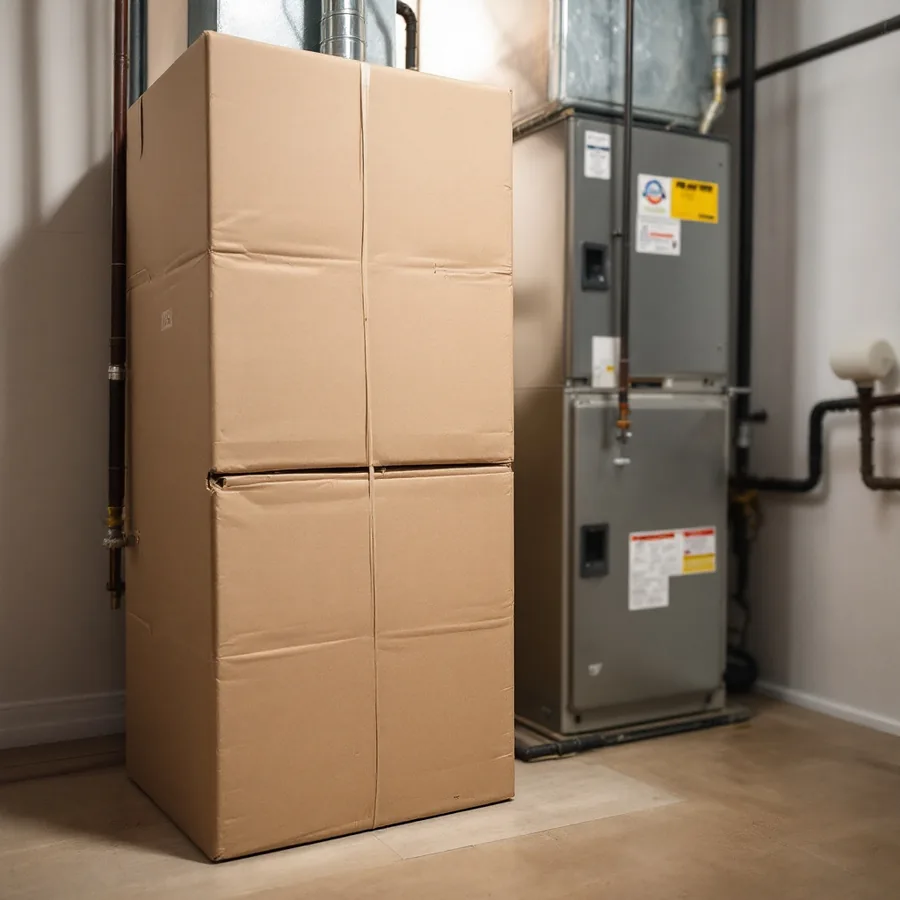
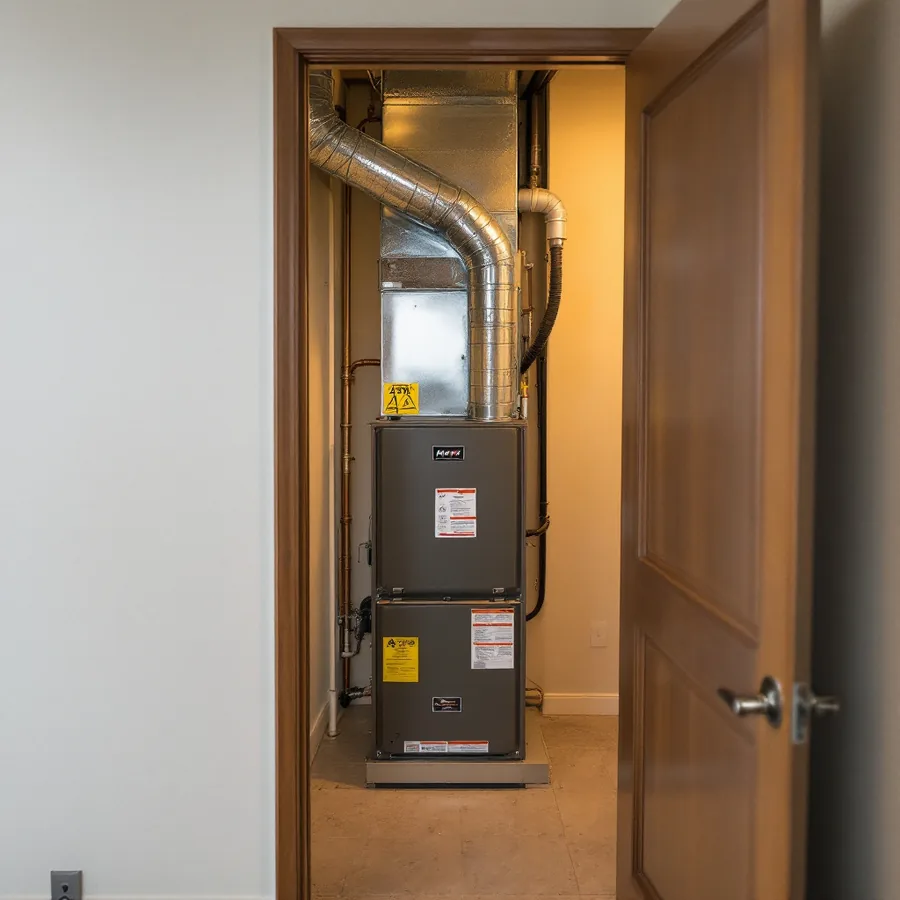
Furnace or air handler, indoor coil, outdoor unit, and the thermostat that runs them. This is the part with model numbers, published ratings and a list price, and it is the part every quote itemises — because it is the part that is easy to itemise. It is also the part where two contractors quoting the same house often differ least.
The labor and the access
Removal of the old system, getting the new one into place, connecting gas, electric, refrigerant and condensate, and the permit and inspection where your jurisdiction requires them. This is where honest quotes diverge, and the divergence is usually about the building rather than the technician: a basement install and an attic install in July are different jobs with the same equipment in them.
The house
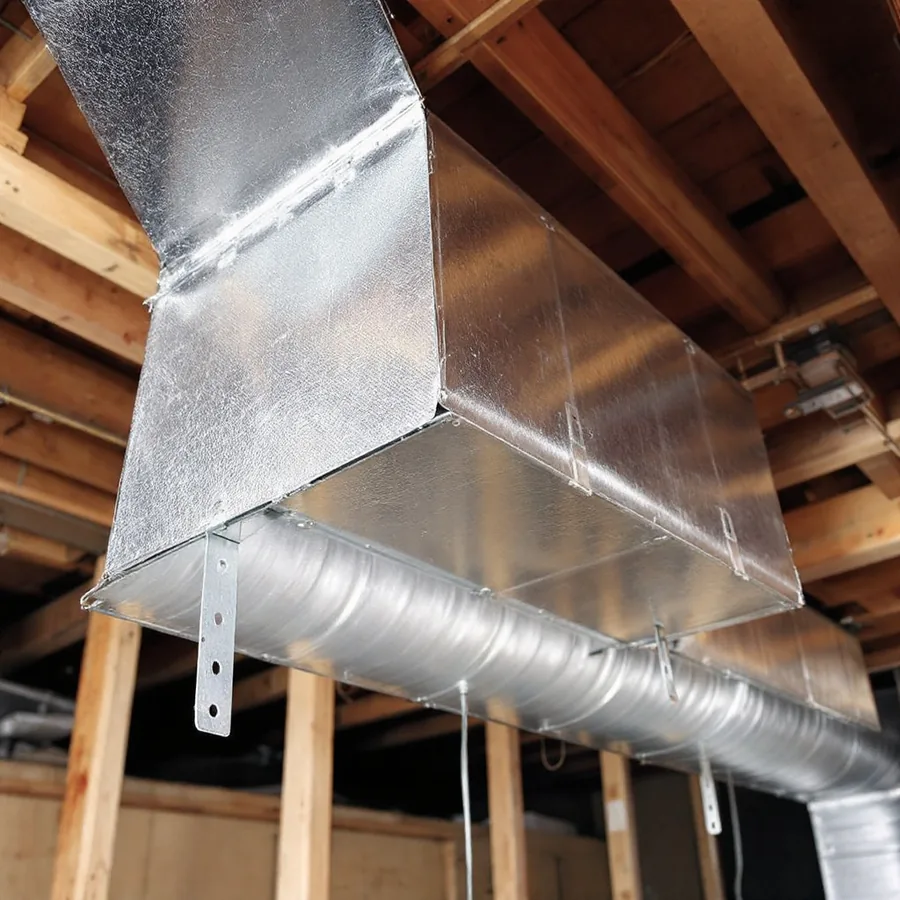
Ducts, returns, insulation, the electrical panel. None of this is heating and cooling equipment and all of it decides what the equipment can deliver. A high-efficiency system on ductwork that cannot carry its airflow performs like a cheaper system that cost less. This is the part quotes are quietest about, and the part worth asking about first.
Why the third part matters more than the brand
Ratings are measured in a laboratory on a matched, correctly charged system with adequate airflow. What arrives at your registers is the equipment plus the ducts plus the installation. The rating is a ceiling, not a promise, and the distance between the two is set by things no brochure mentions.
The Cheapest Quote
Can you replace just the outdoor unit, or just the furnace?
This is one of the most asked questions in the whole subject, and it is usually answered by somebody with an interest in the answer. So here it is from the body that certifies the equipment.
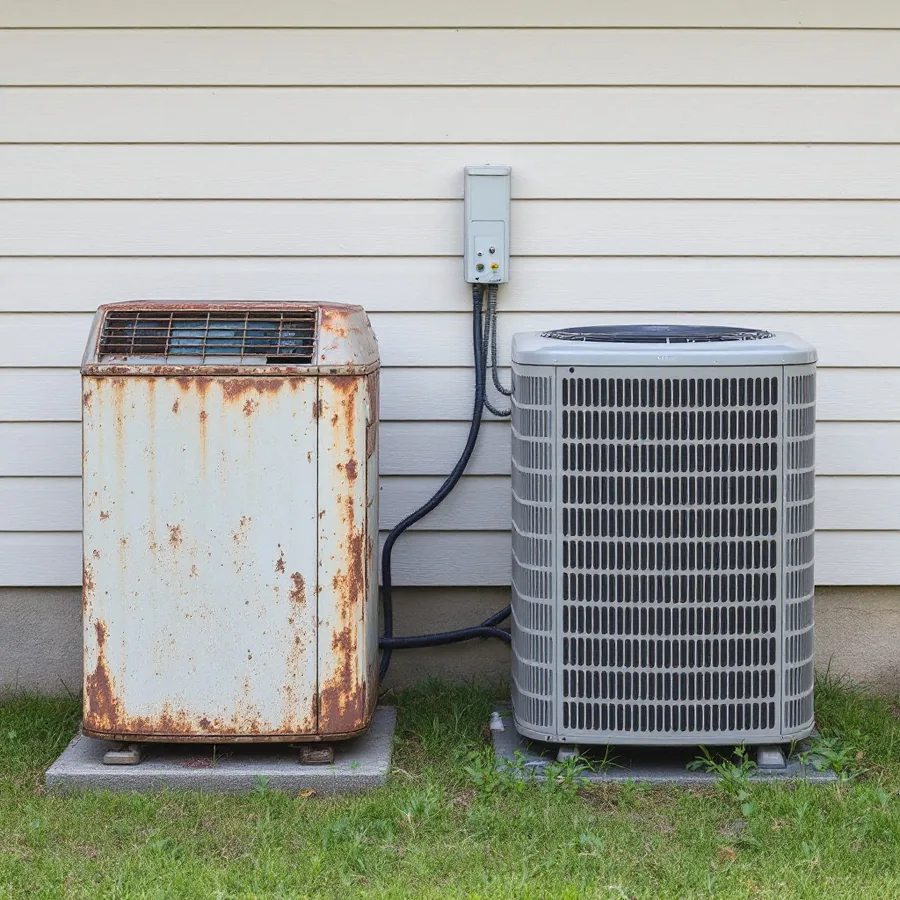
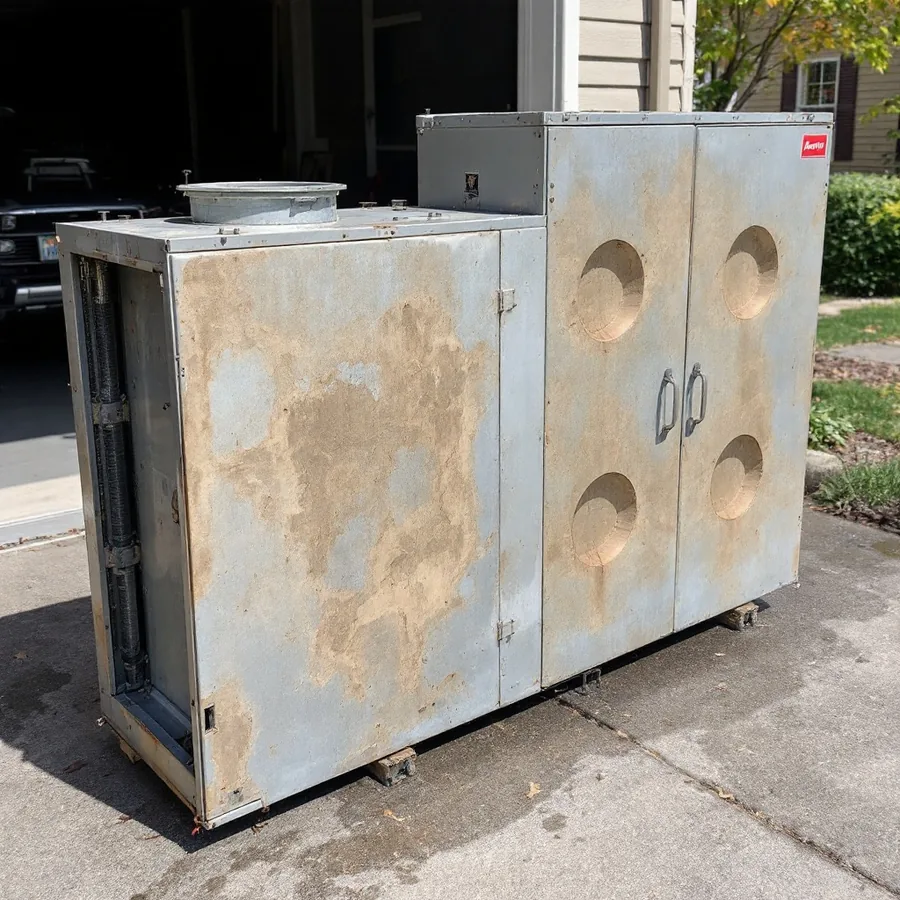
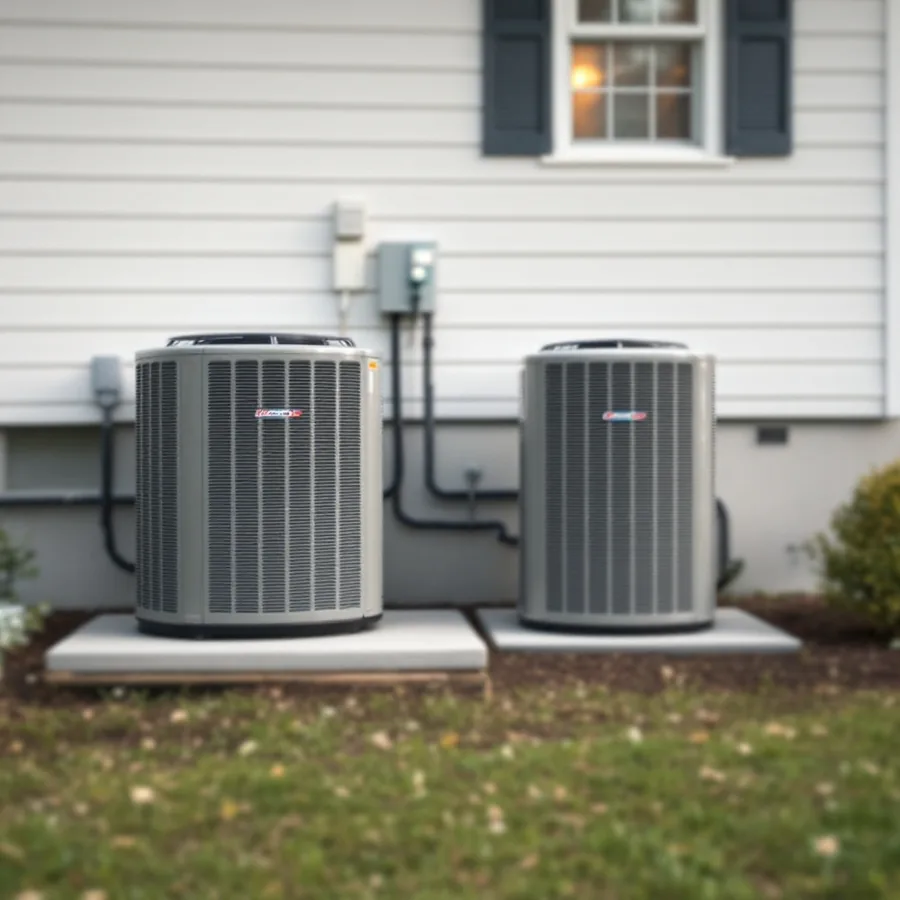
What the certification body says
Split systems are two halves designed as one machine. In AHRI's own homeowner guidance, replacing just one of them “may offer you the lowest price, but it won't give you the best value. At best, the system may still operate, but it won't perform up to the promised energy efficiency level.” And at worst, “improperly matched indoor and outdoor units can create undue stress on your cooling system, resulting in an unnecessary, premature failure.”
There is a harder line about refrigerant. Where the new equipment uses a different refrigerant from the old, the guidance is not advisory: “you must replace your indoor and outdoor units with a properly matched combination designed to work using this refrigerant. If you do not change both units, your system will prematurely fail.”
Why the rating stops applying
The efficiency number on a split system is a rating of the pair, not of the box outside. Put a new high-efficiency condenser on an old coil and you no longer have the rated system — you have an untested combination that inherits the weaker half's behavior. The certificate that documents a rated pair is a real document, and you can ask for it.
Where replacing one half is defensible
When the other half is genuinely new, genuinely matched and uses the same refrigerant — for example a compressor failure two years after installation. That is a warranty conversation rather than a replacement decision. Outside that case, a single-half quote is a lower number attached to a shorter life, and the difference is worth naming out loud before you accept it.
The question that settles it
Ask for the certificate of certified performance for the pair being installed, not the brochure for the outdoor unit. A company that installs matched systems produces it without hesitation, because it is how they specify the job in the first place.
Read The Quote, Not The Total
What is usually missing, by what you are replacing
Pick what is being replaced and what the equipment sits in. This is not a price estimator — it tells you which line is absent and what to ask, which is worth considerably more than an average.
We do not sell installations and we do not take a share of the job. If you want to be connected with an independent licensed and insured company, we can do that — and if the answer is that your system has years left, we would rather you kept the money.
The Honest Answer
Can I replace it myself? The DIY question, answered
People ask this constantly, and the usual answer is a shrug toward “hire a professional”. There are three specific obstacles, and they are worth knowing precisely rather than vaguely.
The refrigerant is not available to you
Refrigerant in cylinders and cans may be sold only to technicians holding federal Section 608 certification or to their employers, and handling it in home cooling equipment requires that certification under 40 CFR Part 82, Subpart F. The small cans sold without certification are for car air conditioning — a different system under a different rule. An air conditioning system cannot be commissioned without charging it, so this alone ends the question for the cooling side.
The permit is not optional where it applies
Equipment replacement is permitted work in most jurisdictions, and gas and electrical connections almost everywhere. A permit is not paperwork for its own sake: it brings an inspection, and the inspection is the only independent check that the work was done correctly. It also surfaces at the worst possible time — when the house is sold, and unpermitted mechanical work becomes a negotiation.
The warranty is the expensive part
Manufacturer warranties on this equipment routinely require installation by a qualified contractor and registration after installation. Self-installation commonly voids the part of the warranty that matters most, which is the compressor. You would be trading a documented multi-year warranty against a saving that is a fraction of one compressor replacement.
What you genuinely can do
Everything on the free check list: filters, registers, returns, clearing the outdoor unit, the breaker, the drain. Those prevent a meaningful share of the failures that lead to replacement conversations, and none of them requires a certification or a permit.
Current As Of This Page’s Date
The federal tax credit ended on 31 December 2025
This is the single most out-of-date claim in the search results for this subject, and it is out of date in the direction that costs you money if you plan around it.
What it was
The Energy Efficient Home Improvement Credit — Section 25C — paid 30% of the project cost, up to $2,000 a year for a qualifying heat pump, and up to $1,200 a year for a combination of other improvements including furnaces, boilers and central air conditioners. Heat pumps had their own annual ceiling separate from that $1,200, and there was no lifetime limit.
When it applied
The IRS states it plainly: you can claim the credit for improvements made through 31 December 2025. ENERGY STAR puts the same boundary on the equipment side — the credit was effective for products purchased and installed between 1 January 2023 and 31 December 2025. Equipment placed in service after that date does not qualify.
What that means in practice
If your system was installed in 2025 you can still claim it on that year's return, and for 2025 installations the credit additionally requires the manufacturer's QMID number to be reported on the return — a detail worth asking your installer for now rather than at filing time. If your system is being installed this year, there is no federal credit, and a quote that includes one as a deduction from the price is quoting a number that will not arrive.
What has not disappeared
State programmes and utility rebates are separate from the federal credit and run on their own schedules and budgets. They are worth checking specifically for your utility rather than in general, because they change quietly and they are frequently first-come. Financing is also its own decision: the interest is a real cost, and a monthly figure is not a price.
What Is Left After The Credit
Grants and rebate programs, and who they are for
The federal tax credit ended, but a separate and much larger federal programme did not — and unlike a tax credit, it pays at the point of purchase rather than at filing time. It is means-tested, and it is run by your state rather than by Washington.
Home Electrification and Appliance Rebates
Funded federally, administered by each state, and aimed at households below 150% of the area median income. The structure is two bands: at or below 80% of area median income the rebate can cover up to 100% of the project cost; between 80% and 150% it covers up to 50%.
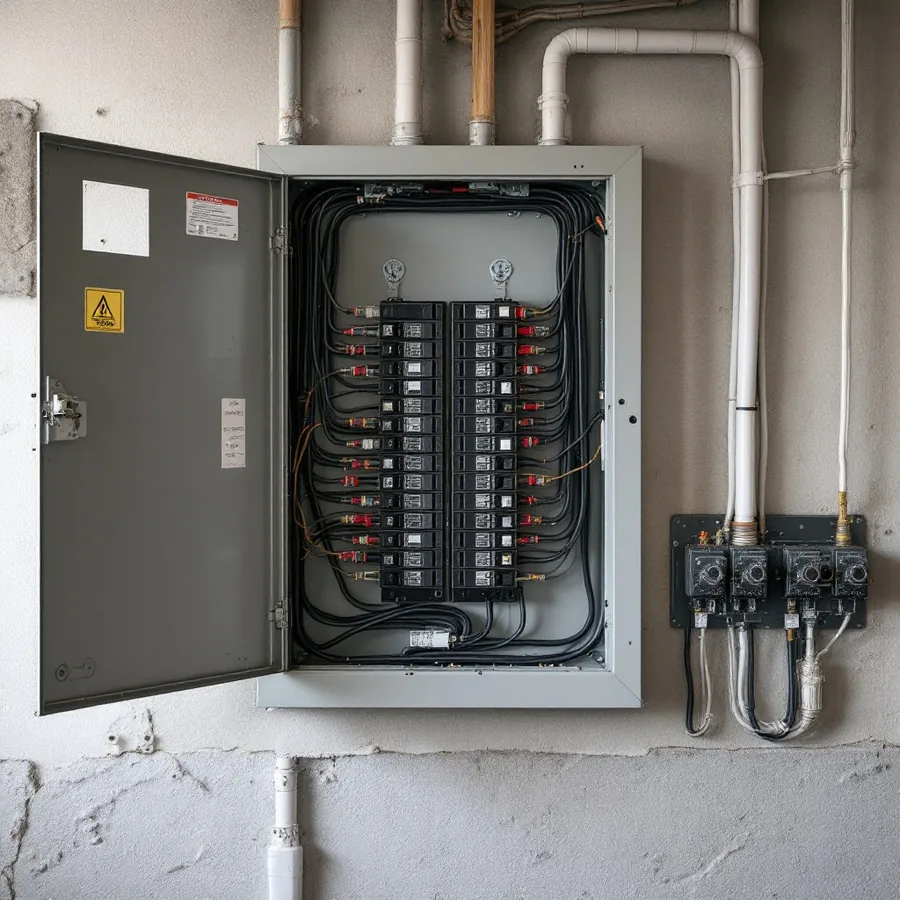
The caps are per measure, and the one that matters here is large: $8,000 for a heat pump for space heating and cooling. Alongside it sit $4,000 for an electrical service panel upgrade, $2,500 for wiring, $1,600 for insulation, air sealing and ventilation, and $1,750 for a heat pump water heater, with a combined maximum of $14,000 per household.
Those numbers change the arithmetic of the whole decision for a household that qualifies. A panel upgrade is one of the standard reasons a heat pump quote comes in higher than expected, and it is separately covered here.
If the furnace has failed and paying for it is the problem
There is a separate federal programme for that, and it is not the same as the rebates above. The Low Income Home Energy Assistance Programme — LIHEAP — is best known for helping with energy bills, but grantees may also use funds to repair or replace broken or inefficient heating equipment, and a furnace failure in winter is treated as a crisis rather than an improvement project. Not every state offers equipment replacement and the rules differ, which is exactly why it is worth asking rather than assuming.
Eligibility is income-based, with states setting limits within federal bounds, and programmes commonly prioritise households with elderly or disabled members or young children. Assistance for seniors specifically is usually delivered through this route rather than through a separate scheme. The national referral line is 1-866-674-6327, and your state or tribal energy office administers the actual programme.
The two things to check before counting on it
First, that your state has launched its programme and is accepting applications — the money is federal but the schedule is not, and states opened at different times and in stages. Second, that your contractor is on whatever approved list your state maintains, because the rebate flows through the contractor rather than to you afterwards.
What else exists, and where to look for it
Utility rebates run independently of any of this, are often first-come and change quietly during the year; your utility's own site is the only reliable source for its current offer. Some states run additional efficiency programmes of their own. And for landlords and rental property there is a separate question entirely — whether a replacement counts as a repair or a capital improvement changes how it is treated, and that is a question for an accountant rather than for a heating company.
Why we are not listing programmes by state
Because a list like that is wrong within months, and a stale list of money that no longer exists is worse than no list. What holds still is the structure: federal rebate administered by your state with income bands and per-measure caps, plus whatever your utility is doing this year. Ask both, in that order.
Bigger Is A Defect
Capacity: the one specification you should question
Almost every other number on a quote is worth taking at face value. This one is worth asking about, because oversizing is common, it feels like generosity, and it makes the house less comfortable.
What oversizing actually does
An oversized system reaches the thermostat setting quickly and shuts off. Removing humidity takes run time, so a system that satisfies the thermostat in short bursts leaves the house cool and damp rather than comfortable. It then starts again, and starting is the hardest thing a compressor does. The result is a house that does not feel right and equipment that ages faster, bought at a higher price than the correct size would have cost.
How the right size is arrived at
By calculating the load of the specific house — its area, insulation, windows, orientation, air leakage and the local design temperature. It is a calculation, not a rule of thumb, and a company that has done it can tell you what it assumed. A capacity quoted from square footage alone, or from what was there before, is a guess inheriting whatever mistake was made last time.
The question worth asking
“What load calculation did you do, and what did it come out at?” It is a fair question, it is answered in one sentence by anyone who did the work, and the answer tells you which kind of company you are talking to.
The Question Everyone Types
“What does a system cost for a 1,500 square foot house?”
It is the commonest way this search gets phrased, and it deserves a real answer rather than a made-up number. The real answer is that floor area is one input of several, and on its own it is the weakest of them.
Why two identical floor areas need different systems
Take two 1,500 square foot houses. One is a 1950s single story with original windows, an uninsulated attic and a west-facing wall of glass. The other is a 2015 two story, sealed, well insulated, shaded. They are the same on a floor plan and they are not remotely the same thermal problem, and the capacity each needs can differ by a full ton or more. Sizing from area alone means sizing for whichever of those two houses the rule of thumb was built around.
What the calculation uses instead
Floor area, yes — and insulation levels, window area and orientation, air leakage, ceiling heights, how many people live there, and the design temperature for your location. That is what a load calculation is, and it is the difference between a capacity chosen for your house and one inherited from the equipment being removed.
What area does usefully predict
Roughly how much ductwork exists and how far the air has to travel, which affects the labor side rather than the equipment side. A larger house is more duct, more registers and more places for the installation to be difficult. That is a real cost relationship — it is just not the one the search is asking about.
And what about replacing one component?
Blower motors, reversing valves, zone dampers, control boards and inducer motors all have their own repair conversations, and they fall into the same three bands as everything else: cheap in every market, mid-range where labor and access dominate, or system-level where the cost approaches a meaningful share of replacement. The banding is set out on the home page, and the reason we band rather than price is the same reason there is no average on this page.
The Decision Behind The Quote
Repair or replace, without the rule of thumb
You will be offered a formula — multiply the age by the repair cost and compare it to something. Formulas are popular because they are quick, not because they are right. The honest version is four questions.
Where the formula misleads
Rules of thumb ignore the two variables that matter most: what specifically failed, and what condition everything else is in. They give the same answer for a fifteen-year-old system needing a $200 capacitor and one needing a compressor, which are not remotely the same decision.
Practicalities
How long it takes, and what the day looks like
Worth knowing because it affects when you schedule it, and because a quote that promises something implausible is telling you about the company.
A straightforward swap
Like-for-like equipment in an accessible location is usually a single day: removal, placement, connections, evacuation and charge on the cooling side, start-up and commissioning. Two technicians, most of a working day, and the house is without heating or cooling for that period.
What extends it
Duct modifications, electrical panel work, moving equipment to a different location, structural work to get new equipment into an old closet, and permits with inspection scheduling. Any of those turns one day into two or more, and each should be visible on the quote rather than discovered.
The step with a name worth knowing: evacuation
Before a cooling system is charged, the lines and coil have to be emptied of air and moisture with a vacuum pump, and held there long enough to prove they hold. Moisture left inside reacts with refrigerant and oil and damages the compressor from within over months. It is invisible, it takes time at the end of the job, and asking whether the system will be evacuated and to what level is one of the few questions that tells you immediately whether you are talking to somebody who installs carefully.
The part that is easy to skip and shouldn’t be
Commissioning — measuring airflow, temperature split and final charge after everything is connected, and correcting what the measurements show. It is the step that turns rated equipment into a working system, it takes real time at the end of a long day, and it is the step most often compressed. Ask for the numbers in writing; a company that measures is glad to be asked.
Making Two Numbers Comparable
Four questions that turn quotes into information
Two quotes for the same house routinely differ by thousands, and the difference is almost never the same job at a different price. These four questions expose what is actually different.
| Ask | Why it changes the price | A weak answer |
|---|---|---|
| Is this a matched pair, and can I see the certificate? | Half-system quotes look cheaper and do not deliver the rating. This is the commonest reason two quotes differ. | A brand name, a brochure, or “it'll work fine with your coil”. |
| What load calculation gave you this capacity? | Oversizing raises the price and lowers comfort. The answer separates a calculation from an inheritance. | “Same as what you have now” or square footage alone. |
| What did you measure on the ducts? | Ductwork decides whether the equipment can perform. Unmeasured ducts are a risk transferred to you. | “They looked fine.” |
| What is included in start-up, and will I get the readings? | Commissioning is where an installation becomes a system. It is also the easiest line to quietly drop. | Silence, or “we always check everything”. |
And one about the paper
Ask who pulls the permit and whether the price includes it. The answer should be immediate and it should be the contractor. A suggestion that the permit can be skipped to save money is not a discount; it is the removal of the only independent inspection of the work, offered to you as a favor.
Deliberate Omission
Why there is no national average on this page
Every competitor for this search leads with one. We think it is the least useful sentence on those pages, and here is the reasoning rather than the posture.
An average across the United States mixes a basement swap in a mild climate with an attic replacement in a hot one, a single-stage furnace with a variable-speed heat pump, a house with adequate ducts and a house that needs them rebuilt. The spread between those is larger than the number itself, which means the average predicts nothing about your house while sounding like it does.
What about the estimators that ask for a zip code?
They are averages with a geography filter, which improves them slightly and does not change what they are. A zip code does capture climate and local labor rates, which is more than a national figure does — but it still knows nothing about your ducts, your insulation, your electrical panel or how the equipment is reached, and those are the variables that actually separate two quotes for the same house. Treat the output as a sanity check on the order of magnitude, never as a number to negotiate against.
What is useful is knowing which decisions move the price and in which direction, so that when you receive a real quote for your real house you can read it. That is what the rest of this page is. If you want a number, the only one worth anything comes from somebody who has been to your house, measured the ducts and calculated the load — and by then you have a quote rather than an average.
If the property is rented out
The question changes completely. Whether a replacement is a deductible repair or a capital improvement that must be depreciated, and whether bonus depreciation applies in the year of purchase, are tax questions with real money in them — and they are questions for an accountant who knows your situation, not for a heating company and not for us. What we will say is that the distinction is real, that it turns on facts rather than on what the invoice is called, and that it is worth asking before the work rather than at filing time.
What we will say about magnitude
Which faults are cheap in every market, which are mid-range, and which become a conversation about the whole system is set out on the home page. That is banding rather than pricing, and banding survives regional variation in a way that a dollar figure does not.
The Add-Ons
Extended warranties and service contracts
Both are offered at the point of sale, both are sold on the same anxiety, and they are not the same product. Worth separating before deciding about either.
What comes free with the equipment
New equipment carries a manufacturer’s parts warranty, and on this equipment it is usually long — often a decade on parts and longer on the compressor. Two conditions attach to it and both get missed. The first is registration, normally within a defined window after installation; miss it and the coverage often drops to a shorter default. The second is installation by a qualified contractor, which is one of the practical reasons self-installation is a false economy.
What the manufacturer warranty does not cover is labor. A covered compressor arrives free and is fitted at your expense, and fitting it is most of the cost. That gap is what extended coverage is sold against.
Labor warranties from the installer
Separate from the manufacturer, the installing company warrants its own work, commonly for one to two years and sometimes longer as a paid extension. This is the coverage that matters in the first year, because early failures are far more often installation problems than manufacturing ones. Ask what the labor warranty is and get it written on the quote rather than described on the doorstep.
Extended warranties: the question to ask
An extended warranty is worth its price only against what it covers beyond the manufacturer’s existing terms. Since the parts are already covered for years, what you are usually buying is the labor to fit them. So the question is narrow and answerable: which specific failures does this cover that are not already covered, for how long, and who performs the work? A seller who cannot answer that in two sentences is selling reassurance rather than coverage.
Maintenance contracts are a different thing again
These buy scheduled visits rather than repair coverage, and their honest value is that annual inspection catches the slow failures — a filling coil, a silting drain, a pitting contactor. ENERGY STAR recommends an annual pre-season check-up regardless of who does it. Sold honestly, a contract is inspection with cleaning at a predictable price. Sold badly, it is a subscription that produces a replacement quote every spring, which is worth watching for after the second or third visit.
The Monthly Number
Financing, and why a payment is not a price
Replacement is one of the larger unplanned bills a house produces, and it usually arrives in the week the system fails. Financing is a legitimate answer to that; the presentation of financing is where care is needed.
The substitution to watch for
A quote presented as a monthly figure rather than a total is answering a different question from the one you asked. Two systems at very different prices produce similar monthly numbers over different terms, and the term is where the difference goes. Ask for the total, the interest rate, the term and the total repaid across the term — four numbers, all of which exist, none of which is difficult to state.
Promotional rates and what happens after
Deferred-interest offers are common in this trade and they are not the same as zero interest. If the balance is not cleared within the promotional window, interest may be charged on the whole original amount from the beginning rather than on what remains. That is a legitimate product with a specific failure mode, and the failure mode is worth reading for rather than assuming away.
The other route
Emergency replacement costs more than planned replacement, because urgency removes your ability to collect comparable quotes and to choose the season. A system in its final years is a predictable expense, and knowing that is the cheapest form of financing available.
When, Not Just What
The season you buy in changes what you pay
Not because prices are seasonal in any published sense, but because the market is.
Why the first hot week is the worst time
Marginal equipment fails when it is finally asked to work, so failures cluster in the first genuinely hot week of summer and the first cold snap of winter. In those weeks every company in the area is busy, appointment slots are scarce, and you are choosing between whoever can come rather than between comparable quotes. Nothing about that arrangement favors you.
What planning ahead actually buys
Time to get three quotes and read them. Time to ask the four questions above and hear the answers. Time to schedule the work for a day when the house can be without heating or cooling. And the option of saying no to the first number, which is the only real negotiating position a homeowner has.
How to know the conversation is coming
An annual inspection tells you the condition of the equipment rather than its age, and condition is what predicts failure. A system being told it needs a large repair every year is telling you something. So is one where refrigerant keeps needing topping up — that is a leak being deferred, and it is a repair you pay for repeatedly without receiving.
The Checklist
What a complete quote contains
Not a template to demand, but a list to read against. Anything absent is either not being done or not being charged for, and it is worth knowing which.
- Model numbers for every component, indoor and outdoor, rather than a system name. Model numbers are what let you check the pair and its rating independently.
- The capacity, and what it was calculated from. A number with a reason behind it rather than one inherited from the old equipment.
- Removal and disposal of the old system. It is bulky and it contains refrigerant that must be recovered rather than released, and somebody is paying for that.
- Permit and inspection, with the contractor pulling it.
- Electrical and gas work spelled out, including any panel work a heat pump requires. This is the line that most often becomes a change order.
- Ductwork: what is being done, or an explicit statement that nothing is. Silence here is the expensive kind.
- Refrigerant line handling — reused, flushed or replaced. A change of refrigerant usually forces the answer.
- Start-up and commissioning, with the measurements you will receive afterwards.
- Both warranties: the manufacturer’s parts terms including the registration requirement, and the installer’s labor warranty with its length.
- The total, the payment schedule, and what triggers each payment. A large deposit before any equipment arrives is worth questioning.
Straight Answers
Questions people actually ask
Can you replace just the furnace and keep the air conditioner?
Sometimes, and it is usually the cheaper quote rather than the better one. The indoor coil normally sits directly on the furnace, so it has to come out anyway, and it is the same age as everything else. AHRI's guidance is that replacing one half gives you the lowest price rather than the best value, and that mismatched indoor and outdoor units can cause undue stress and premature failure. Where the new equipment uses a different refrigerant, both halves must be replaced as a matched pair.
Can you replace just the outdoor unit?
The same answer applies with more force, because the efficiency rating of a split system is a rating of the pair. A new high-efficiency condenser on an old indoor coil is an untested combination that behaves like its weaker half. Ask for the certificate of certified performance for the pair rather than the brochure for the outdoor unit.
Is there still a federal tax credit for HVAC?
Not for work done now. The Energy Efficient Home Improvement Credit applied to property placed in service through 31 December 2025 — the IRS wording is that you can claim it for improvements made through that date, and ENERGY STAR gives the same boundary for equipment purchased and installed. A 2025 installation can still be claimed on that year's return, and for 2025 it also requires the manufacturer's QMID number. State and utility rebates are separate and may still be available.
Can I install a new air conditioner myself?
Practically, no. Refrigerant may only be sold to and handled by technicians certified under federal Section 608 rules, and a cooling system cannot be commissioned without charging it. Replacement is also permitted work in most jurisdictions, and manufacturer warranties commonly require installation by a qualified contractor — so self-installation typically forfeits the compressor coverage that matters most.
Why are two quotes for the same house thousands apart?
Usually because they are not the same job. The most common differences are a half-system quote against a full one, a capacity taken from the old equipment against one calculated for the house, ductwork assumed to be fine against ductwork measured, and commissioning included against commissioning omitted. Asking those four questions makes the totals comparable.
Does a bigger system cool better?
No. An oversized system reaches the set temperature quickly and shuts off before it has removed humidity, leaving the house cool and clammy, then starts again. Frequent starting is hard on the compressor. Correct capacity comes from a load calculation for your house, not from square footage or from matching whatever was there before.
How long does a replacement take?
A like-for-like swap in an accessible location is usually one working day. Duct changes, electrical panel work, relocating equipment or structural work to fit new equipment into an old space extend it, and each of those should appear on the quote rather than on the day.
Does the price include the permit?
It should, and the contractor should pull it. A permit brings an inspection, which is the only independent check that the work was done properly, and unpermitted mechanical work resurfaces when the house is sold. An offer to skip it is not a discount.
Do you sell or install equipment?
No. We are a matching service, paid for the introduction rather than for the size of the job. We publish research and connect homeowners with independent licensed and insured heating and cooling companies. We do not repair, install or sell equipment.
Where This Comes From
Sources
- The federal tax credit and its end date — IRS, Energy Efficient Home Improvement Credit, and ENERGY STAR on air source heat pumps.
- Matched systems and what a mismatch costs — AHRI, “A Perfect Match”, the certification body's own homeowner guidance.
- Who may buy and handle refrigerant — EPA refrigerant sales restriction and EPA Section 608 technician certification (40 CFR Part 82, Subpart F).
- Maintenance, filters and coils — ENERGY STAR maintenance checklist.
- Cooling as a share of household energy — U.S. Department of Energy, Energy Saver 101.
Our editorial standards explain how we source and check what we publish, including why we refuse to print national average prices. Tax rules change; the date on this page is when we last checked it against the IRS. Nothing here is tax advice or a quote — we are a referral service, not a contractor. Last updated .
Before you call anyone
The independent match — we are paid for the introduction, not for the size of your job
Most roofing advice is written by the company that wants to do the work. That is not a failing of the people who read it; it is a defect in who is talking. The estimate, the diagnosis and the invoice come from one party, and no amount of care on your side fixes that.
We are built the other way round. We do not repair roofs and we do not sell materials, so the payment reaches us when you are connected to a licensed, insured roofing company — the same amount whether your roof needs an eight-hundred-dollar repair or a twenty-thousand-dollar replacement. Nobody here has a reason to talk you into the larger number. How we make money and how we research are both written down.
Waiting is the one thing that actually costs money. An insurance clock runs from the date of the damage rather than the date you noticed it, and damage that sits through a season stops reading as sudden and starts reading as wear — which is the exclusion that pays nothing. And if your roof is simply worn out, say so on the call. No claim will pay for age, we will tell you that plainly, and you will have lost nothing but the call.