Ductwork
Ductwork — what it is, what it costs, and when sealing beats replacing
Everyone quotes the equipment. Almost nobody measures the ducts, and the ducts are the half of the system that decides whether the equipment can do what the label promises. In a typical house, a fifth to nearly a third of the air moving through the duct system never reaches a room. We do not install ductwork, which is why this page starts with the question every page in this search result skips: whether yours needs replacing at all.
Four things worth knowing before anyone quotes you
- The leak is bigger than any efficiency upgrade you are being sold. ENERGY STAR puts duct losses in a typical house at 20% to 30% of the air that moves through the system, and says leaky ducts can cut heating and cooling efficiency by as much as 20%. No equipment upgrade recovers air that is being delivered to an attic.
- One room that is never right is almost always distribution. It is the single most common symptom that gets answered with new equipment, and the single most common symptom that new equipment does not fix — the same conclusion we reach from the other direction on our page about one room that will not cool.
- Sealing and replacing are different projects with different prices. A duct system can be leaky, undersized, poorly laid out, physically damaged, or contaminated — and those five faults have four different remedies. Only one of them is replacement.
- In a house built before about 1980, do not open anything yourself. Old duct wrap, tape and cement-based duct can contain asbestos, and the federal guidance is to leave intact material alone rather than to investigate it.
The Vocabulary
What ductwork actually is, and what the parts are called
Ductwork is the distribution system: the network that carries conditioned air from the equipment to the rooms and back again. Knowing the words is most of what you need to read a quote, because a quote for duct work is a list of these parts.
The supply side
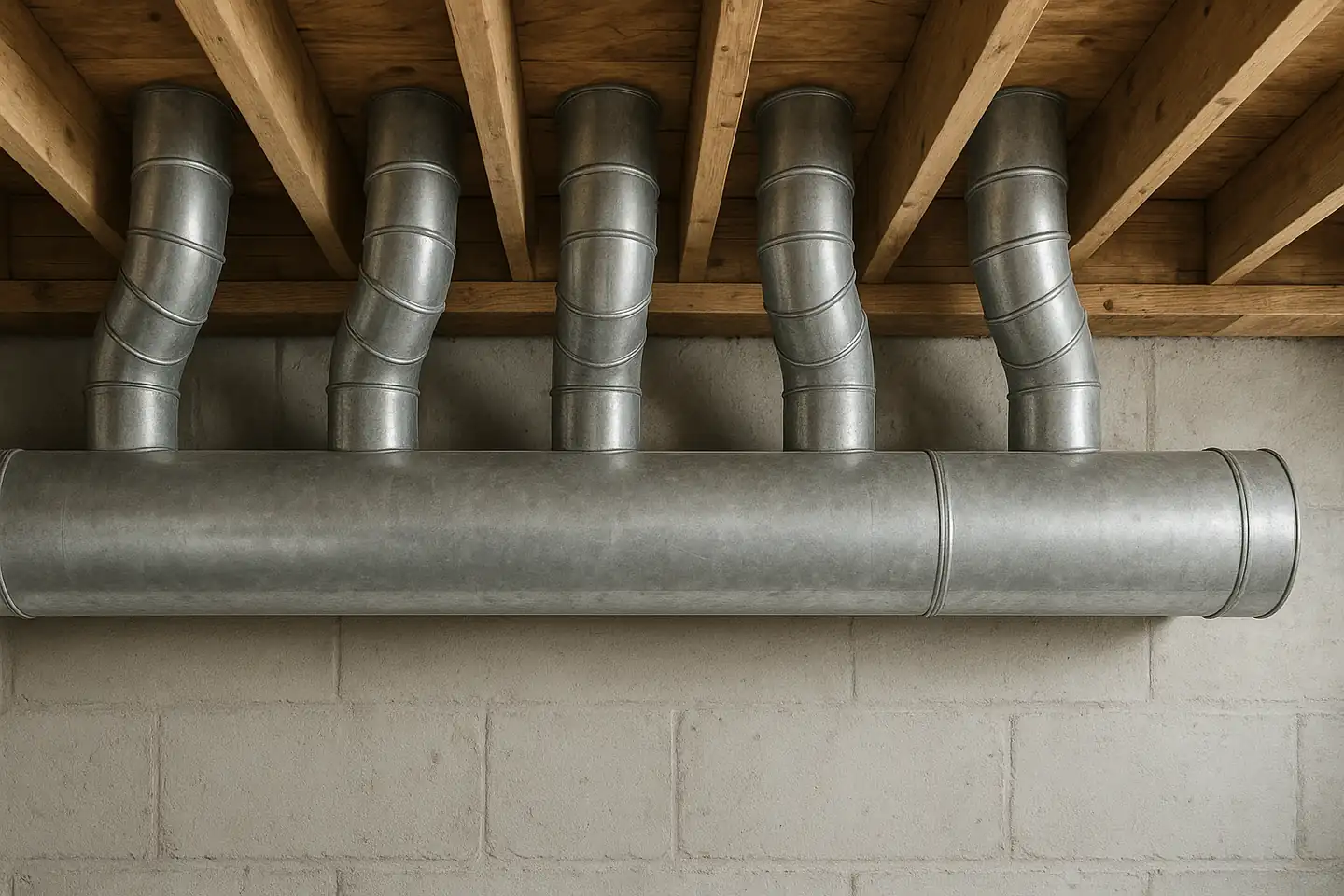
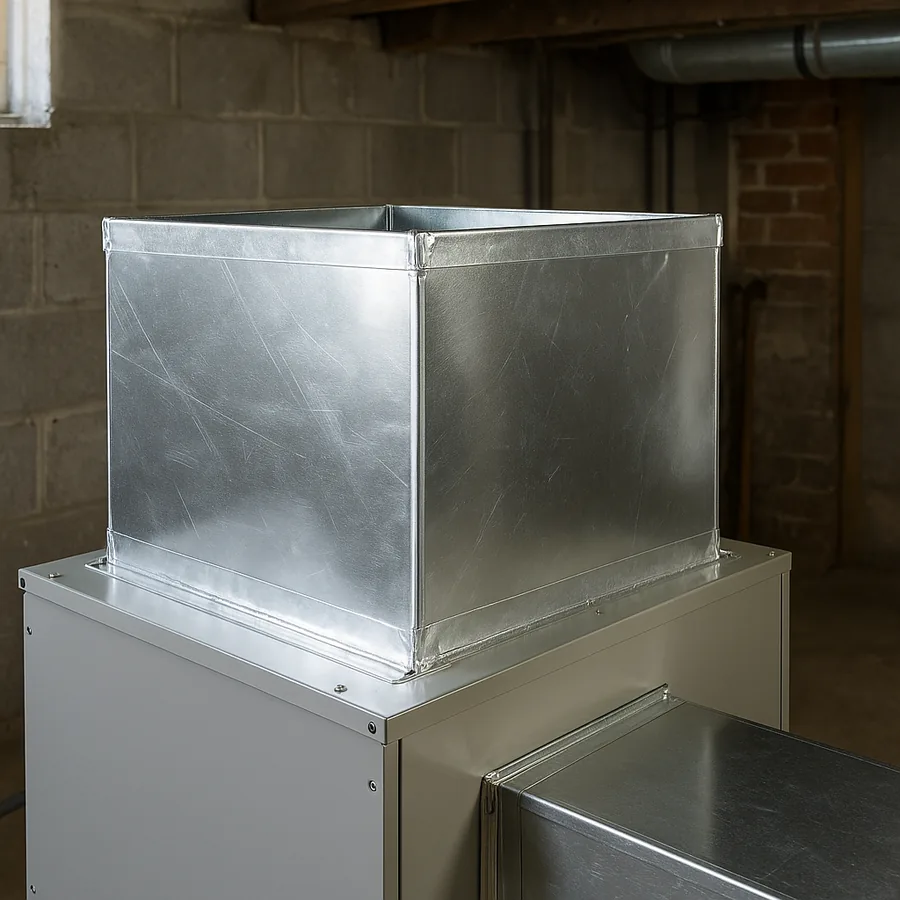
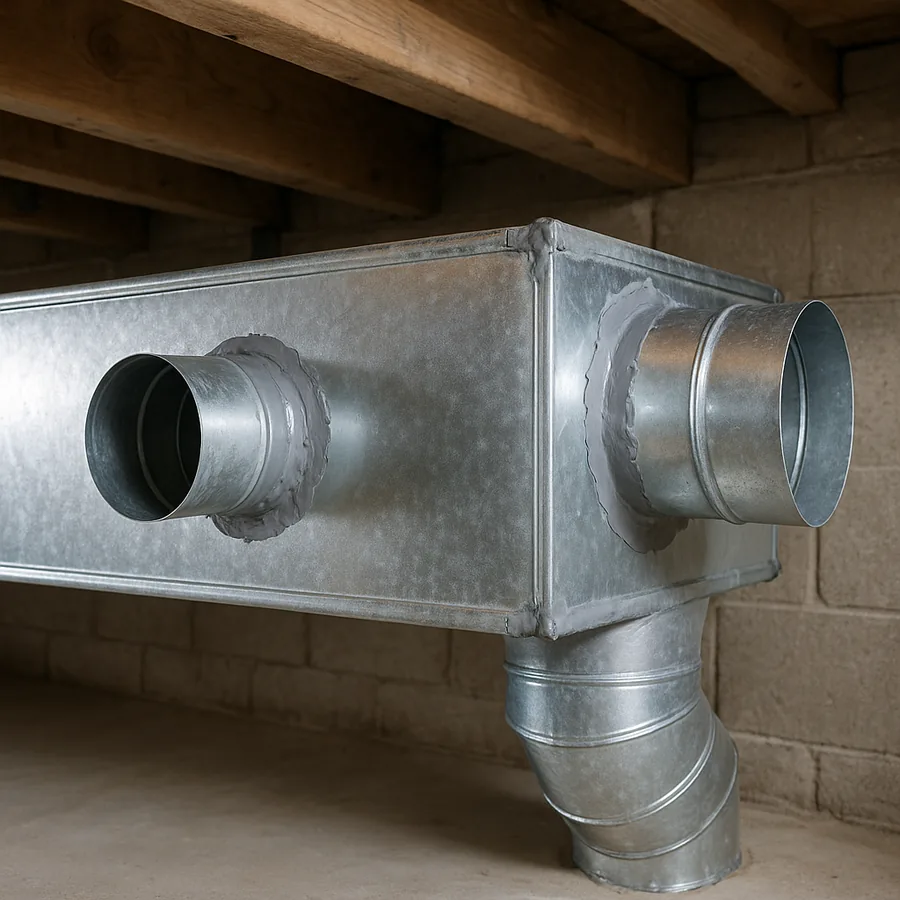
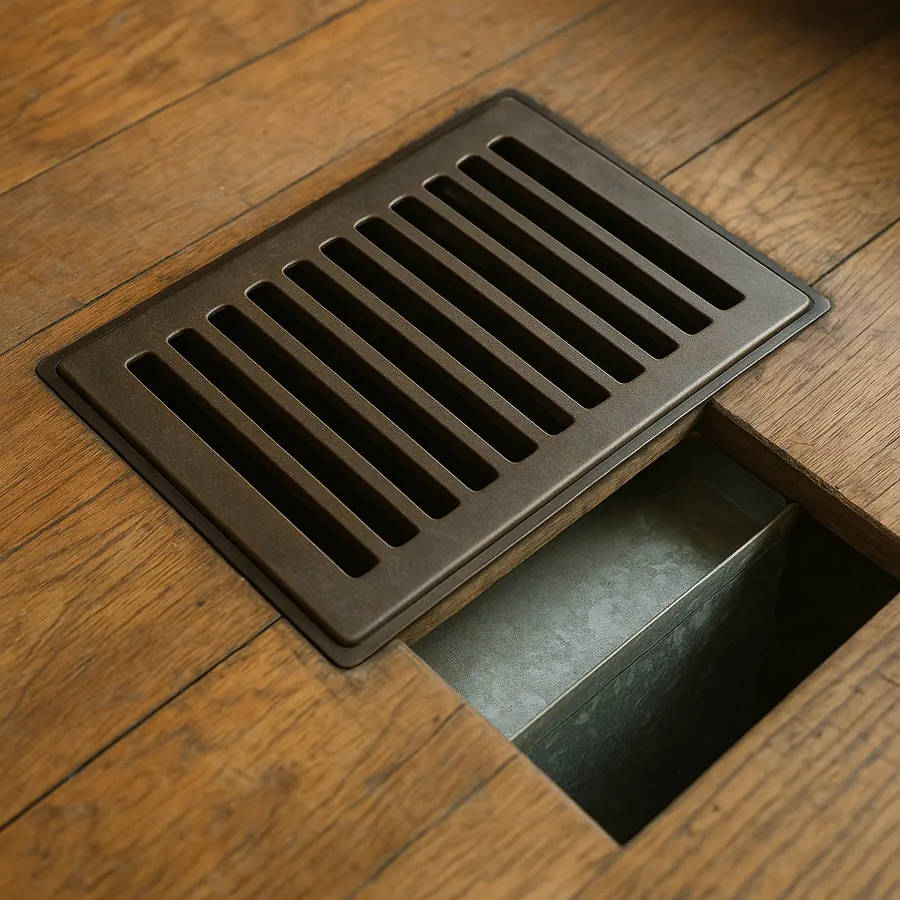
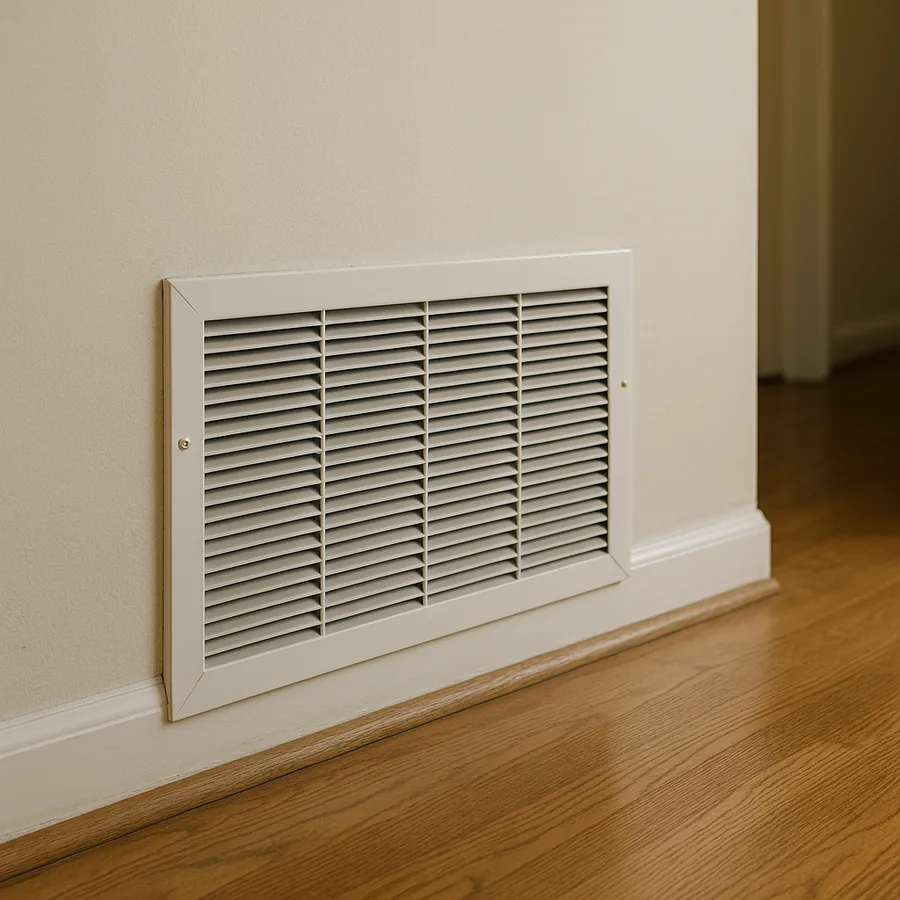
Air leaves the furnace or air handler through the supply plenum, a fabricated box sitting directly on the equipment. From there it enters the trunk — the large rectangular or round duct that runs the length of the basement, attic or crawlspace. Off the trunk come branch runs, one to each room, connected by a takeoff fitting. Each branch ends at a boot, the transition piece that turns the round duct into the rectangular opening in your floor or wall, and the boot is covered by the register — the grille with movable blades that you can open and close.
The return side, which is where most systems are short
Air has to get back. Return grilles, usually larger and without adjustable blades, feed return ducts that carry air to the return plenum and back into the equipment through the filter. A system with generous supply and starved returns is common, cheap to build, and produces exactly the symptoms people blame on the equipment itself: pressure differences between rooms, doors that pull shut, poor airflow with a clean filter.
Dampers, and why the balancing lever is not a fix
A damper is a plate inside a duct that restricts flow, either at a branch takeoff or as a balancing damper in the trunk. Dampers let an installer balance a system that is close to right. They cannot rescue a system that is wrong: closing branches to push air somewhere else raises static pressure across the whole system, and past a point the blower simply moves less air overall.
Residential ductwork against everything else
This page is about residential heating ductwork and cooling ductwork — the same ducts do both, which is why the word for the system is neutral. Industrial ductwork, restaurant kitchen exhaust and commercial spiral systems are a different trade with different codes, and we do not cover them.
Rigid, Flexible, Board, Fabric
What your ducts are made of, and what each material is good at
The types of ductwork in a house are usually mixed, and the mixture tells you something about how the system was built. None of these materials is disgraceful. The installation is what separates them.
Sheet metal: rigid, round, rectangular and spiral
Galvanized sheet metal is the traditional material. Round ductwork moves air with the least resistance for a given cross-section and is what a trunk should be where there is headroom. Rectangular ductwork and flat ductwork exist because joists and soffits do; square ductwork and rectangular ductwork sizes are chosen to fit the cavity, at some cost in friction. Spiral ductwork — the seamed round pipe you see in exposed installations — is stiffer, leaks less at the seam and looks deliberate, which is why it turns up in finished basements and lofts. Stainless steel ductwork and corrosion resistant ductwork belong to laboratories and coastal or process applications rather than to houses.
Flexible ductwork, and the reason it has a bad reputation
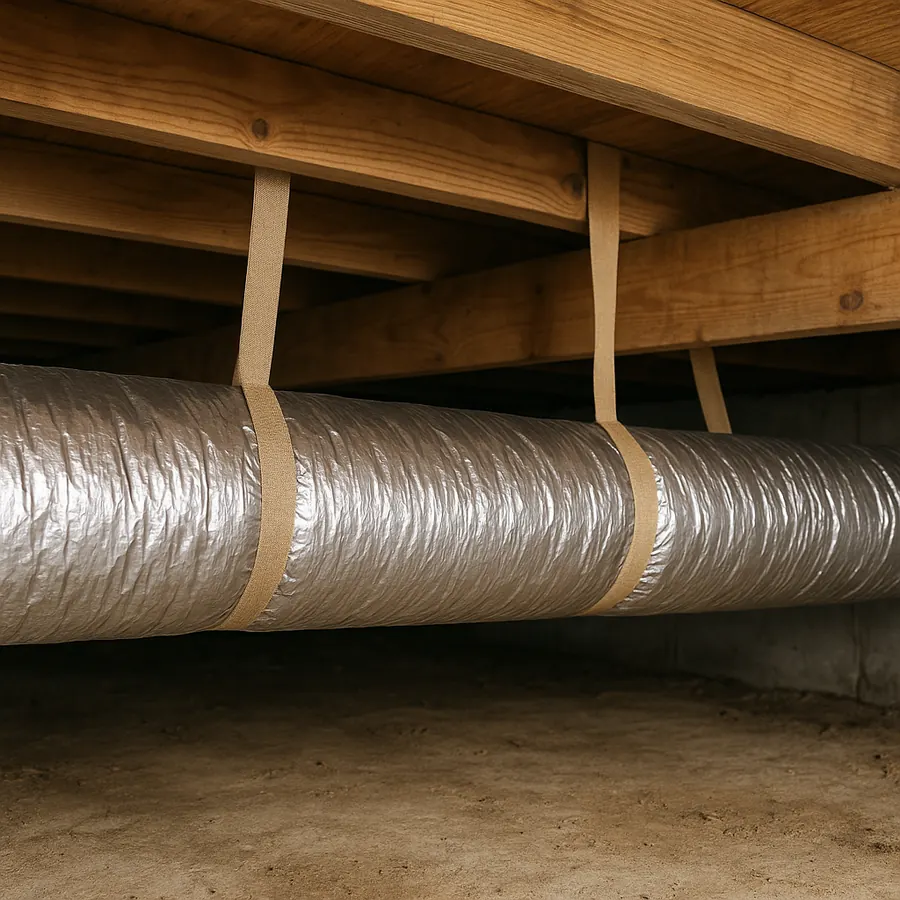
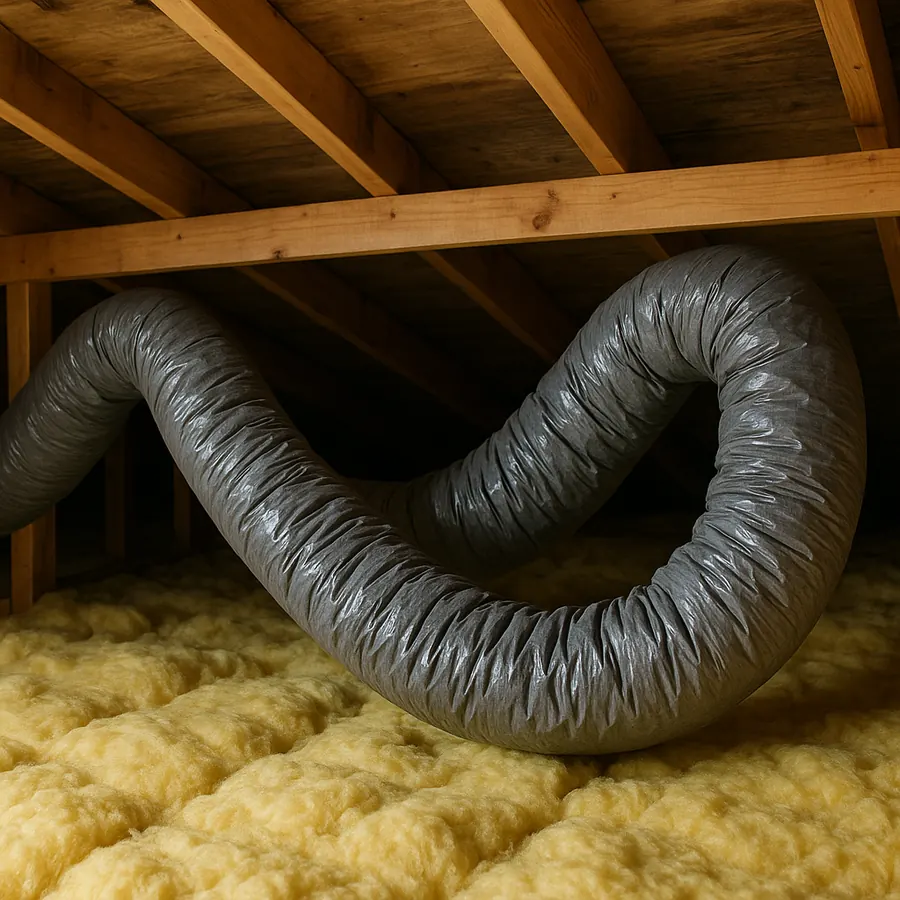
Flex duct is a wire helix wrapped in plastic inner liner with insulation and an outer jacket. Pulled tight and supported properly it performs close to its rating and installs in a fraction of the time. Left sagging between joists, kinked around a corner, or crushed under stored boxes in an attic, it can lose a large share of its capacity, and none of that is visible from inside the house. The material is not the problem; the installation almost always is. A short flex connection to a boot is normal practice. Thirty feet of unsupported flex to a bedroom is a defect.

Duct board, fiberglass and fabric
Fiberglass ductwork — rigid duct board — is formed from insulated panels, so it insulates and encloses in one step and runs quietly. Lined ductwork is metal with an internal acoustic liner and does the same job differently. Fabric ductwork, sometimes called sock ductwork, is a suspended textile duct that distributes air along its whole length; it belongs to gyms, workshops and open commercial spaces rather than to a family house. Plastic ductwork appears in some manufactured-home and underground applications and should be identified rather than assumed.
Small duct high velocity, and low profile
High velocity ductwork uses small flexible tubes, usually two to three inches across, at much higher pressure, and exists for houses where conventional duct will not fit — old buildings with plaster walls and no chases. Low profile ductwork solves the same problem in the other direction, using very shallow rectangular sections. Both cost more per unit of air moved than ordinary duct, and both are the right answer when the alternative is destroying a building or going ductless. If your house has no ducts at all, that comparison belongs on our page about ducted and ductless heat pumps.
Fittings, and where the losses hide
Elbows, flanges, transitions and takeoffs are the ductwork fittings that connect straight runs, and they matter more than their size suggests: a sharp elbow can add as much resistance as many feet of straight pipe. How to connect round ductwork together is a real trade skill — crimped end into the run, screwed, then sealed — and it is where a fast installation quietly becomes a leaky one.
The Number That Changes The Decision
A fifth to a third of the air never arrives
This is the part the search results leave out, and it is not our estimate. It is the federal one.
ENERGY STAR states it plainly: in a typical house, about 20 to 30 percent of the air that moves through the duct system is lost due to leaks, holes, and poorly connected ducts. The consequence is on the bill and in the rooms — higher utility bills and difficulty keeping the house comfortable no matter how the thermostat is set. Separately, ENERGY STAR puts the efficiency penalty from leaky ducts at as much as 20% of heating and cooling system efficiency.
Sit with those numbers for a moment against what is being sold. A homeowner replacing a working furnace to gain a few points of rated efficiency, in a house losing a quarter of its air into a crawlspace, has bought the smaller improvement at the larger price. That is not a rare situation. It is the ordinary one, and it is invisible unless somebody measures the ducts.
Where it goes matters as much as how much
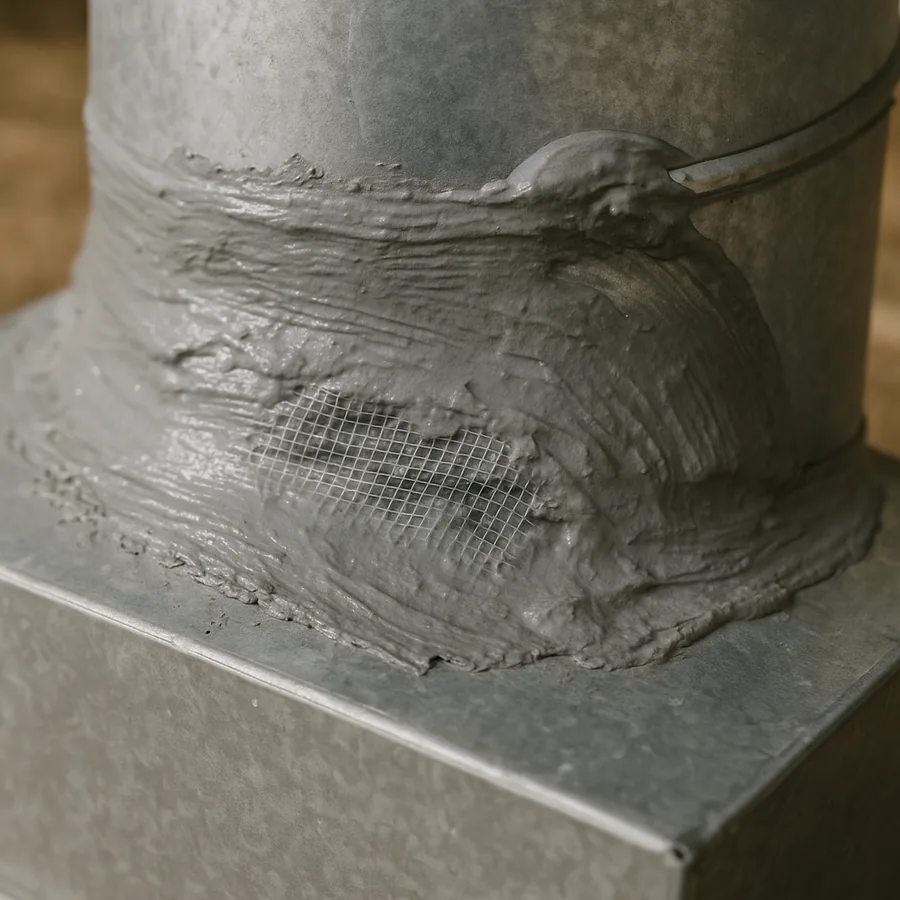
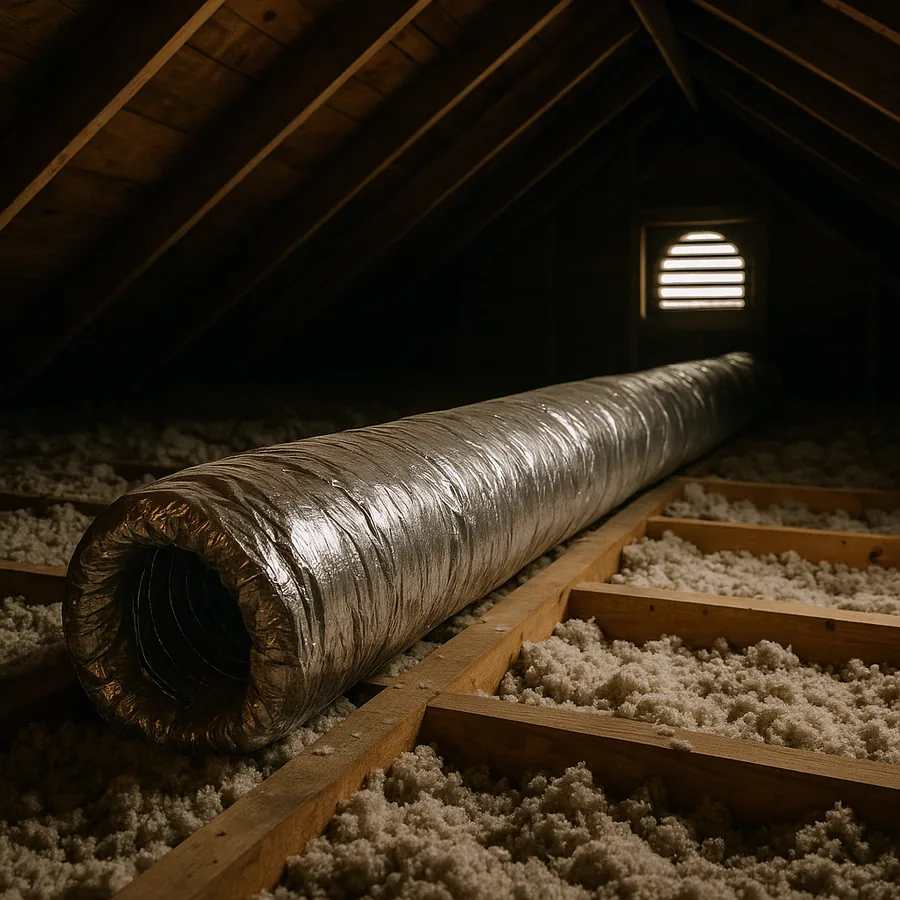
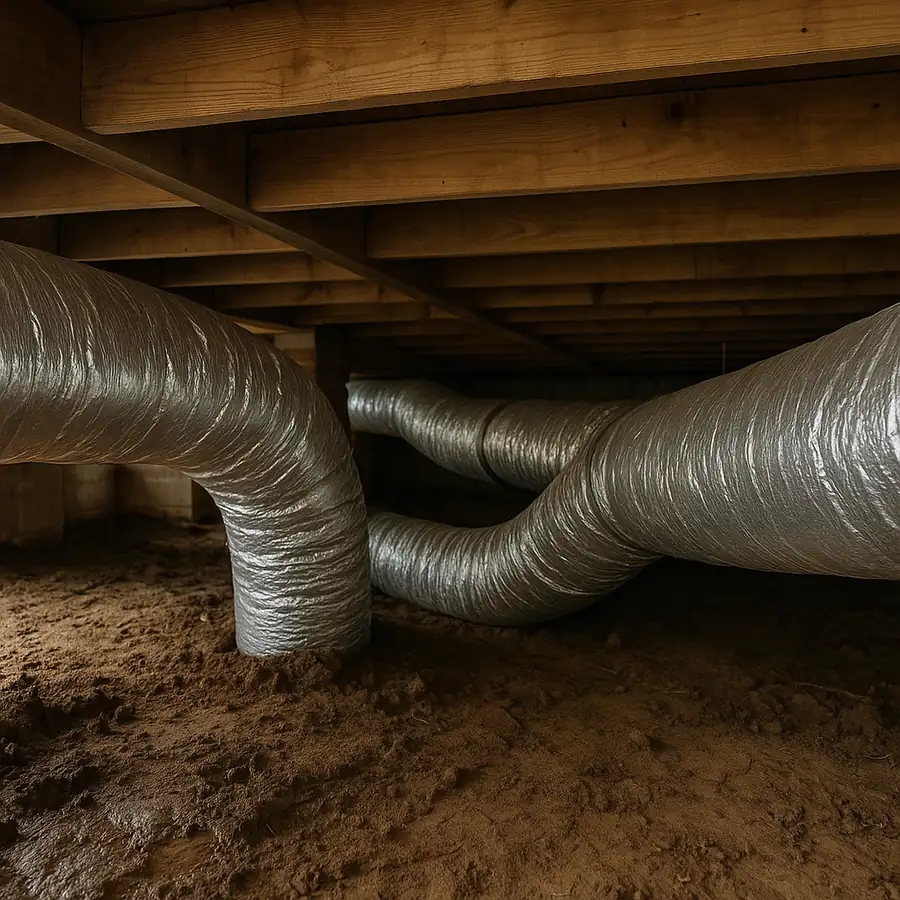
ENERGY STAR notes the case that makes this urgent: ducts located in an attic, crawlspace or the garage. Air lost from a duct inside conditioned space is wasted but stays in the house. Air lost from an attic duct is gone. Worse, a leaking supply duct pressurizes the attic and a leaking return sucks attic air — dust, insulation fibres, summer heat — into the system and distributes it through the house.
Two consequences that are not about money
- Indoor air quality. ENERGY STAR: sealing ducts can help improve indoor air quality by reducing the risk of pollutants entering ducts and circulating through your home. A return leak in a garage is the version of this worth taking seriously.
- Backdrafting. Duct leaks change the pressure balance of a house, and an unbalanced house can pull combustion gases from a furnace or water heater back into the living space instead of up the flue. ENERGY STAR is explicit that sealing leaks minimizes this risk. It is the one argument in this subject where the stake is not the bill.
How to check ductwork for leaks yourself
With the blower running, work along accessible duct in the basement, crawlspace or attic and feel along seams, joints and takeoffs for air moving where it should not. A stick of incense or a thin strip of tissue makes the movement visible. Look for disconnected branches, obviously crushed flex, dark streaks around joints where dusty air has been blowing past for years, and duct tape — the cloth kind — that has dried out and let go. Signs of bad ductwork inside the house are just as telling: one room that is always wrong, registers with weak flow while the filter is clean, whistling at a register, and dust returning days after cleaning.
What a professional does that you cannot
A duct blaster pressurizes the duct system in isolation and measures leakage as a number, which is the only way to know whether sealing has worked. A blower door does the same for the house envelope, and a pressure pan reading at each register locates which runs are leaking rather than only telling you that some are. Ask whether you get the before and after readings. A sealing job with no measurement is a claim.
Seal, Repair Or Replace
Work out which project you actually have
Three questions, and nothing is sent anywhere. This is the triage a good contractor does before quoting — and the one a contractor paid by the size of the job has least reason to do out loud.
We are paid for an introduction, not for the size of the job. A sealing job earns us the same as a whole-house duct replacement, which is why this tool is willing to tell you that the cheaper project is the right one.
Sizing And Static Pressure
Why identical equipment performs differently in two houses
Duct sizing is the part of this trade that is genuinely engineering, and the part most often skipped. The searches for a ductwork sizing chart, a ductwork calculator and a ductwork cfm chart are all people trying to check somebody else's work, which is a reasonable instinct.
What the numbers mean
Airflow is measured in cubic feet per minute, CFM. Every room needs a share of the system's total airflow proportional to its heating and cooling load, and every duct has a capacity set by its cross-section, its length, and the number of fittings in it. Ductwork sizes exist to match those two. A ductwork cfm chart converts duct diameter and air velocity into a flow rate, which is useful for checking a single run and useless as a whole-system design method.
Static pressure is the reading that tells the truth
Static pressure is the resistance the blower works against, measured in inches of water column. Most residential equipment is designed for about half an inch total. Undersized duct, restrictive filters, sharp elbows, crushed flex and closed dampers all add to it, and past the design figure the blower moves less air, the equipment runs longer, coils get colder or hotter than intended, and components wear. It takes a technician a few minutes to measure. Very few quotes mention it.
Manual D, and what a real design looks like
The industry method for residential duct design is ACCA Manual D, which follows a Manual J load calculation room by room. A designed system has a stated CFM for every register, duct sizes derived from those figures, and a total static pressure the selected equipment can handle. Ductwork design software and a ductwork installation guide pdf are how the trade does this. What matters to you is simply whether it was done: ask what CFM this room is supposed to get, and see whether there is an answer.
The specific case worth flagging
A heat pump moves more air at a lower temperature difference than a furnace does. Duct that was adequate for a hot-air furnace can be marginal for the same nominal capacity in a heat pump, which is one of the standard reasons a heat pump underperforms in a house where nothing else changed. If that is the project you are contemplating, this is the check to insist on before signing, alongside the rest of the heat pump buying questions.
How It Is Arranged
Layout: trunk and branch, radial, and what an attic run should look like
People search for a ductwork diagram because the arrangement is hard to picture from inside a finished house. There are only a few, and recognizing yours tells you what to expect.
Trunk and branch
A large main duct with branches off it, usually in a basement. The most common arrangement in a full-basement house, easy to modify and easy to balance. A trunk that steps down in size as it runs is the sign of a considered installation rather than a fast one.
Radial
Individual runs fanning out from the plenum to each room with no trunk at all. Frequent in slab houses and in crawlspaces, simple and short-pathed, and awkward to extend later because there is nothing to tap into.
Perimeter loop
A loop running around the outside of a slab, fed from the plenum, with registers set into the floor at the walls. Built for cold-climate slab houses because it warms the perimeter, and effectively impossible to inspect once the slab is poured.
A residential attic ductwork layout, and what to look for
An attic run should be as short and as straight as the geometry allows, supported at regular intervals with wide straps rather than wire, insulated to the level required for an unconditioned space, and sealed at every joint before the insulation goes on. What you often find instead is flex snaked around obstacles, sagging between supports, resting on ceiling joists where boxes get stacked on it, and jointed with cloth duct tape that gave up a decade ago. None of that requires expertise to see. It requires somebody to go and look.
Mobile and manufactured homes
Mobile home ductwork is a different animal: usually a single main duct running the length of the home under the floor, in the belly, with floor registers off it. A double wide mobile home ductwork diagram shows two such trunks with a crossover duct joining the halves, and that crossover — a flexible duct slung underneath the home — is the classic failure point. It gets torn, crushed, disconnected, or eaten by animals, and the symptom is one half of the home that will not heat, or will not cool. Underside inspection is the whole diagnosis.
Location And Insulation
Where the ducts run matters more than what they are made of
Duct inside the conditioned envelope is forgiving. Duct outside it is not, and most American houses have duct outside it.
Attic ductwork
An attic reaches well above outdoor temperature in summer and close to it in winter. Every foot of duct up there is losing or gaining heat through its walls in addition to whatever leaks out of it, which is why ductwork insulation is not optional in that location and why the insulation value should be checked rather than assumed. This is also where crushing and disconnection go unnoticed for years, because nobody goes up there between December and December.
Crawlspaces, basements and garages
A crawlspace is cooler and damper, which changes the failure mode from heat loss to condensation and corrosion. A conditioned basement is the easy case: losses stay in the house. A garage is the one worth singling out, because a return leak there draws in exactly what is stored in a garage — exhaust, solvents, fuel — and distributes it through the house.
Insulating ductwork: what the wrap does and what it does not
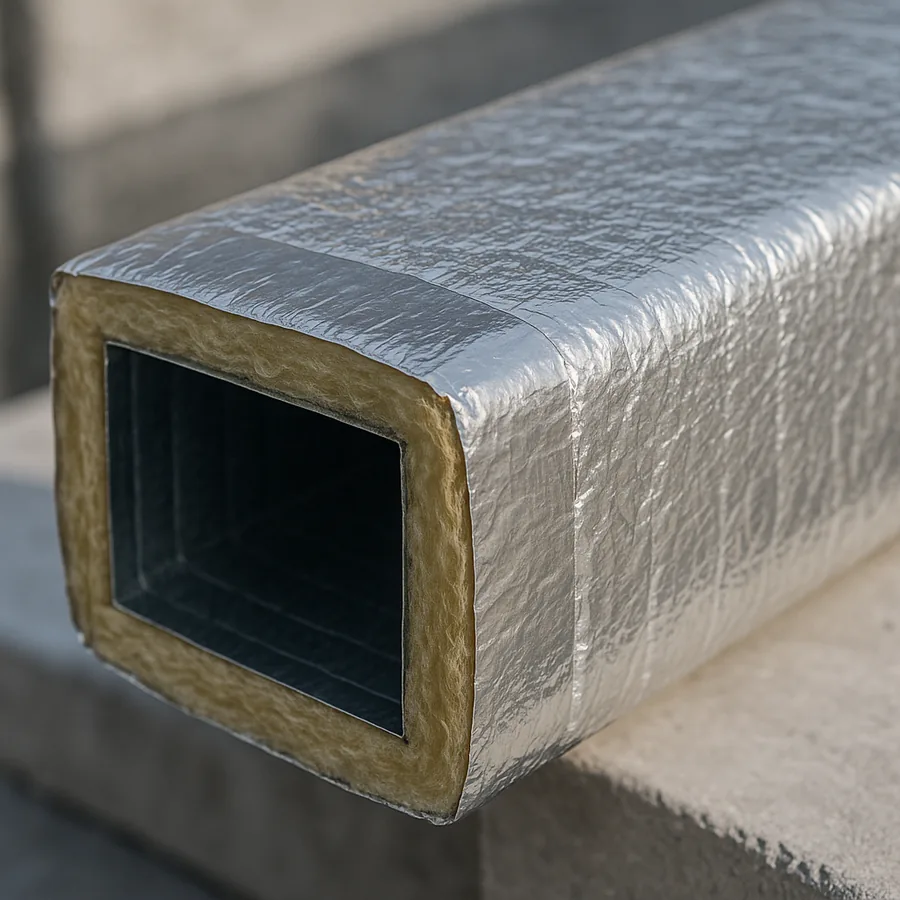
Duct insulation slows heat transfer through the duct wall. It does nothing about leakage: wrapping a leaking duct hides the leak and keeps the loss. Sealing comes first, insulation second, in that order, always. The best insulation wrap for ductwork in an unconditioned space is a proper faced fiberglass duct wrap of the R-value your climate zone calls for, installed without compressing it — compressed insulation delivers a fraction of its rating.
Bubble wrap insulation for ductwork
Reflective bubble wrap is sold as duct insulation and looks impressive. On its own it delivers a low R-value, well under a proper duct wrap, because most of its claimed performance depends on a reflective air gap that a wrapped duct rarely provides. It has a place as a radiant barrier in specific assemblies. As a substitute for insulation on attic duct it is a downgrade wearing a technical-looking jacket. If somebody proposes it, ask what R-value the installed assembly achieves and how that compares with the code minimum for your climate zone.

Condensation on ductwork
Cold duct in humid air sweats, exactly like a glass of iced water. On a cooling system in a humid crawlspace or an unconditioned basement, condensation on ductwork means the duct surface is below the dew point of the surrounding air — usually because insulation is missing, thin, compressed, or has an unsealed vapour barrier that lets moist air reach the cold metal. Left alone it produces rust, stained ceilings, wet insulation and eventually mold. The fix is the vapour barrier and the insulation, not a dehumidifier bolted on afterwards.
Symptom To Cause
What goes wrong, and what each symptom points at
Duct faults are mechanical and mostly visible once somebody looks. These account for the majority of calls.
Older Houses
Asbestos: the reason not to open a 1960s duct system yourself
Thousands of people a month search for asbestos tape on ductwork and asbestos ductwork, and the pages selling duct replacement do not mention it. It belongs at the front of any conversation about a house built before about 1980.
Where it turns up
Federal consumer guidance is specific about this class of material: in older houses, hot water and steam pipes may be coated with an asbestos material or covered with an asbestos blanket or tape, and oil and coal furnaces along with door gaskets may have asbestos insulation. In duct systems the same era produced asbestos-containing paper tape at joints, corrugated wrap around plenums and runs, and transite ductwork — asbestos-cement pipe, often used as in-slab duct in mid-century houses. Transite is the one worth naming, because it does not look like insulation at all. It looks like grey concrete pipe, and it is frequently underfoot in exactly the houses where somebody is proposing to cut into a slab.
The rule is counter-intuitive: leave it alone
The guidance for homeowners is that asbestos material in good condition is usually best left alone. Undisturbed asbestos-containing insulation does not present a risk to the people living or working near it. The risk is created by disturbing it — cutting, sanding, tearing, pulling old wrap off a plenum to get at the joint underneath. Which is to say: the risk is created by duct work. If in doubt, the guidance is to treat the material as if it contains asbestos and leave it alone.
What that means for a quote
If a contractor proposes to replace ductwork in a house of that age and has not raised the question, that is information about the contractor. Sealing or encapsulating suspect material is sometimes an option and is work for somebody trained to handle asbestos safely, not a job for a homeowner with a roll of foil tape. Testing is the only way to know rather than guess, and the sample is taken by somebody qualified to take it.
The practical order
Age of house first, then material identification, then a scope of work — not a price first with the discovery happening on the day. A duct project in an older house that turns up asbestos mid-job becomes a different project with a different price and a different set of legal requirements, and the moment to find that out is before anybody has opened anything.
The Money
What ductwork costs, and which lines actually move the number
We do not publish a national average for how much ductwork costs, and the reason is not coyness. The spread between resealing an accessible basement system and re-running duct through a finished two-storey house is wider than any average is worth, and a number you cannot apply is worse than no number.
The five things that set your price
- Access, before anything else. The same run of duct in an open basement, a stand-up attic, a two-foot crawlspace and a finished ceiling is four different labor figures for identical material. This is the single largest variable and the one that never appears as its own line.
- How much is actually being replaced. Whole-system replacement, replacement of specific runs, or sealing and repair of what is there. A written scope is what makes two quotes comparable; without it you are comparing totals for different projects.
- Whether the system is being redesigned or copied. New duct sized by a Manual D calculation costs more in design time and is the only version that fixes a system that was wrong to begin with, and it is the same argument as sizing the equipment properly. Replacing bad duct with new duct of the same bad sizes buys new metal and the same complaints.
- What has to be opened and put back. Drywall, plaster, soffits, flooring. Ductwork in a finished house is partly a carpentry project, and whether making good is included belongs in writing.
- What the house turns out to contain. Asbestos-suspect material, knob-and-tube wiring in the same cavity, structural surprises. This is why a fixed price given without an inspection is a price that will change.
Adding central air to a house: with ducts, and without
Two distinct questions get asked as one. The cost to install central air with existing ductwork is an equipment-and-labor project, provided the existing duct can carry the airflow the new system needs — which is a measurement, not an assumption, and is the step most often skipped. How much to install central air without ductwork is a different order of project entirely, because the duct system is most of it. Air conditioning options for homes without ductwork are then worth comparing honestly: a full duct installation, high-velocity small-duct, or ductless heads. In many houses the ductless route exists precisely because installing conventional duct would cost more than the equipment. That comparison is set out on our heat pump types page, and the equipment side of the quote is on our replacement cost page.
How to make a ductwork replacement cost calculator useful
Online calculators price linear feet of duct. They cannot see your access, your layout, or what is in your walls, which is where most of the variance lives. Used as a sanity check on the material portion of a quote, they are fine. Used as a budget, they mislead in one direction consistently: downward. If you want an estimate that means something, get two or three written scopes from companies that have physically been in the crawlspace, and compare the scopes before the totals.
Who Pays
Does homeowners insurance or a home warranty cover ductwork?
Two different products, two different answers, and both hinge on the same distinction.
Homeowners insurance: sudden and accidental, not worn out
Property insurance covers damage from a covered peril — a tree through the roof, a fire, certain water events — and ducts damaged in such an event are generally repaired as part of that claim. What it does not cover is deterioration: wear and tear, age, rust, and gradual failure are standard exclusions in nearly every policy. Ductwork that has simply reached the end of its life is a maintenance expense by design of the policy, not by the adjuster's discretion — the same line that separates what a warranty covers from what it does not. The practical test before you call: was there an event, and can you date it?
Home warranties: a service contract, and read the schedule
A home warranty is not insurance. It is a service contract that pays toward repair or replacement of covered systems that fail from normal use, which is the opposite of what property insurance covers. Whether a home warranty covers ductwork depends entirely on the plan document: duct is sometimes included in the heating system coverage, sometimes excluded outright, and commonly subject to caps, access exclusions, and a clause about pre-existing conditions. The two questions that decide it are whether ducts are named in the covered-items schedule, and whether the contract excludes work that requires opening walls or floors.
What both have in common
Documentation before the claim, not after. Photographs, the date, the invoice for any previous work, and a written diagnosis from a licensed company. A claim for duct damage supported by a technician's written findings is a different conversation from one supported by a description over the phone.
Living With Visible Duct
Exposed ducts: hide them, box them in, or make them the point
Mostly a basement question, and the searches for ductwork cover ideas and creative ways to hide ductwork are people looking at a ceiling they have decided to finish.
Leave and paint
Decorative exposed ductwork is a deliberate look, and spiral round duct carries it best. Paint everything overhead one dark colour — duct, joists, pipes — and the ceiling reads as depth instead of clutter. Cheapest option, keeps every joint accessible, and access matters more than it sounds.
Box in with soffits
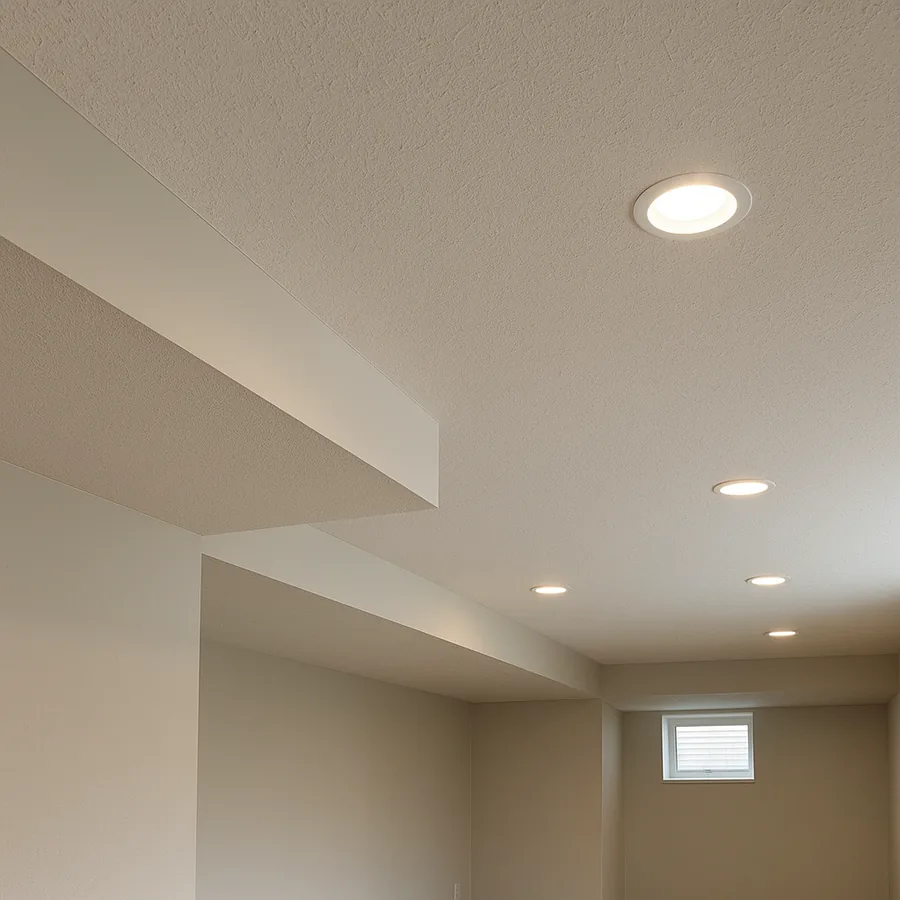
Framing and drywall around the trunk, dropping the ceiling only where duct runs. Preserves headroom everywhere else, looks intentional, and permanently buries the joints it covers. Seal the duct properly before you close it up, because the next chance is a demolition.
Drop ceiling
A suspended grid below the lowest obstruction. Costs the most headroom and gives back full access to everything above it, which in a basement full of duct, plumbing and wiring is worth more than the aesthetics of the alternative.
One caution that applies to all three: before you hide anything, have it sealed and, where it runs through unconditioned space, insulated. The cost of doing that work is a fraction of the cost of doing it later through a finished ceiling, and the leakage figures at the top of this page do not improve on their own.
Before You Sign
What to ask before you sign a ductwork quote
Four questions. Each one separates a company that measured from a company that estimated, and the difference is visible in the answer rather than in the price.
| Ask | Why it changes the outcome | A weak answer |
|---|---|---|
| What is my duct leakage now, and what will it be when you finish? | Turns a claim into a measurement. A duct blaster reading before and after is the only proof that sealing worked. | “We seal everything as we go.” |
| What is the static pressure, and what does this equipment need? | Tells you whether the duct can carry the airflow. It takes minutes and it predicts whether new equipment will perform. | Silence, or an answer about the equipment’s efficiency rating. |
| Which runs are you replacing, and what did you find on the ones you are not? | Forces a scope. Two quotes are only comparable when both say what is being done and where. | “The whole system needs doing” with no room-by-room findings. |
| Was this sized by a load calculation, or copied from what is there? | Determines whether you are buying a fix or new metal in the old wrong sizes. | “Same as what you have now.” |
Two more if the house predates 1980
Have you checked for asbestos-containing material, and are you licensed to work around it if there is any? An inspection that has not looked at duct wrap, joint tape and in-slab transite in a house of that age has not finished. And: what happens to the price and the schedule if it is found? The answer should exist before the work starts.
What we do here, and what we do not
We are not a contractor. We do not install, repair or seal ductwork, and we do not take a share of the job. We are paid a fixed fee for an introduction, which is why this page has spent as long on the case for sealing as on the case for replacing — the two pay us identically. When you are ready to have somebody look, we connect you with independent licensed and insured heating and cooling companies, and what happens after that is between you and them. How the introduction works, and who pays us, is set out on our home page and in how we work.
Straight Answers
Ductwork questions, answered
What is ductwork, in plain terms?
It is the distribution network that carries conditioned air from your furnace, air handler or air conditioner to the rooms, and carries it back again to be reconditioned. Supply plenum, trunk, branch runs, boots and registers on the way out; return grilles, return ducts and the return plenum on the way back. The same ducts serve heating and cooling, which is why ductwork for a furnace and ductwork for air conditioning are the same ductwork.
How long does ductwork last, and how often should it be replaced?
There is no service interval. Metal duct in a dry, accessible location can outlive several generations of equipment; flexible duct in a hot attic degrades faster, and duct in a wet crawlspace faster again. Replacement is driven by condition and by design — damage, contamination, corrosion, or sizing that never suited the house — not by age, which is the same test we apply to repairing or replacing equipment. Anyone quoting a replacement schedule for duct rather than a condition is quoting a sales cycle.
Does duct sealing actually work?
Yes, and the size of the prize is federal rather than promotional: ENERGY STAR puts typical duct losses at 20% to 30% of the air moved through the system and the efficiency penalty from leaky ducts at as much as 20%. The caveat is measurement. Sealing verified by a duct leakage test before and after is a result; sealing described afterwards is a claim.
Is flexible ductwork bad?
The material is not the problem. Flex duct installed tight, supported at proper intervals and run in straight paths performs close to its rating. Flex duct left sagging, kinked around obstructions or crushed under attic storage loses a large share of its capacity, and that is what people are usually reacting to. Judge the installation, not the product.
Can I replace ductwork myself?
Sealing accessible joints with mastic is genuinely a homeowner job and is where most of the available benefit is. Replacing or re-routing duct is not: it is sheet metal work joined to a design question, and getting the sizing wrong produces a system that is worse than the one you removed. In a house built before about 1980, opening old duct insulation or tape is the one job to leave alone entirely, because of asbestos.
How much does ductwork cost to replace?
We do not publish a national figure, because access alone changes the labor by a multiple for identical material, and access is invisible to any calculator. What we can tell you is which lines move the number: how much is being replaced, whether the system is being redesigned or copied, what has to be opened and made good, and what the house turns out to contain. Get written scopes rather than totals.
Should I clean my ducts?
Cleaning removes what is in the ducts now. If dust or debris keeps returning, the ducts are drawing it in through leaks on the return side, and cleaning without sealing means paying repeatedly for the same result. Where there is visible mold, the moisture source has to be found and fixed first, or it returns regardless of what is done to the surfaces.
What is a UV light for ductwork?
An ultraviolet lamp mounted in the air handler or duct, intended to limit microbial growth on the cooling coil and drain pan. Its usefulness is specific to that wet surface. It is not a remedy for a moisture problem elsewhere in the duct system, and it does not address leakage, sizing or contamination of duct surfaces out of its line of sight.
Do you install or repair ductwork?
No. We are a matching service, paid a fixed fee for the introduction rather than a share of the job, so a sealing visit earns us the same as a whole-house duct replacement. We publish research and connect homeowners with independent licensed and insured heating and cooling companies.
Where This Comes From
Sources
- Duct leakage in a typical house, and what it costs you — ENERGY STAR, duct sealing.
- The efficiency penalty, comfort, indoor air quality and backdrafting — ENERGY STAR, benefits of duct sealing.
- Sealing and insulating as a home improvement project — ENERGY STAR, seal and insulate, and the EPA duct sealing brochure.
- Finding air leaks in a house — ENERGY STAR, locating air leaks.
- Duct design and efficient duct systems — ENERGY STAR, efficient duct systems.
- Asbestos in older homes, and the guidance to leave intact material alone — U.S. Consumer Product Safety Commission, asbestos in the home.
- Protecting a household from asbestos exposure — U.S. Environmental Protection Agency, and EPA, learn about asbestos.
- Heating and cooling as a complete system — ENERGY STAR HVAC fact sheet.
Our editorial standards explain how we source and check what we publish. Nothing here is a quote, a diagnosis, or advice about your insurance policy, and we are a referral service rather than a contractor. Last updated .
Before you call anyone
The independent match — we are paid for the introduction, not for the size of your job
Most roofing advice is written by the company that wants to do the work. That is not a failing of the people who read it; it is a defect in who is talking. The estimate, the diagnosis and the invoice come from one party, and no amount of care on your side fixes that.
We are built the other way round. We do not repair roofs and we do not sell materials, so the payment reaches us when you are connected to a licensed, insured roofing company — the same amount whether your roof needs an eight-hundred-dollar repair or a twenty-thousand-dollar replacement. Nobody here has a reason to talk you into the larger number. How we make money and how we research are both written down.
Waiting is the one thing that actually costs money. An insurance clock runs from the date of the damage rather than the date you noticed it, and damage that sits through a season stops reading as sudden and starts reading as wear — which is the exclusion that pays nothing. And if your roof is simply worn out, say so on the call. No claim will pay for age, we will tell you that plainly, and you will have lost nothing but the call.